Sadhvi Niranjan Jyoti and Kiran Mahalle Join NCBC Leadership
Synopsis
In a significant leadership shift, Sadhvi Niranjan Jyoti has been appointed as Chairperson of the NCBC, alongside Kiran Mahalle as a Member. Their extensive backgrounds promise to enhance the Commission's ability to advocate for the rights and welfare of backward classes in India.
Key Takeaways
Sadhvi Niranjan Jyoti appointed NCBC Chairperson.
Kiran Umesh Mahalle joins as a Member.
New leadership aims to protect rights of backward classes.
Jyoti has extensive governance experience.
Mahalle focuses on women's empowerment and social welfare.
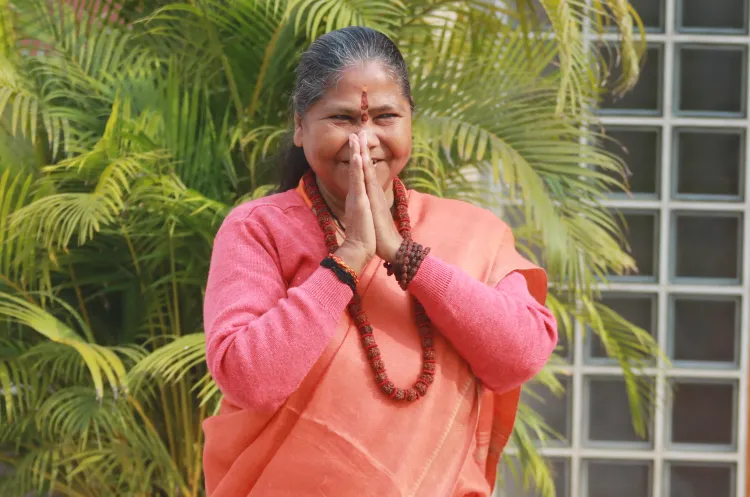
New Delhi, March 27 (NationPress) The National Commission for Backward Classes (NCBC) has undergone a leadership transition with the induction of former MP Sadhvi Niranjan Jyoti as Chairperson and ex-Amravati mayor Kiran Umesh Mahalle as a Member.
Jyoti took charge on March 18, 2026, while Mahalle assumed her position on March 20, 2026, signifying a robust advancement of the Commission’s mandate to protect the rights and interests of backward classes throughout India.
Sadhvi Niranjan Jyoti, a veteran in politics and former Member of Parliament, brings a wealth of experience in governance and social initiatives. Her previous role as Union Minister of State encompassed the Ministries of Rural Development and Consumer Affairs, Food and Public Distribution.
Renowned for her grassroots engagement, Jyoti has been actively involved in programs aimed at uplifting marginalized communities, especially in rural settings. Her leadership is anticipated to bolster the Commission’s efforts in tackling socio-economic hurdles faced by backward classes.
Alongside her, Kiran Umesh Mahalle enters the Commission with a strong history in public service and local governance. Mahalle, a former Mayor of the Amravati Municipal Corporation, has held several pivotal roles in cooperative and social organizations, focusing on women’s empowerment, social welfare, and inclusive growth.
With her extensive grassroots experience, Mahalle is poised to play a significant role in shaping policies and executing initiatives within the NCBC.
The Ministry of Social Justice and Empowerment has warmly welcomed both appointees, expressing confidence that their combined knowledge will greatly enhance the Commission’s mission.
The NCBC is integral in advising the government on issues pertaining to the welfare and safeguarding of backward classes, ensuring fair access to opportunities and resources.
With Jyoti’s national experience and Mahalle’s local leadership, the Commission is set to ramp up its efforts toward addressing social justice, economic empowerment, and the protection of rights for backward communities. Their appointments are timely, as the government prioritizes inclusive development and social equity.
Point of View
The appointments of Sadhvi Niranjan Jyoti and Kiran Mahalle to the NCBC represent a significant step towards strengthening the advocacy for backward classes. Their combined experience in governance and grassroots activism positions them uniquely to address the pressing socio-economic challenges faced by these communities.
NationPress
26 Sept 2026
Frequently Asked Questions
Who is Sadhvi Niranjan Jyoti?
Sadhvi Niranjan Jyoti is a former MP and has been appointed as the Chairperson of the NCBC, bringing extensive experience in governance and social development.
What role does the NCBC play?
The NCBC advises the government on welfare and protection issues concerning backward classes, ensuring equitable access to resources and opportunities.
When did the new appointees take charge?
Sadhvi Niranjan Jyoti assumed office on March 18, 2026, and Kiran Mahalle took charge on March 20, 2026.
What is Kiran Mahalle's background?
Kiran Mahalle is a veteran public representative, a former Mayor of Amravati, and has a strong focus on women's empowerment and social welfare.
How will these appointments affect backward classes?
The leadership of Jyoti and Mahalle is expected to enhance efforts in addressing socio-economic challenges faced by backward classes, promoting social justice and empowerment.