Manju Sharma Highlights Sardar Patel's Legacy in Women's Reservation
Synopsis
Jaipur MP Manju Sharma links the initiative for women's seat reservations to Sardar Patel's vision, emphasizing the transformative impact of the Nari Shakti Vandan Adhiniyam, which ensures 33% representation for women in governance.
Key Takeaways
Sardar Patel's Legacy: The concept of women's reservation in governance traces back to Sardar Vallabhbhai Patel.
Nari Shakti Vandan Adhiniyam: Provides a 33% reservation for women in Parliament and State Assemblies.
Empowerment Initiatives: Various government schemes aim to enhance women's socio-economic status.
Significant Training: Over two million women have benefited from skill development programs in Rajasthan.
Transformative Change: The legislation seeks to integrate women's perspectives into governance and policy-making.
Jaipur, April 15 (NationPress) MP Manju Sharma from Jaipur Lok Sabha emphasized that the concept of women’s seat reservation can be traced back to Sardar Vallabhbhai Patel, who pioneered such initiatives during his time as President of the Ahmedabad Municipality.
She pointed out that the essence of the Nari Shakti Vandan Adhiniyam embodies this vision. This groundbreaking legislation guarantees women a 33 percent reservation in both Parliament and State Legislative Assemblies, facilitating their active involvement in governance, policy formulation, education, and safety matters.
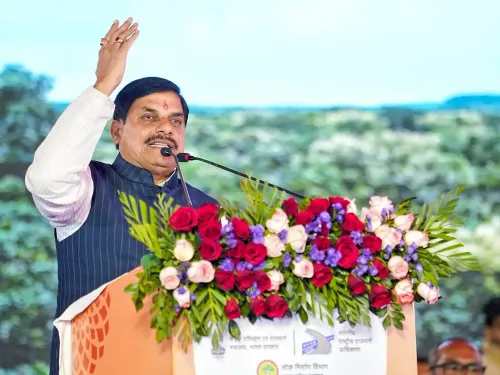
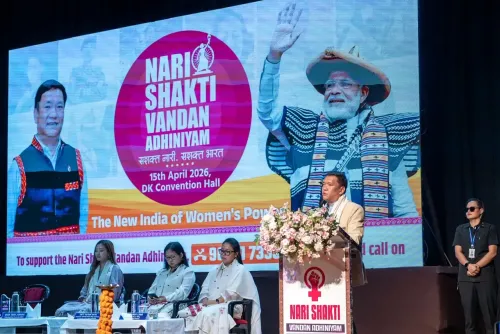
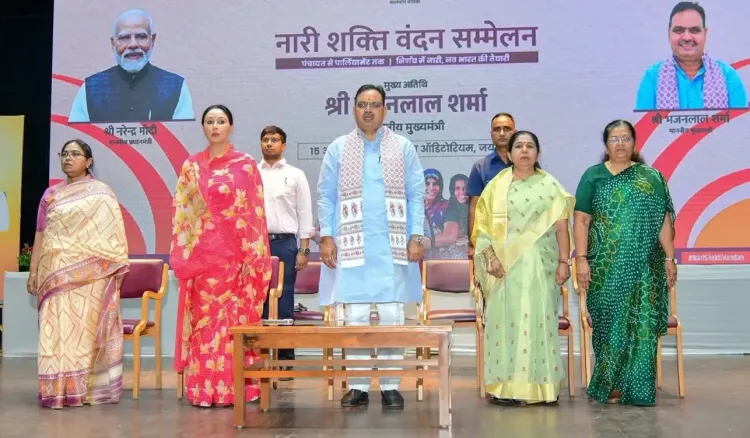
While addressing the Nari Shakti Vandan Women’s Conference at Birla Auditorium on Wednesday, MP Manju Sharma remarked that this Act would enable women to assume a vital role in achieving the vision of a developed India, also known as Viksit Bharat.
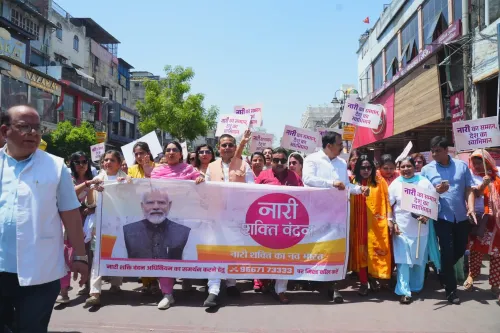
She called upon women to actively support the Act by joining the campaign.
Additionally, she highlighted that Prime Minister Modi firmly believes that genuine national advancement is only achievable through women's active participation across all sectors.
Reflecting on India’s cultural values, she noted that women have always played a significant role and are increasingly contributing across various fields.
She also outlined multiple welfare programs introduced by both the Central and State Governments aimed at empowering women.
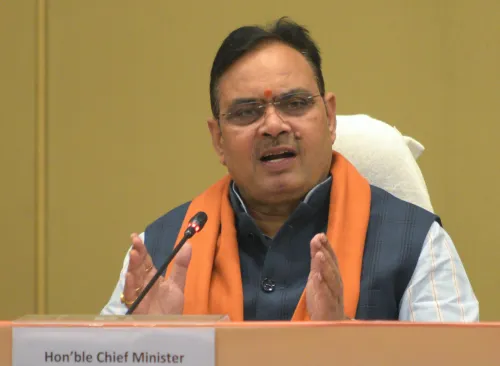
Chief Minister Bhajanlal Sharma addressed the conference, stating that since 2014, under PM Modi's leadership, there have been extraordinary efforts to empower women.
He pointed out significant initiatives such as the Pradhan Mantri Jan Dhan Yojana, NaMo Drone Didi Yojana, and Lakhpati Didi, which have bolstered women socially and economically. He further noted that campaigns like Beti Bachao, Beti Padhao have positively influenced the child sex ratio, while the Swachh Bharat Mission has ensured dignity for women through the construction of household toilets.
The Chief Minister remarked that under the Pradhan Mantri Awas Yojana, homes are registered in women's names, and clean cooking fuel is provided through the Pradhan Mantri Ujjwala Yojana.
In Rajasthan, more than two million women have benefited from skill training, leading to over 1.6 million Lakhpati Didis. Moreover, the Lado Protsahan Yojana has supported over 650,000 girl children. Financial assistance under the Pradhan Mantri Matru Vandana Yojana was increased from Rs 5,000 to Rs 6,500, benefiting approximately 400,000 women.
Deputy Chief Minister Diya Kumari stated that women’s empowerment is fundamental to governance at both Central and State levels.
She described the Nari Shakti Vandan Adhiniyam as a historic reform, marking the first time since independence that women will receive a 33 percent reservation in Parliament and State Assemblies.
She stressed that this legislation will instigate transformative social change by ensuring women’s perspectives are integral to both policy-making and governance.
During the event, Chief Minister Bhajanlal Sharma, Minister of State for Women and Child Development Manju Baghmar, MP Manju Sharma, and Principal Secretary Poonam Sahai, along with numerous women and students, participated in a signature campaign supporting the Nari Shakti Vandan Adhiniyam.
Point of View
Aimed at ensuring women's voices are integral to policy-making. The Nari Shakti Vandan Adhiniyam represents a commitment to gender equality in India's political landscape.
NationPress
19 Sept 2026
Frequently Asked Questions
What is the Nari Shakti Vandan Adhiniyam?
The Nari Shakti Vandan Adhiniyam is a landmark legislation that provides a 33% reservation for women in Parliament and State Legislative Assemblies, aimed at enhancing women's participation in governance.
Who initiated the idea of women's reservation?
The idea of reserving seats for women is attributed to Sardar Vallabhbhai Patel, who started this movement during his presidency of the Ahmedabad Municipality.
What are some key government initiatives for women?
Key initiatives include the Pradhan Mantri Jan Dhan Yojana, Beti Bachao Beti Padhao, and the Pradhan Mantri Ujjwala Yojana, all aimed at empowering women socially and economically.
How many women have received skill training in Rajasthan?
In Rajasthan, over two million women have received skill training, resulting in the emergence of more than 1.6 million Lakhpati Didis.
What impact does the Nari Shakti Vandan Adhiniyam aim to achieve?
The legislation aims to ensure women's perspectives are central to policy-making, fostering transformative social change in the governance structure.