NCERT Emergency chapter in Class 9: Opposition demands full historical picture

Synopsis
Fifty years after the Emergency was imposed, it is now a flashpoint in India's classrooms. The Opposition is not objecting to the topic — it is objecting to selective storytelling. The real battle is over which facts make it into the final NCERT chapter, and which get quietly left out.
Key Takeaways
NCERT has added a chapter on the Emergency (1975–77) to the Class 9 textbook, sparking a political debate on 25 June .
Congress leader Salman Khurshid demanded that the full historical arc — including post-Emergency elections and Congress's return to power — be included.
NCP (SP) spokesperson Anish Gawande questioned why other curriculum chapters were being removed even as the Emergency was being added.
Union Education Minister Dharmendra Pradhan backed the NCERT decision, saying future generations must understand the Emergency to prevent its recurrence.
Shiv Sena's Shaina N.C. and BJP Jammu president Sat Paul Sharma cited press censorship, jail detentions, and cultural bans as reasons the period must be taught.
The NCERT overhaul is linked to the National Education Policy (NEP) 2020 ; the final framing of the chapter remains under scrutiny.
The addition of a chapter on the Emergency (1975–77) to the Class 9 NCERT textbook has ignited a sharp political debate, with Opposition leaders on Thursday, 25 June saying they have no quarrel with the subject being taught but insisting that the complete historical record — including what followed the Emergency — must accompany it. Ruling alliance leaders, meanwhile, welcomed the curriculum change, calling the Emergency a dark chapter that every young Indian should understand.
What the Opposition Said
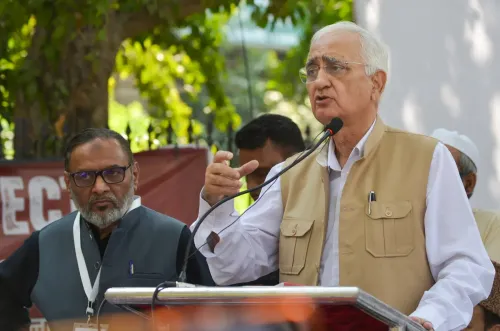
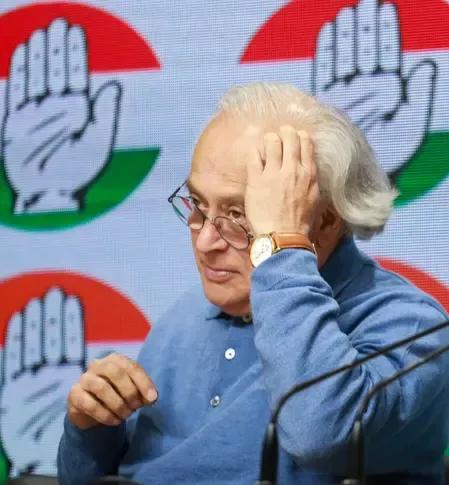
Senior Congress leader Salman Khurshid acknowledged the government's authority over NCERT content but drew a line at selective presentation. 'Yes, they can do that. Today, they have the authority and the power to include chapters and questions in NCERT textbooks. The issue is not whether the topic is included. The real question is how it is presented and what commentary accompanies it. No one can deny the historical fact that the Emergency took place. That reality has to be accepted,' Khurshid said.
He further pressed for the full arc of events to be covered. 'Are its consequences being discussed? Is there any mention that elections were held after the Emergency, that Congress lost those elections, and that later Congress returned to power with a two-thirds majority? If historical facts are being taught, then the complete picture should be presented. The entire reality should be included and not selectively highlighted or cherry-picked,' he added.
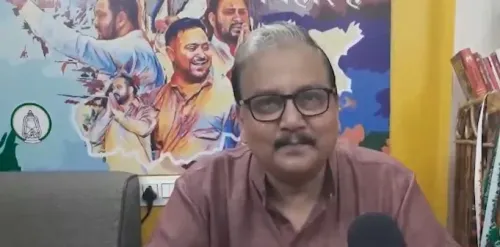
NCP (SP) national spokesperson Anish Gawande supported including the Emergency but questioned why other subjects were being dropped from the curriculum. 'The Emergency should definitely be taught in NCERT textbooks, but why are other subjects being removed? Chapters about people who sacrificed their lives for the country should also continue to be taught,' he said.
Congress MLA Vijay Wadettiwar alleged an attempt to distort history. He argued that the Emergency was officially declared and was not implemented through any hidden agenda, contrasting it with what he described as present-day conditions. 'What is happening today, according to us, is an undeclared Emergency. People cannot freely speak against the government or express dissent. This is an attempt by the BJP government to mislead the younger generation,' Wadettiwar said. He noted that students today have access to artificial intelligence and multiple information sources and are capable of verifying facts independently.
Rashtriya Janata Dal (RJD) MP Sudhakar Singh took a more pragmatic line. 'The government in power will teach history according to its own perspective; there is nothing unusual in that. When we come to power, we will also make changes. That is how it works,' he said.
Ruling Alliance Defends the Move
Shiv Sena spokesperson Shaina N.C. described the 1975–77 period as a dark phase in Indian history and argued that young people must understand how democratic rights were curtailed. 'Emergency was a dark phase in the history of India. The way freedom of expression, fundamental rights, press censorship, sending people to jail, and sterilisation drives… it is very important to know about this youth generation. Because, along with fundamental rights, fundamental duties were also sabotaged. And our youth generation may not even know about the JP movement. So today, when we talk about 1975–77, the youth generation should know how many people sacrificed, gave up and struggled for India to be a developed democracy,' she said.
Union Education Minister Dharmendra Pradhan welcomed the inclusion, saying the NCERT had made the correct decision. 'That is the right thing to do. NCERT has done the right thing. Future generations of the country should know, read and understand the dark chapter of the Emergency so that such a situation does not arise again,' he said.
BJP Voices: From Jammu to the Film Industry
BJP Jammu president Sat Paul Sharma echoed the minister's view, adding specific cultural references to illustrate the period's repression. He cited the banning of the film 'Aandhi' — reportedly because its lead actress bore a resemblance to a prominent national leader — and the blacklisting of singer Kishore Kumar's songs from government-sponsored events as examples of the censorship that prevailed during the Emergency years.
Context and What Comes Next
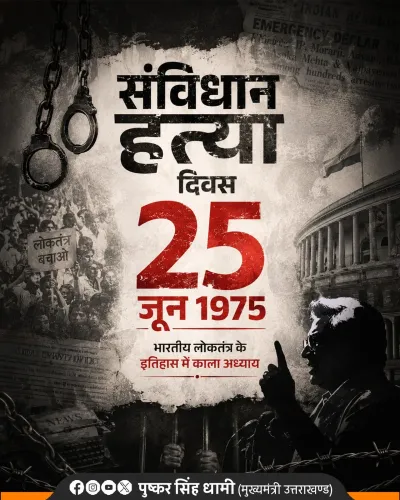
The Emergency, imposed by then Prime Minister Indira Gandhi from 25 June 1975 to 21 March 1977, suspended civil liberties, censored the press, and saw the mass detention of political opponents. The NCERT curriculum revision is part of a broader overhaul of school textbooks currently under way. Critics, including the Opposition, argue that the revision process has lacked transparency and that several chapters on other historical subjects have been quietly removed. The government maintains that the updates align with the National Education Policy (NEP) 2020. How the Emergency chapter is ultimately framed in the final textbook — and what surrounding context it carries — will likely determine whether the political controversy subsides or intensifies when the books reach classrooms.
Point of View
The aftermath, and the electoral verdict that followed. What the Opposition's 'complete picture' demand quietly highlights is a broader pattern in the current curriculum revision — additions that suit one political argument, removals that inconvenience another. The real accountability question is not whether the Emergency is taught, but whether the NCERT's revision process is transparent enough to withstand that scrutiny.
NationPress
24 Sept 2026
Frequently Asked Questions
What is the NCERT Emergency chapter controversy about?
The NCERT has included a chapter on the Emergency (1975–77) in the Class 9 textbook, triggering a political debate over how the period is presented. Opposition leaders say they support teaching the subject but want the full historical context — including the elections held after the Emergency and Congress's subsequent return to power — to be included, not just the imposition of the Emergency itself.
What did Congress leader Salman Khurshid say about the NCERT chapter?
Khurshid acknowledged the government's authority to set NCERT content but stressed that historical events must be presented in their entirety. He specifically asked whether the chapter would mention that elections were held after the Emergency, that Congress lost those elections, and that Congress later returned to power with a two-thirds majority.
How did the ruling alliance respond to the NCERT decision?
Union Education Minister Dharmendra Pradhan welcomed the move, saying future generations must know and understand the Emergency so it is never repeated. Shiv Sena's Shaina N.C. and BJP Jammu president Sat Paul Sharma also backed the inclusion, citing press censorship, detentions, and cultural bans as critical lessons for young Indians.
Why is the Opposition concerned about other chapters being removed?
NCP (SP) spokesperson Anish Gawande raised the concern that while the Emergency chapter is being added, other subjects — including chapters about people who sacrificed their lives for the country — are reportedly being dropped. Critics argue this points to a selective approach to curriculum revision rather than a comprehensive one.
What was the Emergency in India?
The Emergency was a 21-month period from 25 June 1975 to 21 March 1977, during which then Prime Minister Indira Gandhi suspended civil liberties, censored the press, and ordered the mass detention of political opponents. It remains one of the most contested episodes in post-Independence Indian democratic history.