NCERT political science panel row: Opposition alleges RSS-ABVP influence in Class 11-12 textbooks
Synopsis
The NCERT’s quietly notified 20-member panel for Class 11-12 political science textbooks has ignited a full-blown political storm. With at least four members allegedly linked to the RSS or ABVP, the Opposition says this is not a curriculum update — it is an ideological takeover of what millions of Indian teenagers learn about politics and governance.
Key Takeaways
NCERT notified a reconstituted 20-member Textbook Development Team on 14 August for Classes 11 and 12 political science .
At least four members of the panel allegedly have links to the RSS , ABVP , or affiliated organisations, according to Opposition leaders.
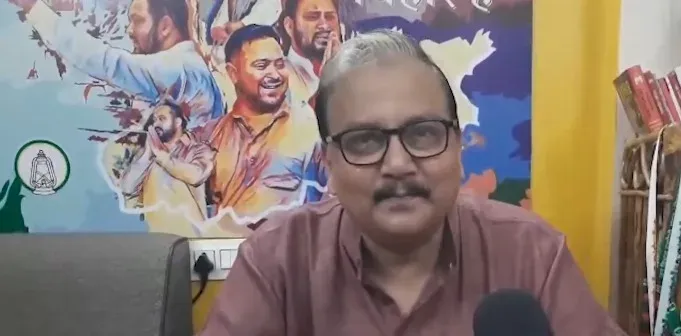
RJD MP Manoj Kumar Jha accused the government of ‘playing with the future of the country’ by including RSS-linked individuals.
Congress MP Jebi Mather cited a 12-year pattern of RSS influence being inserted into educational institutions under BJP rule.
Sriniwas countered that UPA governments had favoured Left-leaning academics and rewrote history around the Nehru-Gandhi narrative.
The panel’s mandate includes integrating Indian Knowledge Systems (IKS) and ‘cultural rootedness’ into political science textbooks.
The Opposition on Thursday, 20 August sharply criticised the government over the reconstitution of the National Council of Educational Research and Training (NCERT)'s Textbook Development Team (TDT) for Classes 11 and 12 political science, alleging that members with ties to the Rashtriya Swayamsevak Sangh (RSS) and its student wing, the Akhil Bharatiya Vidyarthi Parishad (ABVP), were being inducted into the education system. Multiple parties accused the government of “playing with the future of the country.”
What the Reconstituted Panel Covers
The NCERT notified the reconstituted 20-member Textbook Development Team on 14 August, tasking it with developing new political science textbooks for senior secondary classes. The panel’s mandate includes integrating ‘cultural rootedness’, Indian Knowledge Systems (IKS), equity and inclusion, value education, and educational technology. At least four members of the team reportedly have links to the RSS, ABVP, or other Sangh-affiliated organisations, according to Opposition leaders.
Opposition Voices: What Leaders Said
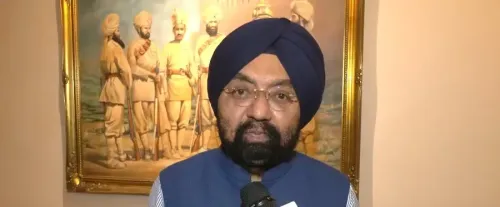
Rashtriya Janata Dal (RJD) MP Manoj Kumar Jha questioned the inclusion of such individuals in educational material development. “Why shouldn’t we raise questions? You are involving the very people and organisations that have destroyed the education ecosystem. Haven’t you understood what Gen Z wants? They want an honest examination system, an education system that leads to employment, and one that is inclusive in nature. By bringing in people trained in Nagpur, you are, frankly, acting in your own interests. You are playing with the future of the country,” Jha said.
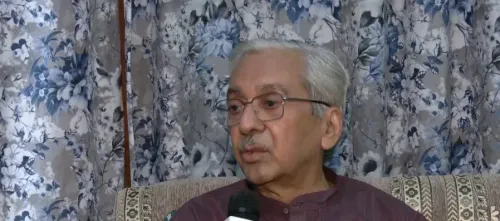
Congress leader Mani Shankar Aiyar alleged that the RSS-BJP was attempting to control institutions across the country. “The RSS-BJP are trying to take control of every institution in our country. Until our government returns, we will have to bear with this,” he said.
Dravida Munnetra Kazhagam (DMK) spokesperson T.K.S. Elangovan alleged that the RSS and Bharatiya Janata Party (BJP) sought to dismantle established institutions. “The RSS and BJP want to change everything. They don’t want anything scientific,” he said.
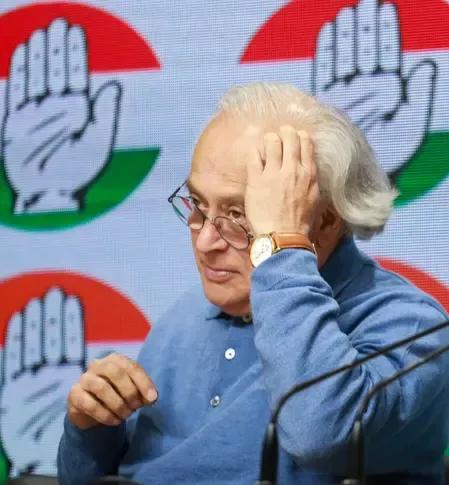
Congress leader Ajay Kumar Lallu alleged that BJP governments at the Centre and in states had placed RSS-linked individuals in key institutional positions. Congress MP Jebi Mather said her party had consistently opposed what she described as the RSS’s growing influence in educational institutions, referencing the Congress’ earlier opposition to a Vice-Chancellor’s participation in an RSS programme in Kerala. “There has been a pattern under the BJP government for the past 12 years. Whether it is NCERT textbooks, universities, vice-chancellors or history books, we are witnessing the RSS agenda being inserted into educational institutions,” Mather said.
BJP’s Counter-Argument
BJP leader T.R. Sriniwas dismissed the allegations, turning the criticism back on the Opposition. He accused previous United Progressive Alliance (UPA) governments of favouring Left-leaning academics in educational institutions and textbook development. “They allege that they have RSS links. So what? I have a huge list of Left-leaning people who were associated with UPA-I and UPA-II and influenced institutions and history writing. The entire history was rewritten so that children were repeatedly taught about only the Nehru-Gandhi narrative through NCERT textbooks,” Sriniwas said.
Broader Context
This is not the first time NCERT’s curriculum revision process has drawn political fire. The council has faced scrutiny over content changes in recent years, including the removal and modification of chapters in social science and history textbooks. The latest controversy centres on who gets to shape the political science curriculum for senior secondary students — a subject that directly informs civic understanding among millions of young Indians. With the new TDT’s mandate explicitly including ‘cultural rootedness’ and IKS, the debate over the ideological direction of public education is set to intensify.
Point of View
Unresolved question: who owns the narrative in Indian public education? The BJP’s counter-argument — that the Left did it first under UPA — is not without historical basis, but it sidesteps the core accountability issue: whether the current panel selection process has any transparent, merit-based criteria. The mandate’s inclusion of ‘cultural rootedness’ alongside equity and IKS is deliberately broad, giving the panel wide interpretive latitude. What is missing from this entire debate is the student — millions of Class 11 and 12 learners whose civic formation will be shaped by whichever ideological current wins this institutional tug-of-war.
NationPress
4 Oct 2026
Frequently Asked Questions
Why is the NCERT textbook panel for political science controversial?
The NCERT reconstituted a 20-member Textbook Development Team for Classes 11 and 12 political science, notified on 14 August, and the Opposition alleges at least four members have links to the RSS, ABVP, or affiliated organisations. Critics argue this amounts to ideological influence over the political science curriculum taught to millions of senior secondary students.
What is the mandate of the new NCERT Textbook Development Team?
The team is tasked with developing new political science textbooks for Classes 11 and 12. Its mandate includes integrating ‘cultural rootedness’, Indian Knowledge Systems (IKS), equity and inclusion, value education, and educational technology into the curriculum.
What did BJP say in response to the Opposition’s allegations?
BJP leader T.R. Sriniwas dismissed the criticism, arguing that previous UPA governments had similarly favoured Left-leaning academics in educational institutions and textbook development. He alleged that NCERT textbooks under UPA repeatedly promoted only the Nehru-Gandhi narrative.
Which Opposition parties have spoken out against the NCERT panel reconstitution?
The RJD, Congress, and DMK have all voiced opposition. RJD MP Manoj Kumar Jha, Congress leaders Mani Shankar Aiyar, Ajay Kumar Lallu, and MP Jebi Mather, and DMK spokesperson T.K.S. Elangovan each raised concerns about RSS and ABVP influence in the panel.
Is this the first time NCERT’s curriculum process has faced political controversy?
No. NCERT has faced repeated scrutiny over content changes in recent years, including modifications to social science and history textbooks. The current row is part of a longer-running debate over the ideological direction of India’s public school curriculum.