NCERT ex-Director Rajput calls RSS panel row an 'absurd protest', defends textbook process
Synopsis
NCERT's former Director J.S. Rajput has gone on the offensive against critics of the RSS-linked textbook panel, calling the uproar 'absurd' and pointing out that left-leaning academics once wrote NCERT books without similar objections. His defence raises a sharper question: who really controls what India's children learn — and whether NCERT's internal safeguards are strong enough to withstand political pressure from any direction.
Key Takeaways
Rajput , former NCERT Director, called criticism over RSS-linked members in a new Political Science textbook panel an 'absurd protest' on 20 August .
Rajput argued that RSS affiliation does not automatically compromise an academic's integrity or output.
He noted that communist -affiliated academics previously authored NCERT textbooks without similar objections being raised.
Final authority over textbook content rests with NCERT 's internal faculty, not external panel members, Rajput stressed.
He said NCERT has not lost public trust, citing the esteem civil servants hold for its textbooks, while acknowledging past controversies.
Rajput cited NTA failures as a values problem, invoking educationist Dr D.S.
Kothari 's call for 'goodness' alongside science and technology.
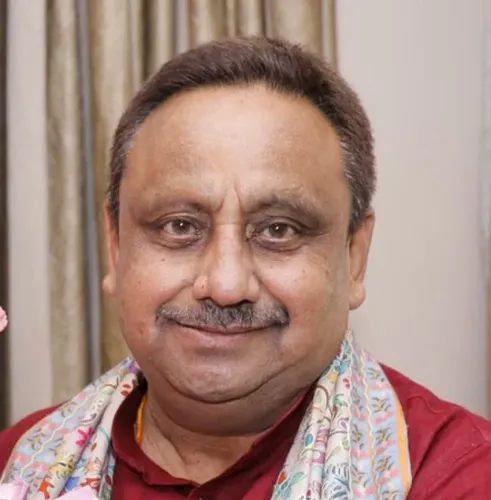
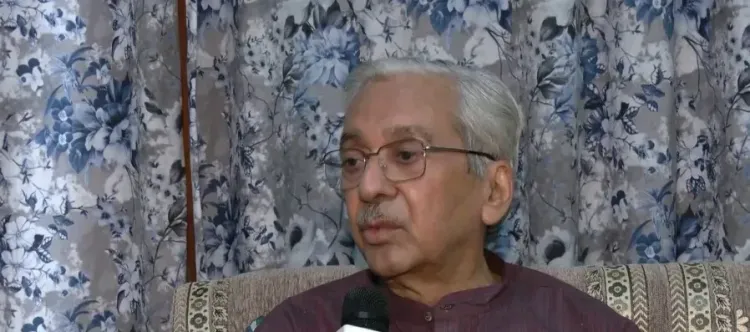
J.S. Rajput, former Director of the National Council of Educational Research and Training (NCERT), on Thursday, 20 August dismissed mounting criticism over the reported inclusion of members with links to the Rashtriya Swayamsevak Sangh (RSS) in a panel tasked with developing a new Political Science textbook, calling the backlash an 'absurd protest' with no relevance. Rajput argued that an individual's RSS affiliation should not be used to question their academic credibility or contributions.
Rajput's Defence of RSS-Linked Panel Members
Rajput was categorical in rejecting the premise that RSS association compromises academic integrity. 'If somebody is associated with the RSS, it does not mean that he is ideologically bound by its strategies or perceptions. An academic is an academic, and an honest academic is one who undertakes his academic work with all sincerity,' he said. He further questioned why the current controversy had not been applied consistently in the past, pointing out that left-leaning academics had previously authored NCERT textbooks without triggering similar objections. 'Earlier, communists used to write NCERT textbooks. Did they protest at that time?' he said, adding that the present criticism lacked coherence.
Who Holds Final Authority Over Textbook Content
Rajput was emphatic that the final content of NCERT textbooks remains the responsibility of the institution's own faculty and academic staff, regardless of who contributes inputs during the drafting process. 'Outsiders may give inputs, but it is for the faculty and academicians to decide what will finally go into the books,' he said. He stressed that NCERT's institutional mandate — to serve every child in India — insulates it from being captured by any single ideological viewpoint, provided internal processes are followed rigorously.
On NCERT's Public Trust and Past Controversies
Responding to suggestions that NCERT has lost public credibility as curriculum changes are increasingly viewed through a political lens, Rajput rejected the claim. 'NCERT is gaining more and more public acceptability,' he said, citing the esteem in which civil service officers hold the institution's textbooks. He acknowledged that controversies have occurred, including one during his own tenure when a curriculum recommendation that 'the basics of all religions must be taught to every child' was challenged and ultimately reached the Supreme Court. According to Rajput, the court 'ruled even more strongly than we had done, saying that this is the best panacea for strengthening secularism in this country.'
NTA Failures and the Question of Institutional Integrity
Rajput also addressed reported anomalies involving the National Testing Agency (NTA), arguing that systemic failures in examination bodies are ultimately a human problem. He invoked the legacy of educationist Dr D.S. Kothari, who in the mid-1970s had argued India needed science, technology, and production — but later revised his formulation to add a fourth element: goodness, or 'G for Gandhi'. 'He said, "I was wrong when I said only three. I had not anticipated that values were deteriorating,"' Rajput recalled. He argued that no institutional reform can substitute for the personal commitment and moral integrity of those entrusted with public responsibilities.
Textbook Reviews, Historical Omissions, and the Path Forward
On the question of whether internal textbook review processes should be made public, Rajput said there was no such obligation, noting that scrutiny occurs at multiple stages before publication. He acknowledged that historical distortions can arise when authors are 'very much ideologically constrained' and said new archaeological research, excavations, and technologies have generated facts that older textbooks did not reflect. He recalled approaching two eminent historians around 2000 to discuss updates, noting that scholarship must evolve with evidence. His prescription for NCERT going forward: identify academicians who are 'devoted to academics... competent in their field and committed to the young people of India,' irrespective of their other affiliations.
Point of View
But that the composition of a curriculum panel signals ideological intent in a subject as contested as Political Science. His assurance that NCERT faculty hold final editorial authority is the right institutional answer — but only if that internal process is genuinely independent and transparent, neither of which is currently verifiable. The NTA detour in the interview is telling: Rajput locates systemic failure in individual morality rather than structural design, which is precisely the kind of reasoning that allows institutions to avoid accountability. NCERT's credibility will ultimately rest not on former directors defending it, but on whether its textbook review process can withstand public scrutiny.
NationPress
4 Oct 2026
Frequently Asked Questions
Why is there controversy over RSS-linked members on the NCERT textbook panel?
Critics have raised concerns that including members with links to the RSS in a panel developing a new Political Science textbook could introduce ideological bias into school curriculum. The debate reflects broader public anxiety about the political direction of India's national education content.
What did former NCERT Director J.S. Rajput say about the controversy?
Rajput dismissed the criticism as an 'absurd protest' with no relevance, arguing that RSS affiliation does not compromise academic integrity. He also pointed out that communist-affiliated academics had previously written NCERT textbooks without triggering similar objections.
Who has the final say over what goes into NCERT textbooks?
According to Rajput, final editorial authority rests with NCERT's internal faculty and academic staff. External experts and panel members may contribute inputs, but the institution's own academicians decide what content is ultimately published.
Has NCERT lost public trust amid curriculum controversies?
Rajput rejected this suggestion, saying NCERT continues to enjoy widespread public acceptance, particularly among civil servants who credit its textbooks for their success. He acknowledged past controversies but maintained the institution's credibility remains intact.
What did Rajput say about NTA exam failures and institutional integrity?
Rajput attributed NTA's reported failures to a decline in moral values among individuals entrusted with important responsibilities, rather than structural flaws alone. He cited educationist Dr D.S. Kothari's revised formula — adding 'goodness' to science, technology, and production — as the guiding principle for institutional reform.