What led to the NHRC's intervention in the Jevar building collapse that killed four labourers?
Synopsis
The NHRC has taken serious action following a tragic building collapse in Jevar, Uttar Pradesh, where four labourers lost their lives. The incident has raised alarming issues regarding human rights violations and the illegal construction of the building. What actions will the NHRC take to ensure accountability?
Key Takeaways
NHRC's intervention highlights serious human rights concerns.
Four labourers tragically lost their lives in the collapse.
Incident raises alarm about illegal construction practices.
Report requested from local authorities to ensure accountability.
Importance of adhering to safety regulations in construction.
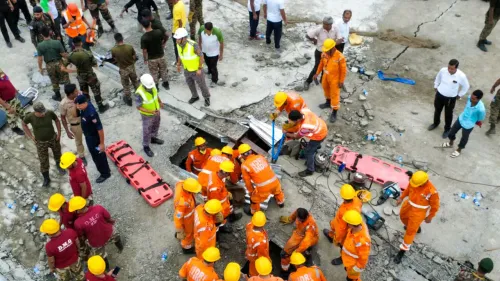
New Delhi, Dec 3 (NationPress) The National Human Rights Commission (NHRC) has initiated suo motu action in response to a media report indicating that four labourers lost their lives and many more were injured when a three-storey building under construction collapsed in mere seconds in Nagla Hukum Singh village, located in Jevar of Uttar Pradesh’s Gautam Buddha Nagar district. This tragic event occurred on November 19, and reports reveal that the building was erected without the necessary permissions. One of the ten labourers present on the site remains unaccounted for.
The NHRC noted that the details from the news report, if accurate, highlight serious human rights violations concerning the victims. Consequently, the commission has served notices to both the District Magistrate of Gautam Buddha Nagar, Medha Roopam, and the Commissioner of Police, demanding a comprehensive report within a two-week timeframe.
The commission has requested that the report include the health status of the injured individuals and any compensation that may have been granted to the families of the deceased and the injured labourers.
A media report published on November 20 stated that the building collapsed “from bottom to top within seconds” while the shuttering for the third floor was being dismantled, resulting in multiple labourers being trapped under debris.
Formed under the Protection of Human Rights Act, 1993, the NHRC serves as an independent body focused on advocating for and safeguarding human rights in India.
Its core mission is to protect and promote human rights, which encompass the rights to life, liberty, equality, privacy, and dignity, as enshrined in the Constitution and international treaties enforceable by Indian courts.
The NHRC possesses the authority to take suo motu (on its own initiative) actions based on media reports, public knowledge, or other sources, even in the absence of formal complaints regarding human rights violations.
Point of View
It is crucial to emphasize that the NHRC's intervention in this tragic incident underscores the pressing need for adherence to safety regulations in construction sites across the nation. The loss of lives due to negligence is unacceptable, and accountability must prevail to protect vulnerable workers.
NationPress
30 Sept 2026
Frequently Asked Questions
What caused the building collapse in Jevar?
The building reportedly collapsed due to illegal construction practices, with allegations that it was built without the necessary permissions.
What actions has the NHRC taken regarding this incident?
The NHRC has initiated suo motu cognizance and has requested a detailed report from local authorities concerning the incident and the status of the injured.
How many labourers were affected by the building collapse?
The collapse resulted in four fatalities, and several other labourers sustained injuries, with one still unaccounted for.
What steps are being taken to support the victims' families?
The NHRC has requested information on compensation provided to the next of kin of the deceased and to injured labourers.