Pak drug cartels push meth labs in Kerala, Tamil Nadu as bust chokes smuggling routes
Synopsis
Pakistan-based drug cartels, squeezed by record Indian seizures and the Taliban's 95% wipeout of Afghan poppy production, are now reportedly ordering associates in Kerala and Tamil Nadu to set up local meth labs — cutting smuggling risk and giving Islamabad deniability. Intelligence officials say kingpin Haji Salim is personally directing the shift, with the southern maritime route to Sri Lanka and Thailand at the centre of the strategy.
Key Takeaways
Pakistan-based narcotic cartels are reportedly directing associates to set up homegrown meth labs in Kerala and Tamil Nadu .
A Taliban cultivation ban from 2022 caused a 95 per cent drop in Afghan drug output from 232,000 hectares , forcing cartels towards synthetic drugs.
Methamphetamine production is reportedly ten times higher in potential output compared to opium or heroin, and cheaper to produce year-round.
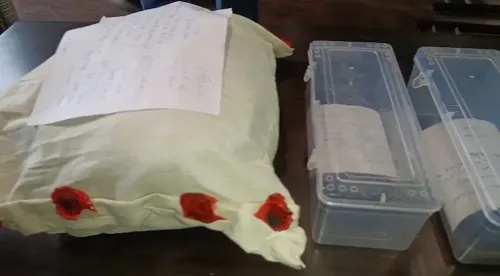
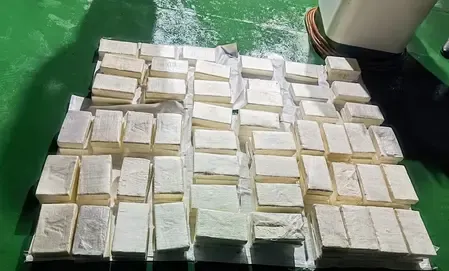
The NCB and Delhi Police seized 95 kg of meth from a clandestine lab in Greater Noida in 2024 .
Drug lord Haji Salim is reportedly in contact with associates in Sri Lanka , Kerala , and the Maldives to accelerate domestic lab setups.
The Iran war has further disrupted traditional smuggling corridors used by cartels linked to Dawood Ibrahim and Haji Salim .
Pakistan-based narcotic cartels are reportedly directing their Indian associates to set up homegrown methamphetamine-producing units in Kerala and Tamil Nadu, according to intelligence officials. The shift in strategy, officials say, is a direct response to intensified drug seizures by the Narcotics Control Bureau (NCB) and other agencies that have effectively choked traditional cross-border smuggling corridors.
From Poppy Fields to Synthetic Labs
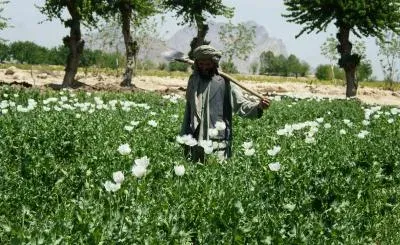
The roots of this tactical pivot lie in Afghanistan. Before the Taliban's return to power, poppy cultivation across 232,000 hectares fed a vast heroin and opium trade that Pakistan-based cartels relied on heavily. A sweeping cultivation ban enforced by the Taliban — primarily from 2022 onwards — triggered a 95 per cent collapse in Afghan drug production, replacing narcotic crops with potatoes, grain, and vegetables.
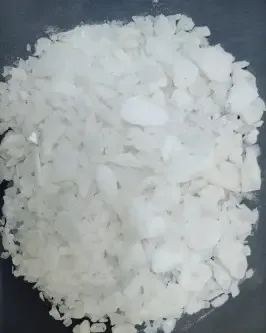
With the Afghan supply chain dismantled, cartels based in Pakistan and Myanmar pivoted sharply to synthetic drugs — chiefly methamphetamine. Unlike opium or heroin, meth can be produced year-round, with potential output reportedly ten times higher than field-grown narcotics. Its lower production cost also makes it cheaper and, by extension, accessible to a far broader consumer base, driving demand across Indian and international markets alike.
Intelligence Agencies Sound the Alarm
An official from the Intelligence Bureau (IB) said that cartels which had established large synthetic drug manufacturing units in Myanmar and Pakistan are now pushing their Indian recruits to replicate the model domestically. 'This has been done due to the massive drug busts that have taken place in India in recent months. The new tactic by the narcotic cartels is similar to the one that Pakistan tries to adopt when it comes to terror-related activities,' the official said.
A second official noted that dispersing production across multiple homegrown units also eliminates the interception risk on Indian or international waters — a route that agencies have been monitoring closely. Notably, the ongoing Iran war has further disrupted the overland smuggling corridors that cartels had long relied upon, compounding pressure on networks linked to figures such as Dawood Ibrahim and Haji Salim.
The Southern Market Under Pressure
Intelligence agencies have learnt that Haji Salim — identified as a key controller of the southern drug route — has been in active contact with associates in Sri Lanka, Kerala, the Maldives, and even some imprisoned operatives, directing them to set up clandestine meth labs at scale. 'There is a lot of focus being given to both Tamil Nadu and Kerala. The recent drug busts have affected the southern markets and also the supplies into Sri Lanka and eventually Thailand,' an official said.
Haji Salim is reportedly under significant pressure from international dealers following the disruption of southern supply lines. Officials believe he views a homegrown production ramp-up as the fastest way to offset losses — with the added strategic benefit that Pakistan can maintain plausible deniability in the event of any seizure, mirroring the logic behind what the IB official described as Pakistan's approach to domestic terror modules.
A Precedent Already Set
The blueprint is not entirely new. In 2024, the NCB and Delhi Police busted a clandestine meth lab in Greater Noida, adjacent to the National Capital Region, seizing 95 kg of methamphetamine in a single operation. Officials warn that cartels are now working to replicate and scale this model across many more states, with the southern region emerging as a priority target given its proximity to Sri Lanka and onward maritime routes to Southeast Asia.
As cartels adapt and decentralise, Indian law enforcement agencies face the harder challenge of tracking diffuse, locally-sourced operations that leave fewer cross-border footprints — and a growing race between interdiction and innovation in illicit drug manufacturing.
Point of View
Localise, and manufacture deniability. The Taliban's drug ban did what years of global counter-narcotics efforts could not, but it has inadvertently accelerated a far harder problem for Indian agencies to solve. Tracking a ship carrying contraband is tractable; dismantling dozens of small-scale urban meth labs run by locally-recruited operatives with no direct Pakistan footprint is a fundamentally different challenge. The southern maritime corridor — linking Kerala to Sri Lanka and onward to Thailand — is now both a supply chain and a geopolitical vulnerability, and the focus on that corridor deserves far greater public and policy attention than it currently receives.
NationPress
9 Oct 2026
Frequently Asked Questions
Why are Pakistan-based drug cartels shifting to meth labs inside India?
Pakistan-based drug cartels are reportedly setting up homegrown meth labs in India primarily because intensified NCB-led drug busts have choked traditional cross-border smuggling routes. The Taliban's ban on Afghan poppy cultivation also eliminated their main heroin and opium supply, pushing them towards domestic synthetic drug production that is harder to intercept and easier to deny.
How did the Taliban's drug ban affect narcotics supply to India?
The Taliban enforced a cultivation ban from 2022, resulting in a 95 per cent collapse in Afghan drug output — down from production across 232,000 hectares. This dismantled the primary heroin and opium pipeline that Pakistan-based cartels depended on, forcing a rapid pivot to synthetic drugs like methamphetamine.
Why are Kerala and Tamil Nadu specifically targeted for meth lab setups?
According to intelligence officials, recent drug busts have disrupted supplies to the southern Indian market and to onward routes into Sri Lanka and Thailand. Kingpin Haji Salim, who reportedly controls this corridor, is under pressure from international dealers and is believed to be directing associates in Kerala and the Maldives to set up labs to restore supply.
Has a meth lab linked to this network been busted in India before?
Yes. In 2024, the NCB and Delhi Police busted a clandestine meth lab in Greater Noida, near the National Capital Region, seizing 95 kg of methamphetamine. Officials say cartels are now working to replicate and scale this model across multiple states.
What makes methamphetamine easier to produce than heroin or opium?
Unlike opium and heroin, which depend on seasonal poppy cultivation, methamphetamine is a fully synthetic drug that can be produced year-round. Officials say potential output from meth labs is reportedly ten times higher than field-grown narcotics, and the lower production cost makes the drug cheaper and more accessible — driving wider consumption.