Pakistan blasphemy laws: Rights activists demand probe into 'blasphemy business group'
Synopsis
Rights activists in Pakistan are demanding a judicial inquiry commission to probe an organised 'blasphemy business group' allegedly weaponising the country's blasphemy laws against Christians and other minorities — citing a chilling pattern that runs from the burning of Shanti Nagar in 1997 to the forced conversion of minor girls and the jailing of nurses in 2021.
Key Takeaways
Rights activists at a Rwadari Tehreek national conference in Islamabad on 20 November 2026 demanded a judicial inquiry commission to probe an alleged 'blasphemy business group' in Pakistan.
Participants urged the Pakistan government to hold a parliamentary 'grand dialogue' on blasphemy law exploitation and to legislate against forced conversion of non-Muslim children .
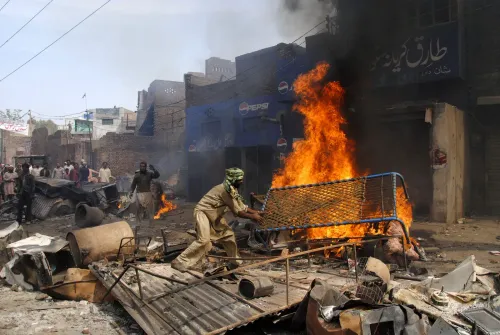
The commission was asked to investigate incidents including the Shanti Nagar burning (1997) , Jaranwala church attacks (2023) , and a Sargodha mob lynching (2024) .
The Voice of Pakistan Minority (VOPM) highlighted three cases of alleged forced conversion of minor girls — Maria Shahbaz , Neha Faqir , and Sonia Tariq — documented by USCIRF .
Christian nurses Navish Arooj and Maryum Lal , arrested in April 2021 for alleged blasphemy, were acquitted in February 2026 after spending five months in detention .
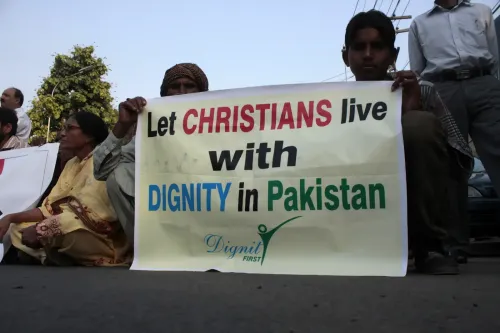
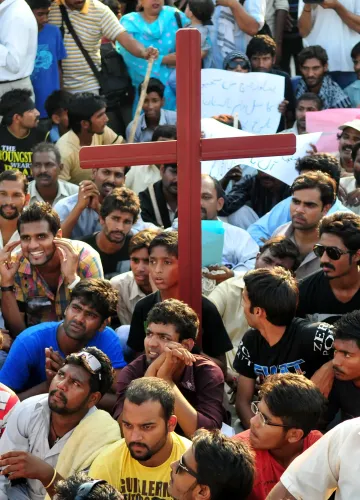
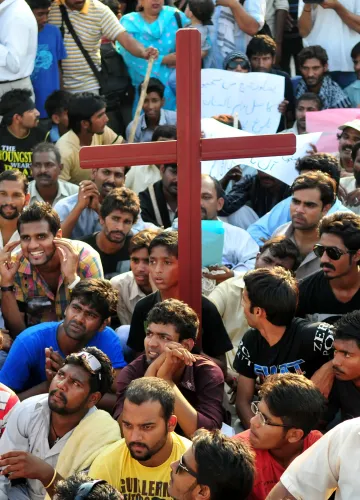
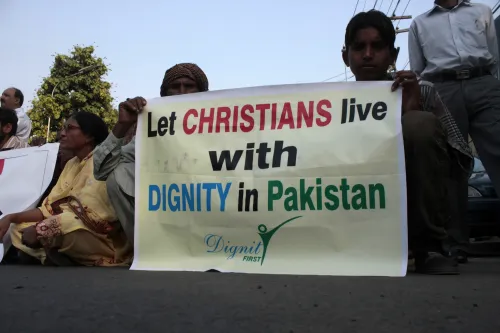
Human rights activists gathered in Islamabad on 20 November 2026 have demanded a formal judicial investigation into an alleged 'blasphemy business group' in Pakistan, accused of systematically misusing the country's blasphemy laws to persecute religious minorities, particularly Christians and Hindus. The demand was raised during a national conference organised by Rwadari Tehreek (Movement for Equality) to mark the International Day for Tolerance, according to reports citing Christian Daily International.
What the Conference Demanded
The conference, held under the theme 'Reclaiming Inclusivity and Democratic Spaces: Religious Freedom, Pluralism and Equal Citizenship in Pakistan', brought together rights activists, academics, policymakers, religious leaders, journalists, and civil society representatives. Participants adopted a declaration urging the Pakistan government to convene a 'grand dialogue' in parliament to address the exploitation of blasphemy laws and curb mob violence, lynching, and false accusations targeting religious minorities.
Participants proposed the formation of a judicial inquiry commission to investigate the alleged blasphemy business group, asserting that organised elements were weaponising blasphemy accusations for ulterior motives — contributing to the persecution of vulnerable citizens. They also called for legislation to criminalise the forced conversion of non-Muslim children.
Key Incidents Cited
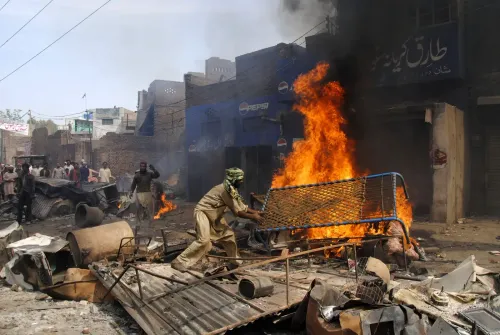
The conference called for the commission to investigate several landmark episodes of communal violence, including the burning of the Christian village of Shanti Nagar in 1997, attacks on Christian homes and churches in Jaranwala in 2023, and the mob lynching of an elderly Christian man in Sargodha in 2024. These incidents, activists argued, illustrate a recurring pattern of impunity that has never been fully addressed by Pakistan's justice system.
Forced Conversions and Minority Persecution
Earlier, on 6 November 2026, the Voice of Pakistan Minority (VOPM) raised concerns over the continued persecution of minorities in the first half of 2026, citing cases documented in reports by the US Commission on International Religious Freedom (USCIRF). The VOPM highlighted the alleged abduction and forced conversion of three minor girls — Maria Shahbaz, Neha Faqir, and Sonia Tariq.
According to the VOPM, a court reportedly upheld the marriage of Maria, described as a 12-year-old Christian girl, to a 30-year-old man accused of kidnapping her. In Neha's case, her family alleged that a man abducted her from a sewing centre and forced her to convert, while police reportedly delayed initial action. Sonia's family similarly alleged abduction and forced conversion; judges reportedly questioned a birth certificate identifying her as 15, while her alleged abductors claimed she was 20.
The VOPM urged that 'authorities must investigate such allegations promptly, assess age evidence fairly and hear girls' accounts without intimidation.'
Blasphemy Charges Against Christian Nurses
The VOPM also drew attention to the case of Christian nurses Navish Arooj and Maryum Lal, arrested in April 2021 after a colleague accused them of defiling a sticker bearing an Islamic inscription. Both women reportedly spent five months in detention and subsequently went into hiding. A court acquitted them in February 2026, citing inconsistencies in witness testimony and insufficient credible evidence. 'Their acquittal represented an important correction, but it could not erase years of insecurity,' the VOPM noted.
Broader Context
Pakistan's blasphemy laws — which carry penalties up to death for certain offences — have long drawn criticism from international human rights organisations. Critics argue the laws are disproportionately used against religious minorities and are vulnerable to abuse, with accusations frequently preceding mob violence before any judicial process is complete. This is not the first time civil society has called for reform; previous parliamentary attempts to amend or regulate blasphemy provisions have faced fierce opposition. How the government responds to this latest demand for a parliamentary dialogue and judicial commission will be closely watched by minority communities and international rights monitors alike.
Point of View
As activists now argue, an organised enterprise with identifiable beneficiaries. The demand for a judicial inquiry commission is significant precisely because it moves the conversation from 'reform the law' to 'prosecute those who weaponise it.' What mainstream coverage often misses is the gap between acquittals — like those of nurses Arooj and Lal — and justice: an acquittal after years of detention and hiding is not vindication, it is a delayed harm. Until Pakistan's state apparatus treats blasphemy abuse as a crime rather than a social grievance, the grand-dialogue call will remain aspirational.
NationPress
20 Nov 2026
Frequently Asked Questions
What is the alleged 'blasphemy business group' in Pakistan?
The term refers to what activists describe as organised elements within Pakistan that allegedly weaponise blasphemy accusations for personal, financial, or ideological motives — targeting religious minorities, particularly Christians and Hindus. Rights groups have called for a judicial commission to formally investigate the group and its alleged role in inciting mob violence and persecution.
What did the Rwadari Tehreek conference demand from the Pakistan government?
The conference demanded that Pakistan hold a parliamentary 'grand dialogue' on blasphemy law exploitation, establish a judicial inquiry commission to probe the alleged blasphemy business group, and pass legislation criminalising the forced conversion of non-Muslim children.
Which incidents of violence against minorities did activists highlight?
Activists cited the burning of the Christian village of Shanti Nagar in 1997, attacks on Christian homes and churches in Jaranwala in 2023, and the mob lynching of an elderly Christian man in Sargodha in 2024 as cases requiring formal investigation.
What happened to Christian nurses Navish Arooj and Maryum Lal?
Both nurses were arrested in April 2021 after a colleague accused them of defiling a sticker bearing an Islamic inscription. They spent five months in detention and went into hiding. A court acquitted them in February 2026 after finding inconsistencies in witness testimony and insufficient evidence.
What are the concerns raised over forced conversions of minor girls in Pakistan?
The Voice of Pakistan Minority (VOPM) cited three documented cases — Maria Shahbaz, Neha Faqir, and Sonia Tariq — involving alleged abduction and forced conversion. In one case, a court reportedly upheld the marriage of a 12-year-old Christian girl to a 30-year-old man accused of kidnapping her, raising serious concerns about child protection and access to justice.