Pakistan now in active conflict with Taliban it once called a strategic asset
Synopsis
Pakistan bet on the Taliban as a regional asset — and got a war instead. A Columbia Political Review analysis lays bare how Islamabad's assumption that past support could be converted into control collapsed the moment the Taliban had a country to govern. With 57 civilians killed in one quarter alone and over 1,46,000 Afghans deported in 2026, the cost of that miscalculation is now measured in bombs and deportations.
Key Takeaways
Pakistan is now in active military conflict with the Taliban government it once backed as a strategic asset, according to a Columbia Political Review analysis.
A June 2026 Pakistani airstrike killed either 13 civilians (per Taliban) or 26 militants (per Pakistan), illustrating the routine clash of narratives.
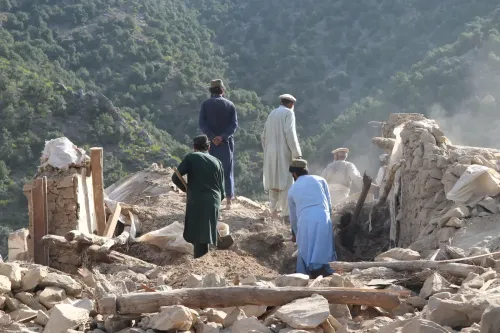
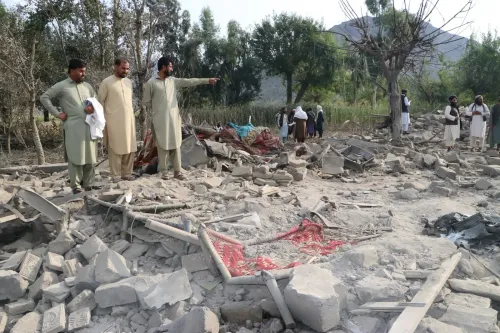
UNAMA recorded 57 killed and 342 injured in cross-border violence between 1 April and 30 June 2026 , attributing all civilian casualties to Pakistani security forces .
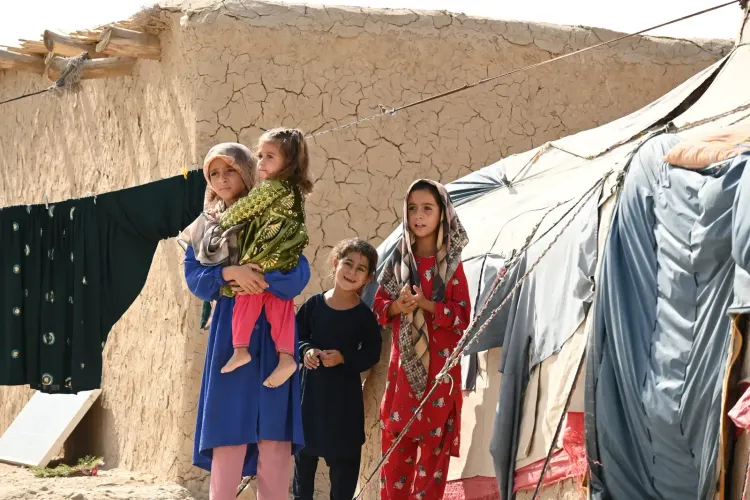
Pakistan has deported over 1,46,000 Afghan refugees in 2026 alone, straining an already acute humanitarian situation.
The TTP's ideological and ethnic ties to the Afghan Taliban make suppression demands by Islamabad politically toxic for the Taliban leadership.
Analysts argue Pakistan's core error was assuming that the Taliban's historical dependence on Islamabad could be converted into ongoing control once it was in government.
Pakistan once wagered that the Taliban's return to power in Afghanistan in 2021 would hand Islamabad decisive strategic leverage across the region. That bet has comprehensively unravelled — the relationship has since deteriorated into open military confrontation, with airstrikes, mass deportations, and a mounting civilian toll reshaping South Asia's most volatile bilateral dynamic, according to an analysis published in Columbia Political Review.
From Allies to Adversaries
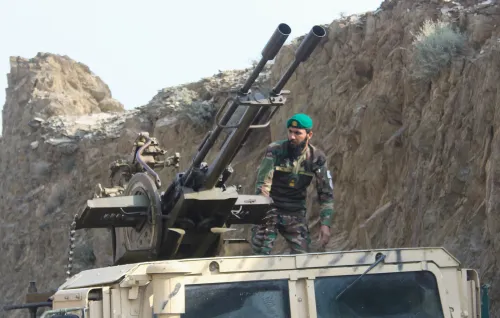
During the United States occupation of Afghanistan, Pakistan provided the Taliban with safe haven and intelligence support, a calculated investment in future influence. When the Taliban seized Kabul in 2021, the prevailing assumption in Islamabad was that deep ties would follow. Instead, the opposite happened. The Taliban, now responsible for governing a sovereign state, proved unwilling to subordinate its own political authority and security priorities to Pakistani interests — a miscalculation that analysts say was fundamental.
Anaya Qayyum, writing in Columbia Political Review, captured the shift starkly: 'Islamabad assumed that the Taliban's comeback into power would become strategic leverage in the region, but instead it led to a recurring security liability as the Taliban government was unwilling to subordinate its own political authority and security priorities. Pakistan increasingly viewed Afghanistan as a security threat, and by 2025 the relationship had moved into direct military confrontation.'
The TTP Problem and Cross-Border Strikes
A central driver of the breakdown is the Tehreek-e-Taliban Pakistan (TTP), which has sharply escalated attacks inside Pakistan while operating from safe havens on Afghan soil. Islamabad has pressed the Taliban government to suppress the TTP — a demand that places the Taliban in a deeply uncomfortable position. The TTP shares ideological roots with the Afghan Taliban, and its members are bound by Pashtun ethnic identity that cuts across the official border. Any Afghan Taliban crackdown on TTP fighters risks being read domestically as a betrayal of kin to appease a hostile Pakistani state, the report noted.
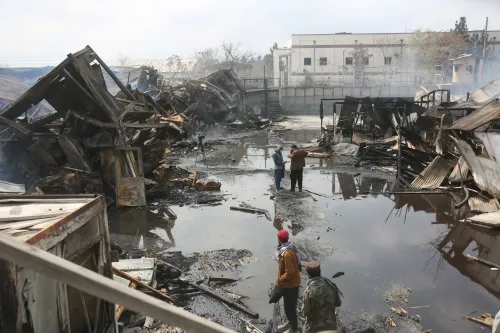
In response to TTP attacks, Pakistan launched cross-border airstrikes. In June 2026, one such strike became the subject of sharply conflicting official accounts: the Taliban said it killed 13 civilians and injured 14 others; Pakistan claimed it killed 26 militants. This pattern of duelling narratives — where the same strike is framed as either counterterrorism or civilian slaughter — has, according to the report, become routine.
Civilian Cost and Humanitarian Strain
The human toll is significant and independently documented. In July 2026, the United Nations Assistance Mission in Afghanistan (UNAMA) reported that 57 people were killed and 342 others injured in cross-border armed violence between 1 April and 30 June 2026. UNAMA attributed all cross-border civilian casualties recorded during that period to Pakistani security forces, identifying airstrikes and ground engagements as the primary causes of harm.
Beyond kinetic strikes, Pakistan has continued a large-scale deportation campaign. More than 1,46,000 Afghan refugees were deported in 2026 alone. As the conflict escalated after October 2025, aid organisations reportedly reduced services in border areas amid funding shortages, leaving displaced families with diminishing support at a critical time.
Why Afghan Sovereignty Makes Control Impossible
The report highlights a structural reason Pakistan's leverage strategy was always fragile: legitimacy in Afghanistan is historically defined by resisting foreign control. Afghans are acutely sensitive to Pakistani influence, and the Taliban has consistently framed itself as an independent Islamic nationalist movement that expelled foreign invaders. Accepting Pakistani direction — even covertly — would undermine that core identity claim.
Qayyum's analysis is direct: 'Pakistan miscalculated the Taliban's loyalty, but its bigger mistake was assuming that dependence could be converted into control. Once the Taliban had to govern Afghanistan rather than fight to retake it, it did not necessarily need Pakistani direction to retain that power.'
What Comes Next
With the conflict still escalating and diplomatic channels effectively closed, both countries appear locked in a cycle of strikes and counter-accusations that shows no sign of resolution. The broader regional consequence — a destabilised border, a humanitarian emergency, and a precedent for Pakistani military action on Afghan soil — will continue to reverberate. How far Islamabad is willing to push a war it did not plan for, and whether any third party can facilitate de-escalation, remains the defining open question.
Point of View
Largely unreported in South Asian mainstream media, is the clearest measure of where this ends up if no off-ramp is found.
NationPress
21 Oct 2026
Frequently Asked Questions
Why is Pakistan now in conflict with the Taliban in Afghanistan?
Pakistan is in conflict with the Taliban because the Taliban government has refused to suppress the Tehreek-e-Taliban Pakistan (TTP), which continues to carry out attacks inside Pakistan from Afghan soil. Islamabad's broader assumption that backing the Taliban's return to power would yield strategic influence proved wrong — once in government, the Taliban prioritised its own sovereignty over Pakistani interests.
What did the UN say about civilian casualties from Pakistan's airstrikes in Afghanistan?
The United Nations Assistance Mission in Afghanistan (UNAMA) reported in July 2026 that 57 people were killed and 342 others were injured in cross-border armed violence in Afghanistan between 1 April and 30 June 2026. UNAMA attributed all cross-border civilian casualties during this period to Pakistani security forces, with airstrikes and ground engagements identified as the primary causes.
Why won't the Taliban crack down on the TTP as Pakistan demands?
The TTP shares ideological roots with the Afghan Taliban and is bound to it by Pashtun ethnic identity that crosses the official border. For the Taliban government, acting against TTP militants would be perceived domestically as betraying their own people to appease Pakistan, which would undermine the Taliban's core legitimacy as independent Afghan nationalists.
How many Afghan refugees has Pakistan deported in 2026?
Pakistan has deported more than 1,46,000 Afghan refugees in 2026 alone. The deportations have compounded the humanitarian crisis along the border, where aid organisations have also reportedly scaled back services amid funding shortages.
What was Pakistan's original strategic calculation regarding the Taliban?
Pakistan calculated that the Taliban's return to power in 2021 would give Islamabad strategic leverage in the region, based on the support — including safe haven and intelligence — it had provided the Taliban during the US occupation of Afghanistan. That calculation proved wrong: the Taliban, once governing a state, had no structural need to defer to Pakistani direction, turning an expected asset into what analysts describe as a recurring security liability.