Rising Oil Prices Intensify Economic Strain on Pakistan
Synopsis
As geopolitical tensions rise and oil prices soar, Pakistan's economy faces mounting pressures. This article explores the implications of these challenges and highlights the critical state of the nation’s financial reserves.
Key Takeaways
Oil markets are currently volatile due to geopolitical tensions.
Pakistan's financial reserves have improved but remain under pressure.
The IMF warns of risks from rising import costs.
Access to international markets is limited due to economic fragility.
The ongoing Middle East conflicts further strain Pakistan's economy.
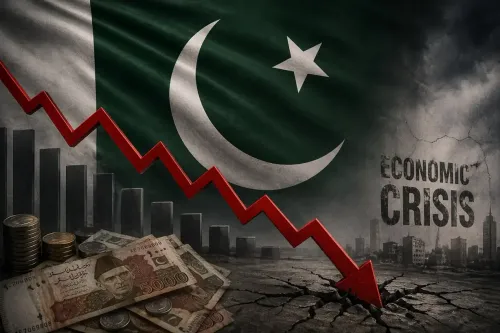
New Delhi, April 14 (NationPress) The March Economic Report from the Finance Division of the Government of Pakistan indicates that oil markets are under significant pressure due to multiple supply disruptions and escalating geopolitical tensions between Iran and the United States. Consequently, the volatility in oil markets remains pronounced, as highlighted in an article by the Karachi-based Business Recorder.
On March 30, the International Monetary Fund (IMF) noted that regions like the Middle East and South Asia face heightened risks due to limited reserves and restricted market access. The IMF emphasized that external shocks can exacerbate financing conditions, particularly as rising import costs for fuel, fertilizer, and food are expanding trade deficits and exerting pressure on local currencies.
This situation is especially pertinent for Pakistan, where as of March 19, 2026, reserves stood at 16.4 billion dollars—a marked increase from under 3 billion dollars (2,916.7 million dollars) as of February 3, 2023. However, these reserves include over 12 billion dollars in annual roll-overs from three allied nations, while the rest is sourced from various multilaterals/bilaterals and maturing debt linked to Eurobonds/Sukuk, as noted by the article.
Interestingly, this month, the United Arab Emirates requested a 3.45 billion dollar loan recall from Pakistan. It is worth mentioning that there has been no request to alleviate the 800 million dollars owed by Etisalat to Pakistan since the privatization of PTCL decades ago. Additionally, an extra 1.4 billion dollars was repaid this week on maturing Eurobonds.
Pakistan’s access to international commercial markets has remained constrained for the past three to four years, primarily due to a fragile economic state that has led to a non-investment grade rating from three leading international rating agencies.
Despite the much-publicized rating upgrade last year linked to the country being on an active IMF program, Pakistan is still classified within the highly speculative category, indicating a material default risk with little margin for safety. Financial obligations are being met, but the capacity for ongoing payments is at risk due to potential downturns in the business and economic climate.
The ongoing conflicts in the Middle East have certainly further hampered Pakistan’s economic landscape, mirroring a global trend, as stated in the article.
Point of View
Pakistan is at a critical juncture as rising oil prices and geopolitical tensions threaten to destabilize its already fragile economy. The government must navigate these challenges with strategic foresight to ensure economic stability and growth.
NationPress
5 Oct 2026
Frequently Asked Questions
Why are oil prices rising globally?
Oil prices are rising due to geopolitical tensions, supply chain disruptions, and increased demand in various regions.
What impact do rising oil prices have on Pakistan?
Rising oil prices increase import bills, widen trade deficits, and put pressure on the Pakistani rupee, straining the economy.
What is the current state of Pakistan's reserves?
As of March 19, 2026, Pakistan's reserves are at 16.4 billion dollars, a significant increase from earlier this year, but still vulnerable.
How has the UAE loan recall affected Pakistan?
The UAE's request for a 3.45 billion dollar loan recall adds pressure to Pakistan's financial obligations amidst rising economic challenges.
What are the risks for Pakistan's economy?
Pakistan faces risks such as limited access to foreign markets, speculative credit ratings, and vulnerability to external shocks.