Experts Alert: Pakistan's Economy at Risk from Global Shocks Without Urgent Reforms

Synopsis
As global tensions rise, experts warn that Pakistan's economy remains perilously vulnerable. Heavy reliance on imported fuel and weak finances necessitate urgent reforms to avert worsening conditions. Discover the critical steps needed for financial recovery and the implications of government measures.
Key Takeaways
Dependence on imported fuel poses significant risks.
Government measures are seen as temporary solutions.
Structural reforms are crucial for long-term economic stability.
Geopolitical tensions affect oil prices significantly.
Expert recommendations include stronger management of energy demand.
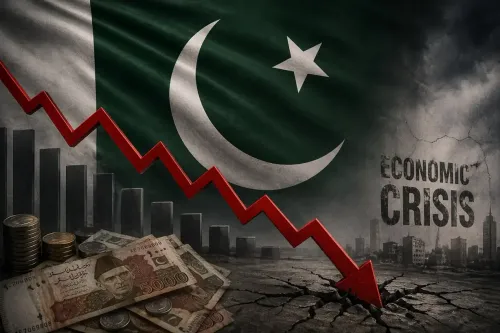
New Delhi, March 25 (NationPress) Analysts have raised concerns that Pakistan’s economy is significantly exposed to global disturbances because of its substantial dependency on imported fuel, weak external financial conditions, and restricted fiscal space. They warn that without immediate structural reforms, the situation is likely to deteriorate further.
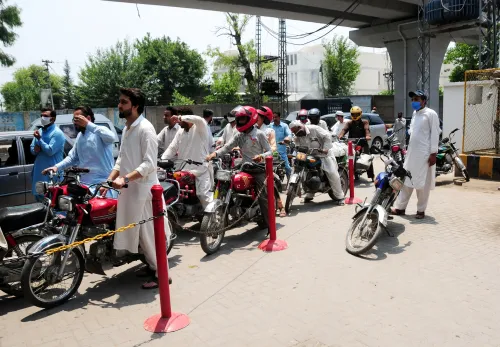
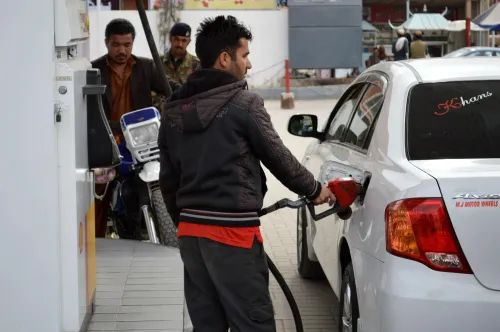
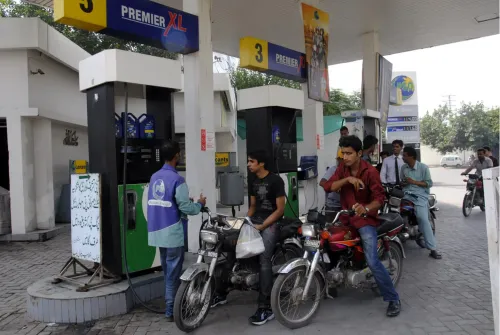
Nevertheless, the government's recent move to increase the petroleum levy on high-octane fuel is viewed as a strategy with some financial rationale, targeting consumers of luxury and high-performance vehicles, according to a report by Dawn.
By generating approximately Rs 9 billion monthly from those who can absorb the extra costs, the government intends to utilize these funds to shield the broader populace from escalating oil prices.
This approach offers only short-term relief amid rising global oil prices driven by geopolitical tensions, as highlighted in the report.
The initiative does little to address the underlying structural issues such as dependence on imported fuel, fragile external finances, and constrained fiscal capacity, according to the report.
These obstacles render the economy susceptible to global shocks, and without reforms, the situation could worsen progressively.
Finance Minister Muhammad Aurangzeb has recognized the gravity of the situation, stating that 'hope is not a strategy' while the world observes ongoing conflicts in the Middle East.
Even if hostilities subside, the repercussions on supply chains, production, and trade routes could keep oil prices elevated for an extended duration.
Previous government measures, like cutting fuel allowances and allowing partial work-from-home arrangements, are also perceived as limited in effectiveness.
Experts assert that more robust actions are necessary to manage energy demand effectively, as stated in the report.
Proposals such as early closures of markets, restaurants, and businesses—often avoided due to political sensitivities—may now need to transition into standard policy rather than temporary solutions.
Point of View
It is evident that Pakistan's economy requires immediate action to shield it from global volatility. The reliance on imported fuel and existing financial weaknesses pose significant risks. A proactive approach to structural reforms is essential for long-term stability and resilience against external shocks.
NationPress
23 Sept 2026
Frequently Asked Questions
Why is Pakistan's economy vulnerable to global shocks?
Pakistan's economy is vulnerable due to its significant reliance on imported fuel, weak external financial positions, and limited fiscal capabilities.
What measures has the government taken to address the economic issues?
The government has raised the petroleum levy on high-octane fuel to generate revenue aimed at protecting the public from rising oil prices.
What are the long-term implications of the current economic situation?
Without structural reforms, the economy could face worsening conditions, making it even more susceptible to global economic disturbances.
How does geopolitical tension affect oil prices in Pakistan?
Geopolitical tensions can disrupt supply chains and trade routes, leading to elevated oil prices, which significantly impact Pakistan's economy.
What additional measures are experts suggesting?
Experts are advocating for stronger actions, including early closures of businesses and a more effective management of energy demand.