Why Are Pakistan's Exports Declining for the Fifth Consecutive Month?
Synopsis
Pakistan's export sector is in turmoil as it experiences a fifth consecutive month of decline, with a staggering drop of 20.4% in December 2025. This situation highlights the nation’s significant economic challenges, driven by structural issues and an expanding trade deficit. Explore the implications of these trends for Pakistan's economy.
Key Takeaways
Exports fell by 20.4% in December 2025.
Trade deficit surged to $19.2 billion .
Imports increased by 2% , reaching $6.02 billion .
The decline reflects deeper structural economic issues.
Policy reforms are needed to enhance export competitiveness.
New Delhi, Jan 23 (NationPress) Pakistan’s export figures have dropped significantly by 20.4 percent in December 2025, marking the fifth straight month of decline, indicative of the severe economic challenges facing the nation, as per official statistics.
Exports fell to roughly $2.32 billion, down from nearly $2.91 billion in December 2024. In contrast, imports have continued to rise, increasing by approximately 2 percent to $6.02 billion, leading to an almost 24 percent surge in the monthly trade deficit to $3.7 billion, according to a report in The Maldives Insider.
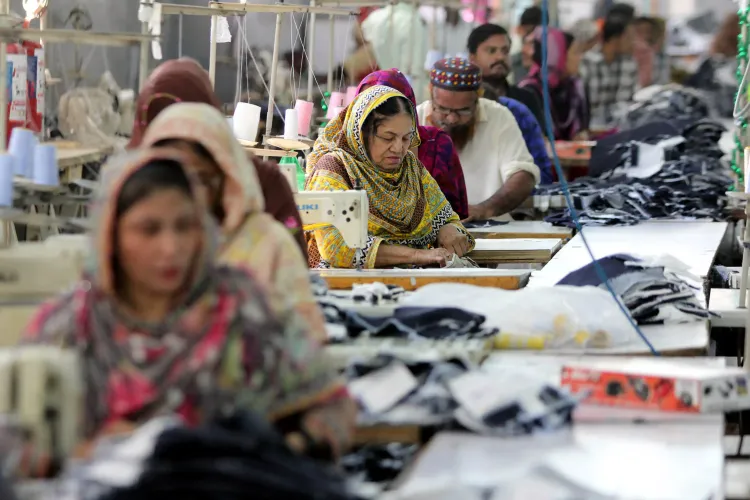
The ongoing decline in export revenue underscores deeper systemic challenges, such as limited product diversity, waning competitiveness, and inadequate integration into global value chains. This trend highlights a chronic struggle to generate adequate foreign exchange through exports, the article noted.
Data from the Pakistan Bureau of Statistics reveals that export revenues for the first half of the 2025–26 fiscal year (July–December) fell by around 8.7 percent to $15.18 billion, while imports surged by 11.3 percent to $34.39 billion.
Consequently, the trade deficit for this timeframe has skyrocketed to $19.2 billion, a staggering 35 percent increase compared to the same period last year.
Historically, Pakistan’s external sector has been plagued by persistent trade imbalances, with export performance often viewed as a weak link in maintaining economic stability.
Long-term data indicates that Pakistan’s merchandise exports have remained stagnant, struggling to keep up with increasing import demands or regional competitors.
In recent years, successive governments have heavily depended on foreign official flows, remittances from expatriate workers, and sporadic debt financing to stabilize the economy and bolster the balance of payments.
However, these interventions have merely concealed the underlying vulnerabilities in the export sector without tackling the root issues. The data from December clearly illustrates that this vulnerability is now manifesting as significant economic pressure.
The rise in imports, especially against the backdrop of a steep drop in exports, has heightened the strain on Pakistan’s trade balance.
With imports surpassing the $6 billion threshold in December—the highest point this fiscal year—it indicates an increased demand for foreign goods that has outstripped export capabilities.
Economic analysts suggest that recent policy shifts towards trade normalization and liberalization may have accelerated import demand quicker than anticipated. While a rebound in imports can signify economic activity, it simultaneously exacerbates the trade deficit when not accompanied by export growth.
This disparity between growing imports and shrinking exports underscores a persistent disconnect between domestic consumption requirements and the economy's ability to generate foreign exchange from international sales.
In a nation where both manufacturing and export sectors have faced challenges in scaling up, increasing reliance on imports further exacerbates the external account's strain and limits policy options for stabilizing reserves without jeopardizing domestic liquidity.
Point of View
It is crucial to recognize the challenges facing Pakistan's economy, particularly in the export sector. The consistent decline in exports not only reveals structural flaws but also emphasizes the urgent need for policy reform to enhance competitiveness and stabilize the economy. We stand committed to providing insights that foster informed discourse on these vital issues.
NationPress
24 Sept 2026
Frequently Asked Questions
What caused the decline in Pakistan's exports?
The decline in Pakistan's exports can be attributed to several factors, including limited product diversification, declining competitiveness, and insufficient integration into global value chains.
How much did imports rise in December 2025?
Imports in December 2025 rose by approximately 2 percent, reaching around $6.02 billion.
What is the trade deficit for the first half of the fiscal year?
The trade deficit for the first half of the 2025–26 fiscal year ballooned to $19.2 billion, a 35 percent increase compared to the previous year.
What measures have been taken to stabilize the economy?
Governments have relied on foreign official flows, remittances, and occasional debt financing to stabilize the economy and support the balance of payments.
How does the decline in exports affect Pakistan's economy?
The decline in exports pressures the trade balance, limits foreign exchange generation, and highlights the fragility of the economic structure.