Pakistan farmers protest for wheat price guarantee, end to corporate land grabs
Synopsis
Small farmers across Pakistan are demanding a guaranteed wheat support price of PKR 5,000 per maund and an end to corporate land grabbing — but with production costs already at PKR 3,761 per maund and no settled indicative price in sight, Pakistan's Rabi season is starting under a cloud of financial peril and food insecurity.
Key Takeaways
Nationwide protests organised by the Pakistan Kissan Rabta Committee (PKRC) on 19 October 2026 demanded a guaranteed wheat support price of PKR 5,000 per maund .
Farmers called for the immediate restoration of the Pakistan Agricultural Storage and Services Corporation (PASSCO) and an end to corporate land grabbing and GM crop expansion.
Wheat production costs have reportedly reached PKR 3,761 per maund during the current Rabi season , with water shortages adding further pressure.
PKRC leaders Tariq Mahmood and Riffat Maqsood warned that small landholders are being pushed to the brink of financial collapse.
Protesters opposed IMF and World Bank policies promoting market deregulation, which critics say have weakened public agricultural institutions.
The PTI Kisan Wing also urged the government to act, warning of a further deterioration in the agricultural crisis if left unaddressed.
Small farmers across Pakistan took to the streets on Monday, 19 October 2026, demanding a guaranteed support price of PKR 5,000 per maund for wheat and an immediate halt to corporate land grabbing and the spread of genetically modified (GM) crops, according to local media reports. The nationwide demonstrations underscored a deepening agricultural crisis gripping rural Pakistan.
Key Demands of the Protesters
The protests, organised by the Pakistan Kissan Rabta Committee (PKRC), centred on several urgent demands. Farmers called for a robust public procurement mechanism to shield growers from exploitation by powerful middlemen and market cartels. They also demanded the immediate restoration of the Pakistan Agricultural Storage and Services Corporation (PASSCO), whose absence has left small landholders without a safety net.
PKRC President Tariq Mahmood and Secretary General Riffat Maqsood stated that small landholders were being pushed to the brink of financial collapse. PKRC Federal Committee member Farooq Tariq said that 'the right path to national food security is based on genuine agrarian reforms, land redistribution for peasants who do not own land, transparent distribution of water, and support for local seed sovereignty, rather than giving national agricultural resources to commercial conglomerates and increasing GM crops,' according to leading Pakistani daily Dawn.
Opposition to IMF and World Bank Policies
Participants at the rallies openly opposed economic policies pushed by the International Monetary Fund (IMF) and the World Bank that promote market deregulation and the weakening of public agricultural institutions, Dawn reported. Critics argue that these structural adjustments have systematically eroded state support for the farming sector, leaving small cultivators exposed to volatile input costs and unpredictable market prices.
The Wheat Crisis and Rising Input Costs
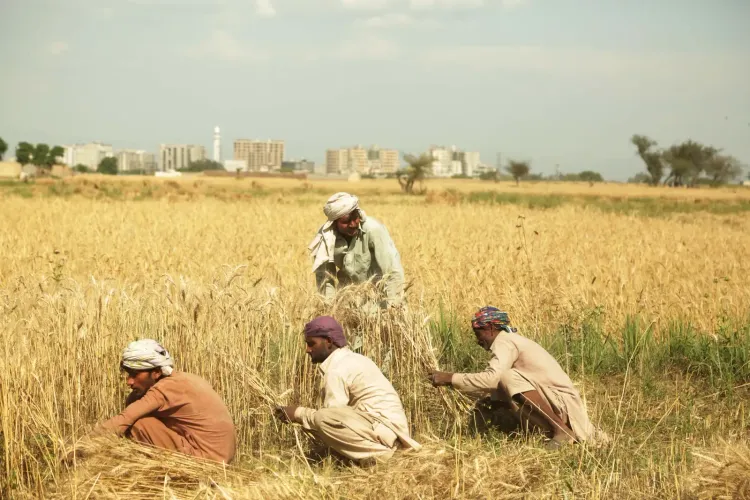
The protests come at a particularly precarious moment. Wheat cultivation in Pakistan is already facing severe headwinds at the start of the Rabi season, with production costs reportedly reaching PKR 3,761 per maund while water shortages continue to hamper irrigation supplies, according to The Express Tribune. The absence of a settled indicative wheat price and concerns over the condition of government wheat stocks have heightened uncertainty, sparking wider questions about food insecurity across the country.
Political Voices Join the Call for Reform
Khalid Nawaz Sadhraich, Central Information Secretary of the Pakistan Tehreek-e-Insaf (PTI) Kisan Wing, warned that the government must act decisively to resolve these problems or risk further deteriorating the agricultural crisis. His remarks reflect a rare cross-party convergence on the urgency of farm sector reform, even as Pakistan navigates a broader economic stabilisation programme.
What Happens Next
With the Rabi sowing season underway, the pressure on Islamabad to announce a credible support price and revive procurement infrastructure will only intensify. Agrarian reform advocates argue that without structural change — including land redistribution and water access transparency — Pakistan's food security outlook will remain fragile heading into 2026.
Point of View
Designed to improve fiscal efficiency, is creating the conditions for food insecurity at the grassroots. With production costs at PKR 3,761 per maund and no guaranteed price in sight, the economics of wheat farming are barely viable. Islamabad faces a structural dilemma: honour its stabilisation commitments to multilateral lenders, or rebuild the procurement and storage architecture that once kept rural Pakistan afloat. Neither path is painless, and the Rabi season clock is already ticking.
NationPress
19 Oct 2026
Frequently Asked Questions
What are Pakistan's farmers demanding in the October 2026 protests?
Farmers are demanding a guaranteed wheat support price of PKR 5,000 per maund, the restoration of PASSCO, an end to corporate land grabbing, and a ban on the expansion of GM crops. They are also calling for land redistribution, transparent water distribution, and a public procurement mechanism to protect them from middlemen.
Who organised the Pakistan farmer protests?
The protests were organised by the Pakistan Kissan Rabta Committee (PKRC). PKRC President Tariq Mahmood and Secretary General Riffat Maqsood led the demonstrations, which were held nationwide on 19 October 2026.
Why are wheat farmers in Pakistan facing a crisis right now?
Wheat production costs have reportedly reached PKR 3,761 per maund during the current Rabi season, while water shortages are affecting irrigation. The absence of a settled indicative government price and concerns over state wheat stocks have deepened financial uncertainty for small cultivators.
How do IMF and World Bank policies factor into the protests?
Protesters argue that IMF and World Bank-backed market deregulation policies have weakened public agricultural institutions and removed state support structures that once buffered small farmers from volatile input costs. Critics contend this has accelerated both corporate land grabbing and the push toward GM crops.
What is PASSCO and why are farmers demanding its restoration?
PASSCO, the Pakistan Agricultural Storage and Services Corporation, is a state body responsible for procuring and storing agricultural produce. Farmers say its effective absence has left them vulnerable to exploitation by middlemen and market cartels, and are demanding it be immediately reinstated to provide a reliable price floor.