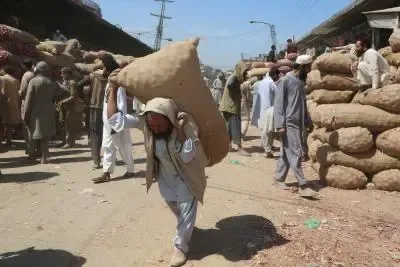
Pakistan food prices 2026: Faisalabad residents cry foul as wheat hits PKR 5,600
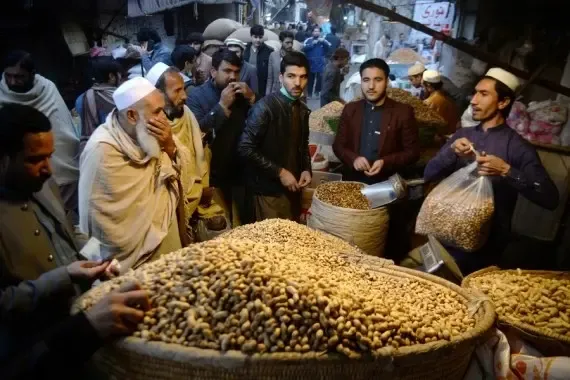
Synopsis
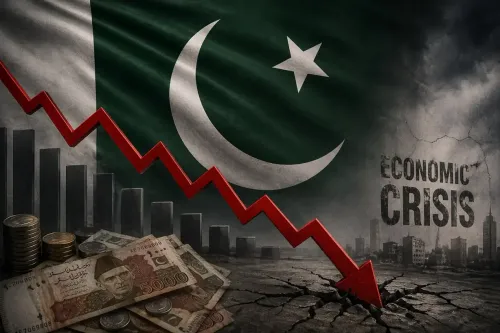
In Faisalabad, wheat is selling at nearly 47% above the official government rate and enforcement bodies are visibly absent — and this is not an isolated incident. Pakistan's 106th-place ranking on the 2026 Global Hunger Index underscores that the affordability crisis gripping Punjab's streets is part of a systemic failure, not a passing supply disruption.
Key Takeaways
Wheat in Faisalabad is selling at PKR 5,400–5,600 per maund against an official rate of PKR 3,800 — a gap of nearly 47% .
A 15 kg bag of fine flour is priced at over PKR 2,500 ; mill flour is selling at PKR 165–170 per kg .
Residents accuse the Punjab Enforcement and Regulatory Authority (PERA) and price-control magistrates of failing to curb profiteering.
Pakistan ranked 106th out of 122 countries on the Global Hunger Index 2026 with a score of 25.5 , second-worst in South Asia after Afghanistan .
Despite long-term improvement from a score of 36.2 in 2002 , food affordability in urban Punjab remains a critical challenge for low-income households.
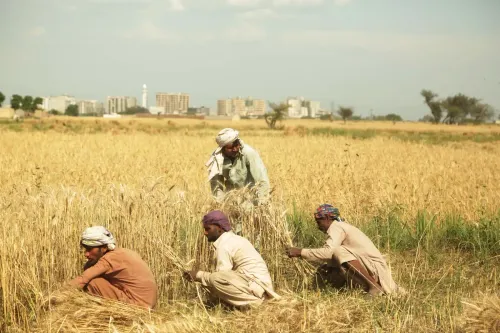
Residents of Faisalabad, a major city in Pakistan's Punjab province, have raised sharp concerns over a persistent surge in food prices, with essential commodities being sold far above official government rates, according to local media reports on Friday, 30 October 2026. The crisis is hitting low-income and working-class households hardest, with residents saying ordinary families are struggling to afford two meals a day.
How Far Prices Have Strayed From Official Rates
The gap between market prices and government-mandated rates has widened significantly. Wheat is reportedly selling at PKR 5,400 to PKR 5,600 per maund in local markets, against an official rate of PKR 3,800 per maund — a premium of nearly 47%. A 15-kilogram bag of fine flour is being sold at over PKR 2,500, while flour from local mills is priced between PKR 165 and PKR 170 per kilogram.
Prices of vegetables including tomatoes, onions, and ginger have also surged sharply. Commodities such as mutton, chicken, eggs, milk, and fruits are reportedly being sold at rates set by individual shopkeepers, with no enforcement of the official price list visible on the ground.
Enforcement Bodies Accused of Failing to Act
Muhammad Ali, a Faisalabad resident, said the rising cost of essentials has made it 'increasingly difficult for ordinary families to buy two meals a day.' He cited the wheat price gap as evidence of unchecked profiteering.
Zakia Khanum, another resident, attributed the hardship to the combined effect of persistent inflation and unemployment. She said the administration and the Punjab Enforcement and Regulatory Authority (PERA) department in Faisalabad division had failed to curb prices effectively, according to reports citing The Express Tribune.
Residents say price-control magistrates and the PERA Force have been unable to stop alleged profiteering despite the government's repeated claims of relief measures being in place. This comes amid a broader failure of price-monitoring infrastructure across Pakistan's urban centres, a pattern critics argue has worsened through repeated cycles of economic stress.
Pakistan's Hunger Index Standing Adds Context
The on-ground distress in Faisalabad mirrors Pakistan's deteriorating ranking on formal food security metrics. Earlier this month, Pakistan was ranked second-worst in South Asia on the Global Hunger Index (GHI) 2026, with a score of 25.5 — classified as a 'serious level of hunger' by the index. The country placed 106th out of 122 countries globally, trailing only Afghanistan, which scored 28.6.
The GHI score is calculated on four components: child stunting, undernourishment, child wasting, and child mortality. Notably, Pakistan's score has improved from 36.2 in 2002 to 25.5 in 2026, reflecting long-term gains — yet the current market reality in cities like Faisalabad suggests food affordability remains a live crisis for millions.
What This Means for Households and Policy
The disconnect between official price lists and market realities points to a structural enforcement gap, not merely a temporary supply shock. For low-income households in Punjab — Pakistan's most populous province — the inability to access basic staples at regulated rates compounds the broader economic squeeze from inflation and unemployment.
Whether the provincial government moves to strengthen PERA's enforcement powers or introduces targeted subsidy mechanisms will be closely watched in the weeks ahead.
Point of View
And the Punjab government has repeatedly announced crackdowns that dissipate within weeks. Until enforcement is decoupled from patronage networks at the local level, official price lists will remain aspirational documents rather than market realities.
NationPress
30 Oct 2026
Frequently Asked Questions
What are the current wheat prices in Faisalabad compared to official rates?
Wheat in Faisalabad is being sold at PKR 5,400 to PKR 5,600 per maund, compared to the official government rate of PKR 3,800 per maund — a premium of nearly 47%. Residents say the gap reflects unchecked profiteering that enforcement agencies have failed to address.
What is the Punjab Enforcement and Regulatory Authority (PERA) and why is it under criticism?
PERA is a body tasked with enforcing official price lists and curbing profiteering in Punjab province, Pakistan. Residents and local media reports say PERA and price-control magistrates in the Faisalabad division have failed to bring market prices in line with government-mandated rates.
How did Pakistan rank on the Global Hunger Index 2026?
Pakistan ranked 106th out of 122 countries on the Global Hunger Index 2026 with a score of 25.5, classified as a 'serious level of hunger.' It was the second-worst performer in South Asia, behind only Afghanistan, which scored 28.6.
Which food items are most affected by price surges in Faisalabad?
Wheat, fine flour, tomatoes, onions, ginger, mutton, chicken, eggs, milk, and fruits are all reportedly being sold above official rates. Shopkeepers are setting their own prices with little visible enforcement of the government's official price list.
Has Pakistan's hunger situation improved over the long term?
Pakistan's Global Hunger Index score has improved from 36.2 in 2002 to 25.5 in 2026, indicating long-term progress. However, current market conditions in cities like Faisalabad suggest that food affordability remains a serious challenge for low-income households despite the statistical improvement.