Pakistan military embeds weapons in civilian areas, report finds
Synopsis
A Eurasia Review report accuses Pakistan's military of a calculated, decades-long strategy of embedding lethal weapon systems — mortars, artillery, drones — within civilian zones, including near a girls' school in PoK's Kotli district. India, by contrast, reportedly held back from striking known military assets in civilian areas during Operation Sindoor to avoid non-combatant casualties.
Key Takeaways
A Eurasia Review report describes Pakistan's placement of military assets in civilian areas as a "calculated, premeditated strategy" — not logistical necessity.
Weapons including mortars, artillery, rocket systems, air defence units, and drone-launch infrastructure have been repeatedly identified inside or adjacent to villages, schools, and civil airports.
During Operation Bunyan Um Marsoos in May 2025 , civilian localities in Pakistan and PoK were converted into active military sites within days.
A drone-launch site was positioned adjacent to a government girls' high school in Kotli district, PoK .
India reportedly chose not to strike military assets embedded in civilian areas during Operation Sindoor , prioritising civilian protection.
Under international humanitarian law, any site used for military purposes — including schools — becomes a lawful military target .
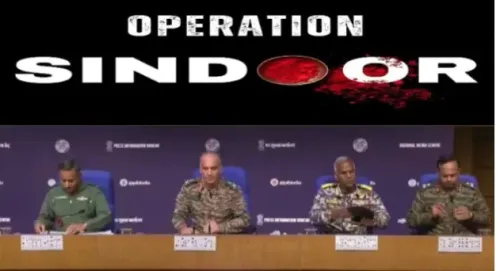
India exercised significant restraint during Operation Sindoor, deliberately avoiding strikes on military assets concealed within civilian areas across Pakistan-occupied Kashmir (PoK) and Pakistan, even as it targeted high-value terror infrastructure and terrorists. A detailed report published in Eurasia Review has now laid bare what it describes as a calculated, decades-long Pakistani military strategy of embedding lethal weapon systems within populated civilian zones — a practice that critics argue constitutes a systematic violation of international humanitarian law.
A Premeditated Strategy, Not Logistical Necessity
The Eurasia Review report is unambiguous in its characterisation of Pakistan's approach. "This is not an act of desperation or logistical necessity," it states. "Evidence gathered over decades of observation along the Line of Control (LoC), as well as during major military operations, strongly suggests that this is a calculated, premeditated strategy — one designed to exploit the moral restraint of the adversary while simultaneously manufacturing a propaganda narrative. The pattern is consistent and unmistakable."
According to the report, mortars, artillery guns, rocket systems, air defence units, and drone-launch infrastructure have repeatedly been identified as being positioned inside or adjacent to villages, towns, residential localities, schools, and civil airports. The underlying logic, the report argues, is cynical: place weapons among civilians, and the adversary either refrains from striking — allowing those assets to operate with impunity — or strikes and faces international condemnation for civilian casualties.
Operation Bunyan Um Marsoos and the Conversion of Civilian Sites
When Pakistan launched Operation Bunyan Um Marsoos in May 2025 in response to Operation Sindoor, the report notes that multiple civilian localities across Pakistan and PoK were converted into active military sites within just a few nights. The speed of that conversion, the report argues, points to prior planning rather than improvisation.
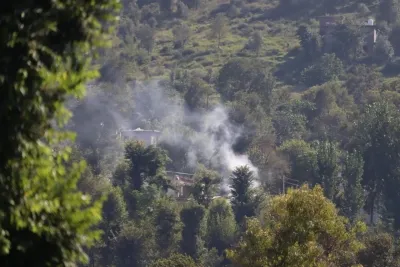
Among the most striking examples cited is the use of a site adjacent to a government girls' high school in the Kotli district of PoK as a drone-launch location. The report describes this not merely as a "tactical choice" but as a "moral failure of the highest order" — using the surroundings of an educational institution as a military staging ground.
India's Restraint and the Laws of Armed Conflict
Notably, Indian forces operating under Operation Sindoor were reportedly aware of military assets embedded within civilian areas but chose not to strike those locations, prioritising the avoidance of civilian casualties. This approach, according to the report, underscores New Delhi's adherence to the laws of armed conflict — a standard the report argues Pakistan's military has repeatedly failed to uphold.
This comes amid broader international scrutiny of conduct during the May 2025 conflict, with questions being raised about accountability under international humanitarian law frameworks.
The Legal and Humanitarian Implications
The report draws a sharp legal conclusion: under international humanitarian law, any site actively used for military purposes — whether a village home, a school, or an airport — becomes a lawful military target. By embedding weapons among civilian populations, the Pakistan Army is not protecting those civilians, the report argues, but placing them "directly in the crosshairs of any potential retaliatory action."
The report calls on residents of Pakistan and PoK to recognise the grave risk this strategy exposes them to. As scrutiny of Pakistan's military conduct intensifies, the findings are likely to add pressure on international bodies to examine compliance with the laws of armed conflict in the region.
Point of View
If substantive, represent more than a tactical critique — they amount to a documented pattern of using civilian populations as strategic shields, a practice that inverts the protections international humanitarian law was designed to provide. What is striking is the specificity: drone launches from beside a girls' school in Kotli is not collateral proximity, it is deliberate positioning. India's restraint during Operation Sindoor, while strategically prudent, also sets a precedent that asymmetric actors can exploit — the more restrained the adversary, the more valuable the human shield. The international community's silence on Pakistan's conduct, even as it monitors conflict zones elsewhere, raises uncomfortable questions about the selective application of accountability frameworks.
NationPress
23 Sept 2026
Frequently Asked Questions
What did the Eurasia Review report find about Pakistan's military tactics?
The Eurasia Review report found that Pakistan's military has deliberately positioned lethal weapon systems — including mortars, artillery, rocket systems, and drone-launch infrastructure — within or adjacent to civilian areas such as villages, schools, and civil airports. The report describes this as a calculated, premeditated strategy rather than a logistical necessity.
What happened during Operation Bunyan Um Marsoos in May 2025?
During Operation Bunyan Um Marsoos, launched by Pakistan in May 2025 in response to India's Operation Sindoor, multiple civilian localities across Pakistan and PoK were reportedly converted into active military sites within just a few nights. One drone-launch site was positioned near a government girls' high school in the Kotli district of PoK.
How did India respond to Pakistani military assets in civilian areas during Operation Sindoor?
According to the report, Indian forces were aware of military assets concealed within civilian areas but chose not to target those locations in order to avoid civilian casualties. This restraint is cited as evidence of India's adherence to the laws of armed conflict.
What does international humanitarian law say about military use of civilian sites?
Under international humanitarian law, any site actively used for military purposes — including homes, schools, or airports — becomes a lawful military target. The Eurasia Review report argues that by embedding weapons among civilians, Pakistan's military is exposing those civilians to grave risk rather than protecting them.
Why does Pakistan's strategy of embedding weapons in civilian areas matter?
The strategy, as described in the report, serves a dual purpose: it either deters adversaries from striking — allowing military assets to operate with impunity — or, if struck, generates international condemnation over civilian casualties. Critics argue this constitutes a systematic violation of international humanitarian law and places civilian populations in direct danger.