Pakistan's nuclear deterrence falters as conventional military build-up surges: Report
Synopsis
A US-based nuclear policy journal argues that Operation Sindoor cracked Pakistan's foundational security promise — that nuclear weapons guarantee sovereignty. Islamabad's post-conflict pivot to conventional military pageantry, rising defence spending, and a new Army Rocket Force Command signals a quiet but consequential shift in South Asian strategic doctrine.
Key Takeaways
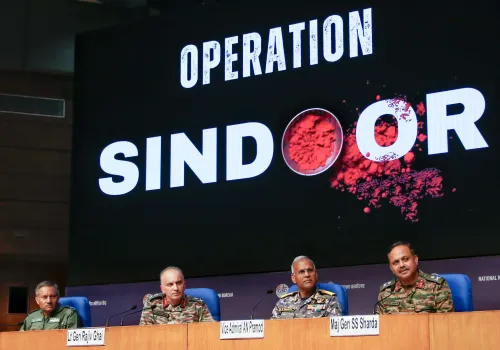
A report by the Bulletin of the Atomic Scientists concludes that Pakistan's full-spectrum deterrence doctrine has proved 'false and misleading.' Operation Sindoor in May 2025 , launched by India after the Pahalgam terror attack , exposed the limits of Pakistan's nuclear shield.
Post-conflict, Islamabad staged extensive conventional military displays — with nuclear weapons and nuclear-capable missiles deliberately absent .
Pakistan's nuclear programme was built by scientists and engineers; the 1998 nuclear tests were authorised by a civilian government , limiting the military's institutional stake in it.
Pakistan has seen a spike in defence spending and has established a new Army Rocket Force Command , signalling a formal shift toward conventional militarism.
Pakistan's strategic doctrine of full-spectrum deterrence — long marketed by its elite as an near-'absolute guarantee' of national security — has been exposed as both insufficient and misleading, according to a report published by the US-based Bulletin of the Atomic Scientists. The findings come in the wake of Operation Sindoor, India's military strikes in May 2025 following the Pahalgam terror attack carried out by a Pakistan-based terror group.
Nuclear Shield Cracks Under Operation Sindoor
The report argues that Operation Sindoor forced Islamabad's strategic establishment to confront an uncomfortable reality: nuclear weapons cannot prevent every crisis or contain every military escalation. For decades, Pakistan's defence posture rested on the assumption that its nuclear arsenal would deter adversaries across all conflict thresholds. That assumption, the report contends, did not hold.
The conventional military engagement that followed the Pahalgam terror attack demonstrated that nuclear deterrence has finite utility — particularly at the lower end of the conflict spectrum, where adversaries are willing to absorb risk and act decisively.
Conventional Militarism Moves to Centre Stage
In the aftermath, Islamabad witnessed an extensive and deliberate display of conventional military power. Public transport was emblazoned with victory imagery and slogans; portraits of military leaders and narratives of battlefield achievements lined major roads; a public square was renamed to commemorate the moment. Conspicuously absent from all of it, the report noted, were nuclear weapons and nuclear-capable missiles.
'This was not because the state lacked the opportunity to showcase them. It was a deliberate effort to communicate a different message,' the report stated. The message, analysts suggest, is that conventional military competence — not nuclear capability — now drives political legitimacy for Pakistan's armed forces.
Why the Military Prefers Conventional Achievements
The report highlights a structural tension within Pakistan's security establishment. The nuclear programme, it notes, was built largely by scientists and engineers, and the decision to test nuclear weapons in 1998 was ultimately taken by a civilian government — not the military. As a result, the armed forces derive limited institutional credit from nuclear capability.
'The bomb's destructive power appears largely self-contained; its existence does not easily translate into visible demonstrations of military competence or leadership,' the report observed. Conventional battlefield achievements, by contrast, serve as direct proof of military effectiveness and bolster the institution's political standing.
Defence Spending Surge and New Army Rocket Force
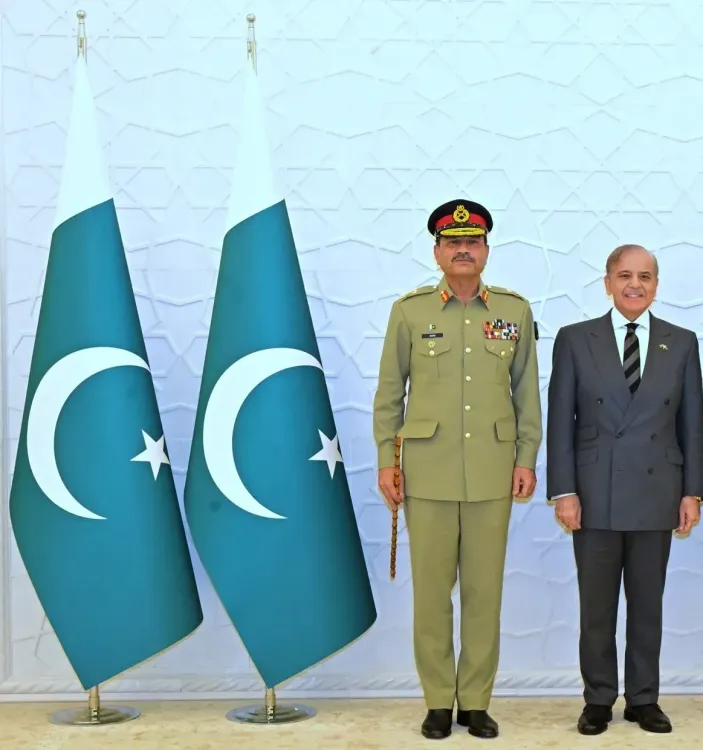
The strategic recalibration has had measurable consequences. Pakistan has recorded a spike in defence spending, and the establishment of a new Army Rocket Force Command signals a formal institutional shift toward conventional precision strike capability. The report frames this as a replacement of nuclear weapons at the apex of military strategy with a growing emphasis on conventional militarism.
This comes amid a broader global reassessment of nuclear postures — from modernisation programmes in the United States to anxieties in Europe and East Asia over the reliability of the US security umbrella, and discussions in South Korea and Canada about independent nuclear acquisition. Pakistan, the report argues, offers a different and unexpected data point in that global conversation.
What This Signals for South Asian Security
The shift carries significant implications for regional stability. A Pakistan that leans harder into conventional military build-up — while its nuclear doctrine loses credibility as a deterrent — introduces new variables into the India-Pakistan security calculus. Whether this recalibration reduces or raises the risk of future escalation remains an open question that regional security analysts are now urgently examining.
Point of View
The implication is double-edged: a Pakistan that prioritises conventional capability may be more predictable at the nuclear threshold, but more active and ambitious below it. The establishment of the Army Rocket Force Command deserves closer scrutiny than it has received.
NationPress
29 Sept 2026
Frequently Asked Questions
What did the Bulletin of the Atomic Scientists report say about Pakistan's nuclear deterrence?
The report concluded that Pakistan's doctrine of full-spectrum deterrence — long presented as an near-absolute guarantee of national security — has proved both false and misleading. It argued that Operation Sindoor in May 2025 demonstrated that nuclear weapons cannot prevent every military crisis or escalation.
How did Operation Sindoor expose the limits of Pakistan's nuclear doctrine?
Operation Sindoor, India's military strikes launched in May 2025 following the Pahalgam terror attack by a Pakistan-based terror group, forced Islamabad's strategic establishment to confront the fact that its nuclear arsenal did not deter the conflict. The strikes proceeded despite Pakistan's nuclear posture, revealing a gap between deterrence theory and battlefield reality.
Why were nuclear weapons absent from Pakistan's post-conflict military displays?
According to the report, the absence was deliberate — a conscious choice by the state to communicate a different message. Pakistan's military derives greater political benefit from conventional battlefield achievements than from nuclear capability, which was built largely by scientists and engineers under civilian authority.
What is Pakistan's new Army Rocket Force Command?
The Army Rocket Force Command is a newly established Pakistani military institution that signals a formal shift toward conventional precision strike capability. Its creation, alongside rising defence spending, reflects what the report describes as the replacement of nuclear weapons at the apex of Pakistan's military strategy with a greater emphasis on conventional militarism.
How does Pakistan's case fit into the global nuclear debate?
The report notes that while countries like South Korea, Canada, and European nations are debating nuclear acquisition or questioning the US security umbrella, Pakistan offers an unexpected counterpoint — a nuclear-armed state that is quietly deprioritising its nuclear arsenal in favour of conventional military investment and public messaging.