Op Sindoor doctrine Pakistan rejected now drives its strikes on Afghanistan

Synopsis
Pakistan publicly rejected India's Operation Sindoor doctrine in May 2025 — then quietly adopted it against Afghanistan in February 2026, with less evidence and weaker legal standing. A report in The National Interest captures the full arc of this strategic reversal, and what it reveals about how regional deterrence norms are shifting.
Key Takeaways
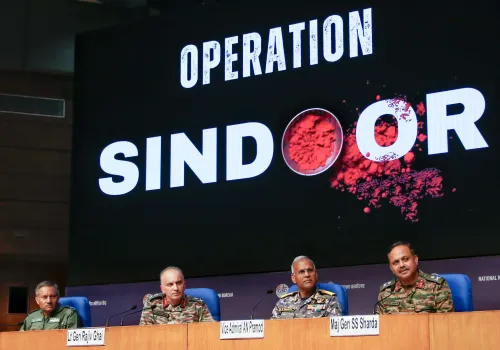
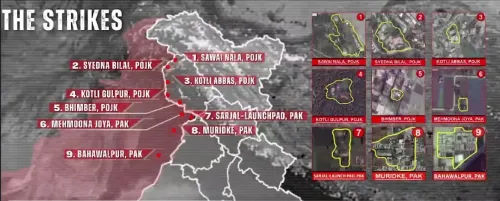
Operation Sindoor , launched on 7 May 2025 , struck nine sites in Pakistan linked to LeT and JeM following the Pahalgam attack that killed 26 Indians on 22 April 2025 .
Pakistan rejected the Sindoor doctrine as illegitimate at the time, arguing India had no right to act on unproven accusations.
By February 2026 , Pakistan's air force struck Nangarhar and Paktika in Afghanistan, with Defence Minister Khawaja Asif declaring 'open war' on 27 February .
A UN Special Rapporteur report from March 2026 found Pakistan could not provide credible evidence that TTP attacks were directed by Afghan authorities.
The ICJ standard holds that 'mere tolerance' of armed groups does not grant a neighbouring state the right of self-defence — the same legal architecture Pakistan dismissed during Operation Sindoor.
Pakistan is now invoking against Afghanistan the very cross-border strike doctrine it publicly rejected when India applied it during Operation Sindoor in May 2025 — and doing so on considerably weaker evidentiary grounds, according to a report published in American magazine The National Interest.
The Doctrine Pakistan Once Dismissed
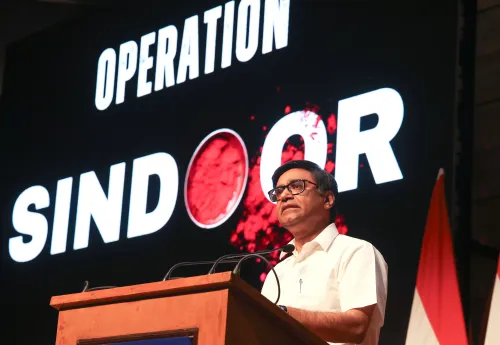
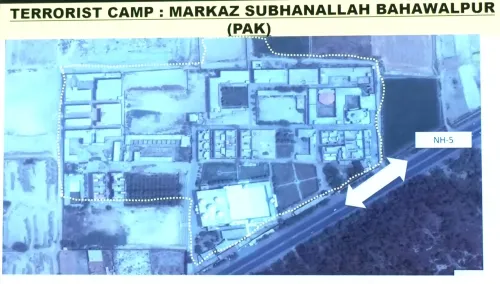
Operation Sindoor, launched on the night of 7 May 2025, followed a terrorist attack that killed 26 Indians in Pahalgam on 22 April 2025. India targeted nine sites in Pakistan linked to terror outfits Lashkar-e-Taiba (LeT) and Jaish-e-Mohammed (JeM), including the LeT headquarters at Muridke and the JeM complex in Bahawalpur. The political doctrine articulated after fighting paused on 10 May 2025 was unequivocal: future terror attacks originating from Pakistani soil would be treated as acts of war, with India reserving the right to determine its own response.
Pakistani officials at the time rejected the argument outright, contending that India had no right to act on accusations it could not prove. For three decades, the report notes, plausible deniability had served as the guiding principle of the Pakistani state's engagement with terror networks.
Pakistan Applies the Same Logic Against Kabul
By February 2026, Islamabad had adopted precisely the framework it had condemned. The Pakistan Air Force conducted strikes on Nangarhar and Paktika on 21 and 22 February, targeting Tehreek-e-Taliban Pakistan (TTP) camps inside Afghanistan. Pakistani Defence Minister Khawaja Asif declared 'open war' on Afghanistan on 27 February. Pakistan's Operation Ghazab lil Haq — a sustained military offensive — involved air and artillery strikes across eastern Afghan provinces. Pakistani forces also reportedly struck an Afghan university in the Asadabad region in late April.
The Evidentiary Gap
Critically, the legal basis for Pakistan's actions against Afghanistan appears far thinner than India's documented case against Pakistan. A UN Special Rapporteur report from March 2026 found that Pakistan could not provide credible evidence that TTP attacks inside its territory were directed or controlled by Afghan authorities. The International Court of Justice (ICJ) has long held that 'the mere tolerance of armed groups by one state does not confer on a neighbouring state the right of self-defence.'
As the The National Interest report observed: 'This is the legal architecture Islamabad dismissed when applied to Sindoor. It is now the architecture under which Pakistan operates.'
The Broader Significance of Operation Sindoor
The report argues that Operation Sindoor's lasting significance lies in its recalibration of the cost calculus around cross-border terrorism. By demonstrating that state support for terror could no longer shelter behind plausible deniability, India effectively set a regional precedent — one that Pakistan, despite its initial rejection, has since internalised and acted upon, albeit without comparable evidentiary justification.
The irony, the report suggests, is that Pakistan's own conduct in Afghanistan has retroactively validated the doctrine it spent considerable diplomatic capital opposing.
Point of View
Then replicated it — with less evidence and against a weaker state. What this reveals is not hypocrisy alone, but the deeper truth that deterrence doctrines, once demonstrated, tend to spread regardless of who originally endorsed them. India's real gain from Sindoor may not be the strikes themselves, but the normalisation of a cost-imposition framework that has now entered regional practice. The question mainstream coverage underplays is this: if Pakistan's strikes on Afghanistan proceed without international censure despite a weaker evidentiary basis, it further legitimises the Sindoor precedent — something New Delhi should be watching carefully.
NationPress
24 Sept 2026
Frequently Asked Questions
What was Operation Sindoor and what doctrine did it establish?
Operation Sindoor was an Indian military operation launched on 7 May 2025, targeting nine terror-linked sites in Pakistan following the Pahalgam attack that killed 26 Indians on 22 April 2025. It established that state support for terrorism could no longer hide behind plausible deniability, and that future attacks from Pakistani soil would be treated as acts of war.
How has Pakistan applied the Operation Sindoor doctrine against Afghanistan?
Pakistan's air force struck Nangarhar and Paktika in Afghanistan on 21 and 22 February 2026, targeting TTP camps. Defence Minister Khawaja Asif declared 'open war' on Afghanistan on 27 February, and Pakistan's Operation Ghazab lil Haq involved sustained air and artillery strikes across eastern Afghan provinces — mirroring the cross-border strike rationale Pakistan had rejected when India used it.
Why is Pakistan's case against Afghanistan considered weaker than India's case during Operation Sindoor?
A UN Special Rapporteur report from March 2026 found Pakistan could not provide credible evidence that TTP attacks were directed or controlled by Afghan authorities. The International Court of Justice standard holds that mere tolerance of armed groups does not grant a neighbouring state the right of self-defence — the same legal bar Pakistan dismissed during Operation Sindoor.
What is the significance of this reversal for India?
According to the report in The National Interest, Operation Sindoor's lasting significance lies in its impact on the regional cost calculus for cross-border terrorism. Pakistan's adoption of the same doctrine — despite having rejected it — effectively validates the precedent India set in May 2025.
What is Operation Ghazab lil Haq?
Operation Ghazab lil Haq is Pakistan's military offensive against Afghanistan, involving sustained air and artillery strikes across eastern Afghan provinces. Pakistani forces also reportedly struck an Afghan university in the Asadabad region in late April 2026.