Pakistan's Role in Gaza Peace Efforts Questioned Amidst Religious Persecution
Synopsis
Amidst its inclusion in the 'Board of Peace' aimed at Gaza, Pakistan's troubling record of religious persecution raises questions about its role as a peacemaker. This article delves into alarming incidents that highlight the plight of religious minorities in the country.
Key Takeaways
Pakistan's inclusion in the 'Peace Board' raises serious concerns .
Reports highlight severe persecution of religious minorities .
Incidents of violence and forced conversions are alarmingly common.
The USCIRF urges a reevaluation of Pakistan's status regarding religious freedom.
Credibility as a peacemaker is questioned due to internal issues.
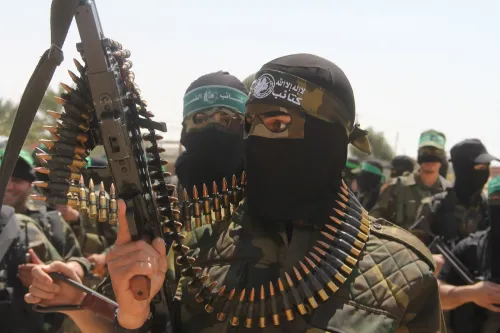
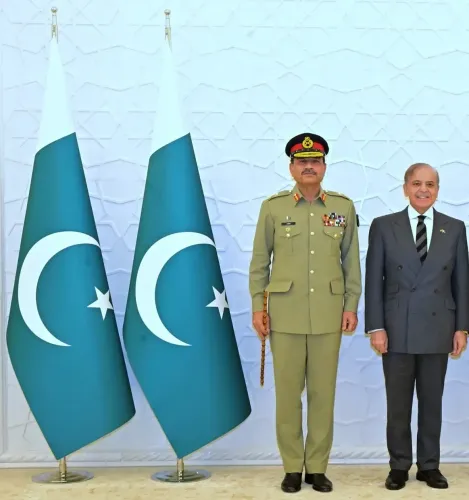
New Delhi, March 22 (NationPress) Pakistan has been included among the nations in the 'Peace Board', a group reportedly established by US President Donald Trump to seek enduring peace solutions for the Gaza Strip. Nevertheless, the nation's troubling history of religious persecution and alleged support for terrorism within its borders has raised serious questions about its capacity to act as a peacemaker in a region that has faced severe hostility over the past two years.
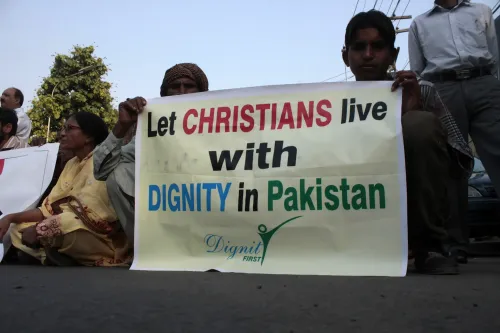
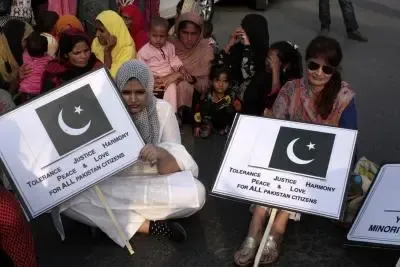
A report from the Gatestone Institute has pointed out numerous incidents that reveal Pakistan's inadequate protection of religious minorities, branding it as one of the “most perilous nations” for Christians and other non-Muslim communities.
According to the report, the previous year witnessed an escalating crisis for religious minorities in Pakistan, characterized by increasing mob violence and an environment of “nearly complete impunity for offenders”.
“Christians, Hindus, and other non-Muslim groups encountered a mix of physical assaults, forced displacements, and systemic exclusion. The Christian community was particularly susceptible to blasphemy accusations, which quickly led to collective reprisals, including the burning of churches, assaults on homes, and the destruction of livelihoods in targeted neighborhoods,” the report stated.
The report also details numerous cases of forced religious conversions, abductions of Hindu girls, and coerced marriages. Families affected by these incidents often find themselves without legal options, facing victim intimidation and alleged discrimination within the judicial system.
One alarming case highlighted in the report involves a 21-year-old Christian agricultural worker, Marcus Masih, who was reportedly tortured to death by his Muslim employers in Punjab Province, with authorities later classifying the incident as a suicide by hanging.
This incident garnered international attention, prompting the United States Commission on International Religious Freedom (USCIRF) to urge the US government to reclassify Pakistan as a “Country of Particular Concern” (CPC) due to its persistent violations of religious freedoms.
Other incidents of violence against minorities are also cited in the report, including one from March 2025, where Zohaib Iftikhar allegedly murdered his co-worker, Waqas Masih, a 22-year-old Christian, claiming he committed blasphemy by touching an Islamic textbook with “impure hands”.
In another shocking case in May 2025, Christian laborer Kashif Masih was reportedly tortured to death by a group of men, including a former police officer, over an unfounded theft allegation, sparking outrage among minority communities.
Furthermore, in June 2024, an 18-year-old Catholic worker named Waqas Salamat was allegedly tortured to death by his employer and others after reportedly leaving his job without permission, with his family alleging that he suffered hours of electric shocks that led to his demise.
The report also discusses forced conversions of Hindu and Christian girls in Punjab and Sindh provinces in 2025, alongside multiple attacks on places of worship during the same period.
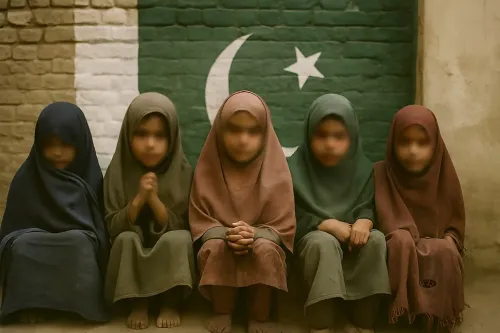
It also brings to light the case of 12-year-old Christian girl, Saba Shafique, who was reportedly abducted in Sindh Province, forcibly converted to Islam, and subsequently married to a 35-year-old man, Muhammad Ali.
The report strongly argues against Pakistan's inclusion in the 'Peace Board', claiming that the nation would unlikely serve as a credible participant in any real peace-building efforts.
Point of View
The pressing concerns regarding Pakistan's historical treatment of religious minorities cannot be overlooked. While efforts for peace in Gaza are commendable, the effectiveness of Pakistan as a mediator is questionable, given its internal challenges and human rights records.
NationPress
22 Sept 2026
Frequently Asked Questions
What is the 'Board of Peace'?
The 'Board of Peace' is a group reportedly created by US President Donald Trump to explore sustainable solutions for establishing peace in the Gaza Strip.
Why is Pakistan's inclusion in the 'Board of Peace' controversial?
Pakistan's history of religious persecution and alleged support for terrorism raises doubts about its capability to act as an effective peacemaker in a volatile region.
What incidents highlight the persecution of minorities in Pakistan?
Incidents include mob violence against Christians, forced religious conversions, and torture cases, all indicating systemic discrimination against religious minorities.
Who urged the US to redesignate Pakistan as a 'Country of Particular Concern'?
The United States Commission on International Religious Freedom (USCIRF) called for the redesignation due to ongoing violations of religious freedom in Pakistan.
What are the implications of Pakistan's role in peace negotiations?
Pakistan's troubled record raises concerns about its potential effectiveness in contributing to credible peace-building efforts in Gaza.