Is the Pakistani Army and ISI Behind the Terror Attack on a Chinese Restaurant in Afghanistan?
Synopsis
In a shocking revelation, Shafi Burfat, a prominent Sindhi leader, has accused the Pakistani military and ISI of orchestrating a deadly attack on a Chinese restaurant in Kabul. This article delves into the implications of these claims and what they mean for regional stability and international relations. Stay informed on this critical situation.
Key Takeaways
Shafi Burfat accuses the Pakistani army and ISI of orchestrating a terrorist attack in Afghanistan.
The attack aimed to undermine Chinese investments in the region.
Burfat emphasizes Pakistan's role in nurturing extremism in Afghanistan.
He calls for international condemnation of Pakistan-sponsored terrorism .
The situation raises concerns about regional stability and security.
Berlin, Jan 21 (NationPress) Shafi Burfat, the leader of the Jeay Sindh Muttahida Mahaz (JSMM), has accused the Pakistani army and the Inter-Services Intelligence (ISI) of being involved, whether directly or indirectly, in the planning of the recent terrorist attack on a Chinese restaurant in Afghanistan.
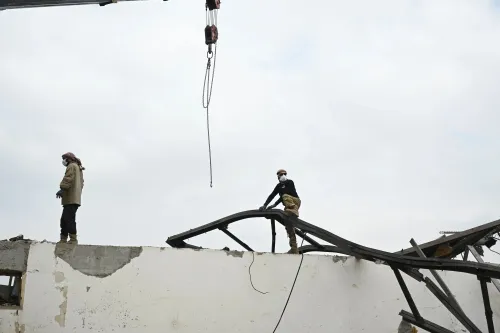
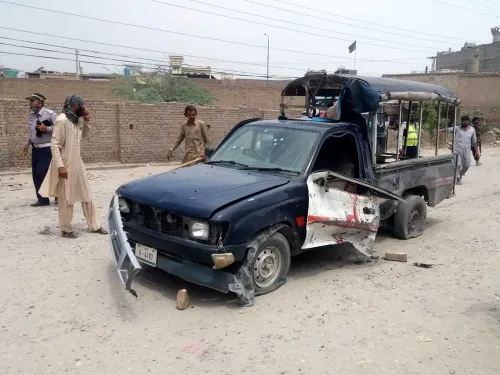
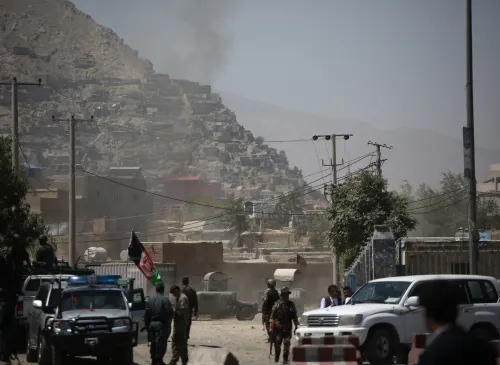
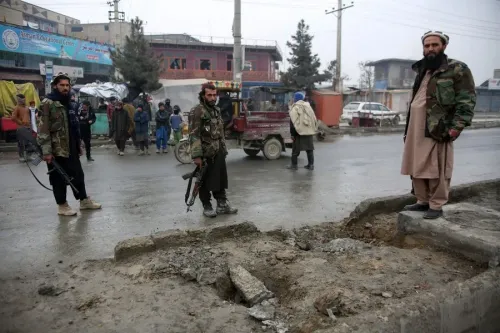
This statement follows an explosion that occurred outside a Chinese restaurant in Kabul, the capital of Afghanistan, on January 19, which resulted in multiple casualties, including the death of a Chinese national.
In his condemnation of the attack, Burfat emphasized that such acts of terrorism are not isolated events but are executed by extremist groups that are nurtured, protected, and strategically utilized by Pakistan’s military establishment, particularly under the guidance of the ISI.
“There is substantial reason to believe that the Pakistani army and ISI are involved in orchestrating this assault. The underlying motives behind this act of terrorism are twofold. First, it aims to obstruct and dissuade China’s expanding economic investments and strategic involvement in Afghanistan and the broader region,” the Sindhi leader stated on X.
“Secondly, it intends to deliberately portray Afghanistan as an unstable and insecure nation, undermining the Afghan government and creating a false international perception that Afghanistan is unsuitable for foreign investment. This narrative is designed to redirect global investors away from Afghanistan and towards Pakistan,” he added.
Burfat underscored that in the wider geopolitical context, Pakistan is attempting to present itself as a willing proxy for global powers by reorganizing, revitalizing, and spreading terrorism within Afghanistan.
“Pakistan aims to placate certain international entities by destabilizing the region, particularly by bolstering extremist and terrorist networks against China and India in Afghanistan. Notably, terrorist organizations like ISIS are being actively reorganized and empowered by Pakistan’s military and intelligence agencies to operate in Afghanistan and the surrounding areas,” he remarked.
Emphasizing that these actions pose a significant threat to regional peace, international security, and the principles of sovereignty and non-interference, the Sindhi leader urged the global community to strongly condemn this Pakistan-sponsored terrorism and hold its military establishment accountable for its ongoing use of extremist violence as a foreign policy tool.
“It is not an exaggeration to claim that Pakistan’s corrupt, rogue, and unaccountable military establishment continues to engage in deception, duplicity, and the use of terrorism as a political instrument—despite projecting an image of strategic closeness and partnership with both the United States and China. In reality, Pakistan’s military has consistently pursued parallel policies of betrayal and manipulation against both powers, exploiting their engagements while simultaneously undermining their interests through proxy violence and extremist networks,” Burfat concluded.
Point of View
I emphasize the importance of impartiality and facts in reporting on sensitive geopolitical issues. The claims made by Burfat highlight a critical discussion surrounding terrorism and regional stability, and it's essential to approach such topics with caution and a commitment to truth.
NationPress
27 Sept 2026
Frequently Asked Questions
What did Shafi Burfat accuse the Pakistani army and ISI of?
Shafi Burfat accused the Pakistani army and ISI of being involved in the terrorist attack on a Chinese restaurant in Kabul, Afghanistan.
What were the consequences of the attack?
The explosion resulted in multiple casualties, including the death of one Chinese citizen.
What are the alleged motives behind the attack according to Burfat?
Burfat suggests the motives are to obstruct Chinese investments in Afghanistan and to project Afghanistan as unstable, deterring foreign investment.
How does Burfat view Pakistan's role in Afghanistan?
Burfat believes that Pakistan is trying to destabilize Afghanistan while positioning itself as a proxy for global powers.
What does Burfat call for in response to these actions?
He calls for the global community to condemn Pakistan-sponsored terrorism and hold its military accountable.