Is the Pakistani Military Deflecting Blame to Hide Internal Failures?
Synopsis
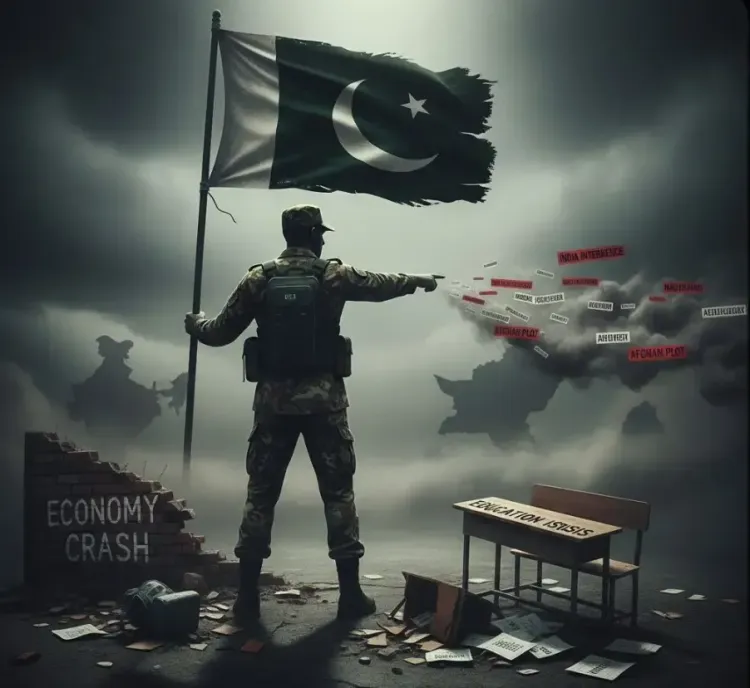
Shafi Burfat, the Chairman of JSMM, criticizes the Pakistani military for deflecting blame for its internal failures onto neighboring countries. He argues that this tactic reveals deep-seated insecurities and a systemic culture of deception. Burfat's statements call for a global reassessment of Pakistan's political and military practices.
Key Takeaways
The Pakistani military is accused of deflecting blame onto neighboring nations.
Internal failures are masked by a culture of deception.
Burfat claims the military operates as a corporate cartel.
Brutality towards civilians is a significant issue.
Calls for global reassessment of Pakistan's military practices.
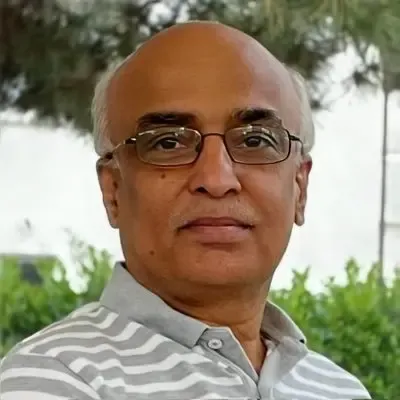
Berlin, Jan 8 (NationPress) Shafi Burfat, Chairman of the Jeay Sindh Muttahida Mahaz (JSMM), has accused the Pakistani military of covering up its own inefficiencies by attributing blame to neighboring nations for its internal shortcomings.
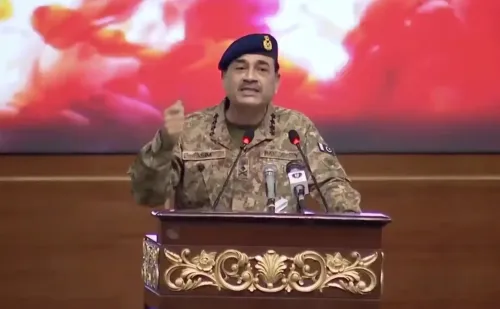
The Sindhi leader claimed that such narratives propagated by Pakistan's military media wing, Inter-Services Public Relations (ISPR), targeting countries like India and Afghanistan, do not represent the behavior of a responsible state institution. Instead, they reveal a profound psychological insecurity stemming from years of failure, internal oppression, and strategic manipulation.
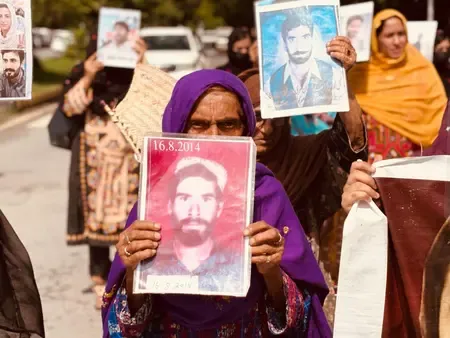
In a post on X, Burfat stated, "Lies inherently fear the truth. The military establishment of Pakistan has institutionalized falsehood as a fundamental policy. The narrative machine run by ISPR serves to mask systemic failures, including political engineering, economic exploitation, enforced disappearances, and the militarization of society. One lie leads to another, and ISPR's messaging is a part of a long series of strategic deceptions aimed at misleading both domestic and international audiences."
"Morally bankrupt institutions mock principles they cannot uphold. The Pakistani military has transformed the state into a captive entity, holding politics, media, judiciary, and the economy at ransom. Corruption has eroded every structure it touches. From extensive business empires and real estate ventures to unaccountable defense budgets, the military operates not as a state institution but as a corporate cartel in uniform. Cowardice is central to this system," he added.
Burfat emphasized that the Pakistani military demonstrates brutality towards unarmed civilians throughout Pakistan, including Sindhis, Baloch, and Pashtuns, while escaping accountability on an international scale.
"Rather than facing its own history of repression and failure, it shifts blame onto India and Afghanistan. This habitual deflection is not a sign of strength; it is a manifestation of strategic cowardice. History does not forgive cowards, nor does it honor institutions built on fear," he asserted.
The Sindhi leader insisted that the Pakistani military establishment stands intellectually, morally, and politically exposed before history.
"Such a state was artificially constructed under an extremist ideological framework, defying natural political, cultural, and historical realities. Its military is merely a corrupt mafia organization, sustained through brutality, oppression, injustice, and institutional violence. This force does not operate as a professional defense entity; it persists through deception, fraud, manipulation, and the systematic falsification of truth," he stressed.
From regional destabilization to proxy warfare, Burfat remarked that Pakistan has treated terrorism as a "strategic asset" rather than a criminal act.
"Within the unnatural state of Pakistan, there is no genuine democracy, no moral legitimacy, and no truthful political order," he noted.
The Sindhi leader urged the global community to take this reality seriously, "not through strategic convenience or selective silence," but through an honest and principled reassessment of Pakistan, which is built on "coercion, deception, and perpetual conflict."
Point of View
The allegations made by Shafi Burfat highlight significant issues within Pakistan's military and political framework. It is essential to approach these claims with a balanced perspective, recognizing the need for accountability and reform in the face of ongoing internal and external challenges.
NationPress
24 Sept 2026
Frequently Asked Questions
What accusations did Shafi Burfat make against the Pakistani military?
Shafi Burfat accused the Pakistani military of blaming neighboring countries for its internal failures and hiding its incompetence.
What does Burfat suggest about the military's narrative?
He suggests that the narrative created by ISPR is a strategic deception intended to mislead both domestic and international audiences.
How does Burfat characterize the Pakistani military?
He characterizes it as a corrupt mafia structure that operates through brutality, repression, and deception.
What is Burfat's call to the global community?
Burfat calls for a principled reassessment of Pakistan's military and political practices, emphasizing the need for accountability.
What does Burfat say about the state of democracy in Pakistan?
He asserts that there is no genuine democracy or moral legitimacy within the political order of Pakistan.