Pakistan's Blame Game: The Tragic Fallout of Afghan Conflict
Synopsis
As Pakistan intensifies its military actions in Afghanistan, the civilian death toll rises to 835, revealing a disturbing narrative that shifts blame onto Afghans. This article delves into the complexities of this escalating humanitarian crisis.
Key Takeaways
Current death toll: 835 civilians have died due to ongoing conflict.
Pakistan's narrative: Accusations against the Afghan Taliban lack evidence.
Taliban's stance: Will not accept Pakistani influence over foreign policy.
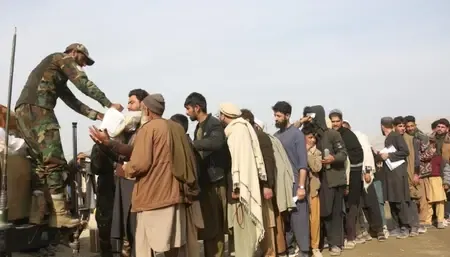
Humanitarian crisis: Thousands displaced and numerous civilian casualties.
Critical regions: Kabul, Kandahar, and others are severely impacted.
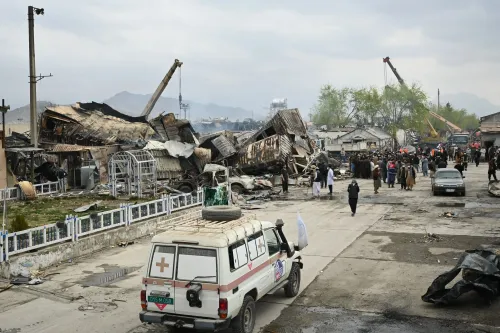
New Delhi, March 18 (NationPress) The ongoing conflict in Afghanistan is evolving into a humanitarian crisis, with Pakistan inflicting severe harm on innocent civilians. Following the hospital bombing that claimed 400 lives, the civilian death toll has tragically reached 835.
Analysts assert that the underlying reason for this conflict is not Pakistan's alleged concern about terrorism. Pakistan has made unfounded accusations against the Afghan Taliban for allegedly supporting the Tehreek-e-Taliban Pakistan (TTP). The actual concern for Pakistan lies in Afghanistan's quest for sovereignty.
Since the Taliban regained control in 2021, they have stood firm against Pakistani influence, asserting that Afghanistan will no longer be treated as a subordinate entity. Moreover, the Taliban seeks to maintain autonomy over its foreign policy decisions.
Officials contend that the war initiated by Pakistan lacks any justification. Currently, as tensions escalate, a narrative is being crafted to blame Afghans for the violence occurring within Pakistan.
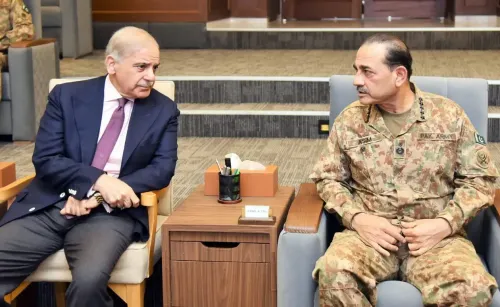
The Pakistani military establishment, facing scrutiny from its own populace regarding the rationale for war, has devised a strategy to legitimize its actions. The Inter-Services Intelligence (ISI) has directed its extremist affiliates to target local Pakistani citizens and attribute these attacks to Afghans.
Recent attacks on the Shia community in Pakistan have been misrepresented as assaults by Afghan nationals or recent travelers to Afghanistan.
One official noted that sectarian violence has plagued Pakistan for years, yet the government refuses to recognize it as an internal issue. Such problems persisted even during the Taliban's previous absence from power. However, with the onset of the conflict and the need for justification, the ISI is reframing internal issues as external threats.
The official further stated that the Afghan conflict is being used to scapegoat the Taliban for Pakistan's internal sectarian strife. Accusations against the Afghan Taliban for supporting the TTP are misleading the Pakistani populace, as noted by another official.
The TTP has long been in conflict with the Pakistani government. Attacks occurred in Pakistan even during the Taliban's time out of power. Additionally, the Pakistani establishment has attempted to promote the false narrative that the TTP was birthed by the Afghan Taliban. An official argued that this is inaccurate; the Afghan Taliban would have no reason to create a faction that would attack Pakistan.
The actual issue escalated in 2021 when the Taliban refused to comply with Pakistan's demands. To justify its military actions in Afghanistan, Pakistan has wrongfully accused the Taliban of supporting the TTP.
An intelligence official mentioned that initially, many in Pakistan opposed the war against Afghanistan. However, the establishment has successfully altered that narrative. Social media platforms in Pakistan are now rife with anti-Afghan sentiment, featuring posts that endorse the killing of Afghan civilians.
According to the official, the assault on the Omid/Ibn Sina rehabilitation hospital in Kabul was one of the gravest tragedies the country has faced, resulting in the death of 400 innocent lives due to Pakistani airstrikes.
Despite this, Pakistan has denied involvement in the hospital attack. The response of the Pakistani people has varied, with some remaining silent while others celebrate civilian casualties.
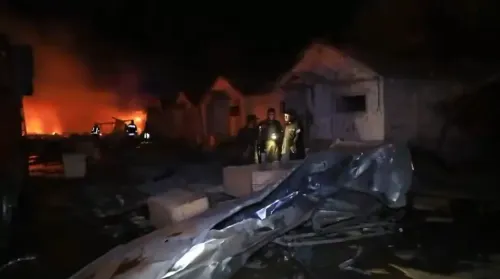
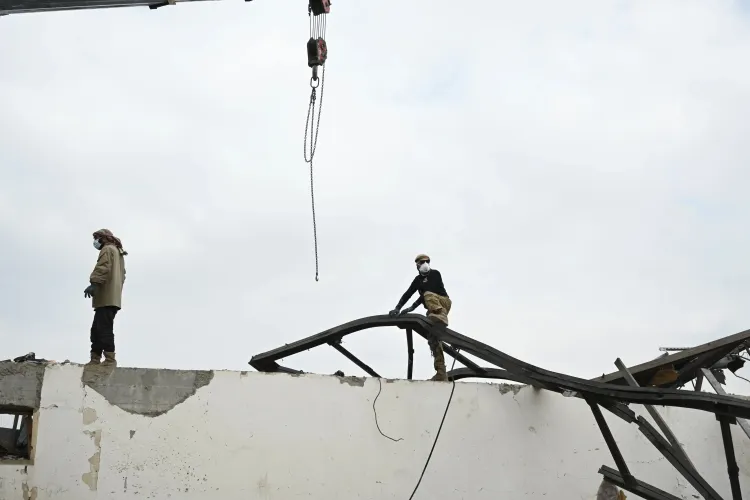
Officials warn that the shift in public sentiment towards Afghanistan, fueled by the establishment's fabricated narrative, poses a significant risk. Since the conflict began in late February, 835 civilians have been killed in Pakistani airstrikes and bombardments, including 87 women and 22 children. Over 1,300 civilians have been injured, with 540 homes destroyed. Additionally, 8,000 families have been displaced, and 26 mosques along with eight madrasas and five hospitals across Kabul, Kandahar, and Nangarhar have been devastated.
Hospitals are being struck at a time when medical resources are already stretched thin amid rising casualties. The most severely affected regions in Afghanistan include Kabul, Kandahar, Nangarhar, Khost, Paktika, Paktia, Kunar, and Laghman.
Point of View
It's imperative to highlight the complexities of the situation in Afghanistan. The narrative being constructed by Pakistan is not only misleading but also dangerous, as it obscures the reality of internal conflicts and blames external forces. Our focus should remain on the humanitarian impact of this conflict and the need for accountability.
NationPress
2 Oct 2026
Frequently Asked Questions
What is the current civilian death toll in Afghanistan due to the conflict?
As of now, the civilian death toll in Afghanistan has tragically reached 835.
What accusations is Pakistan making against the Afghan Taliban?
Pakistan has accused the Afghan Taliban of supporting the Tehreek-e-Taliban Pakistan (TTP) without providing evidence.
How has the Taliban's return to power affected its relationship with Pakistan?
Since regaining power in 2021, the Taliban has refused to allow Pakistan to dictate its foreign policy.
What has been the international response to Pakistan's military actions?
The international community is increasingly concerned about Pakistan's aggressive military actions and the resulting humanitarian crisis.
What regions in Afghanistan are most affected by the conflict?
The regions most affected include Kabul, Kandahar, Nangarhar, Khost, Paktika, Paktia, Kunar, and Laghman.