Patiala gets Punjab's first hybrid cleaning model, aims to be cleanest city
Synopsis
Punjab has launched a first-of-its-kind four-step hybrid sanitation model in Patiala — combining shrub-cutters, super-suction machines, scrubbers, and manual safai sewaks on a fixed weekly ward schedule. If it works, the AAP government plans to roll it out statewide, with the ambitious goal of making Punjab India's cleanest state.
Key Takeaways
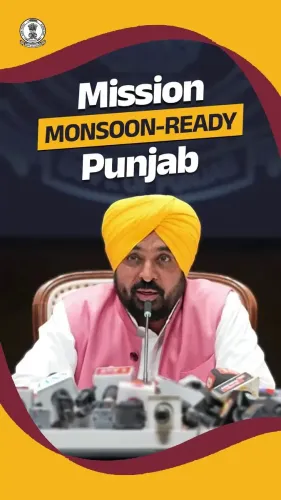
Local Government Minister Harjot Singh Bains launched Punjab's first hybrid cleaning model in Patiala on 10 June .
The four-step protocol combines mechanised shrub-cutters, manual waste collection, super-suction machines, and road-washing scrubbers.
Cleaning will run on a pre-notified weekly schedule every Monday across all city wards.
The government targets making Patiala Punjab's cleanest city within one month , followed by a statewide rollout.
The long-term goal is to position Punjab as India's cleanest state .
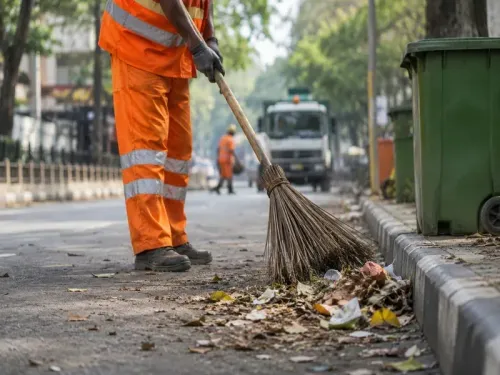
Sanitation workers ( safai sewaks ) remain central to the model, handling organic and bulky waste collection manually.
Patiala became the launch city for Punjab's first-of-its-kind hybrid urban sanitation model on Wednesday, 10 June, as state Local Government Minister Harjot Singh Bains demonstrated the new system live on the city's streets. The initiative integrates mechanised equipment with manual labour and is designed to make Patiala the cleanest city in Punjab within one month, with a statewide rollout to follow.
How the Hybrid Model Works
The system operates on a four-step cleaning protocol tied to a pre-notified weekly schedule for every ward. The first step deploys mechanised shrub-cutters to clear wild grass and overgrowth. The second relies on sanitation workers — referred to as safai sewaks — to collect horticulture and bulky waste by hand. The third uses super-suction machines to remove residual litter, and the fourth involves road-washing scrubbers to leave surfaces clean.
Bains said the system is designed to run every Monday across all wards, with the expectation that thoroughness will improve week on week. 'Next Monday will be even better, and it will keep improving every week. Wherever you see the road starting to shine, that is the result of this system,' he said.
What the Government Said
'Under Chief Minister Bhagwant Mann's leadership, Punjab is attempting to implement India's most advanced cleanliness system. These automatic shrub cutters and super-suction machines will ensure roads and streets are cleaned every Monday. Grass, debris and waste will be gone in one pass,' Bains said in a statement.
The minister was emphatic that sanitation workers are not being sidelined. 'Our safai sewaks are our core partners. The machines handle the heavy work and the detailing. The system is designed to reduce manual drudgery while increasing efficiency,' he said. He added that as roads become consistently clean, the frequency of deep-cleaning cycles will naturally reduce, even as overall cleanliness levels rise.
Broader Ambition: Punjab as India's Cleanest State
The Patiala pilot is framed as the first step in a larger statewide transformation. 'Our effort is to make Patiala the cleanest city in Punjab within a month. After that, we will roll out the initiative across Punjab,' Bains said. The government's stated end goal is to position Punjab as India's cleanest state — a significant benchmark given the competition from states that have historically ranked high in the Swachh Survekshan national cleanliness survey.
This comes amid a broader push by the Aam Aadmi Party (AAP)-led Punjab government to improve urban infrastructure and service delivery, areas where the party has staked its political credibility since coming to power. Urban sanitation rankings carry direct electoral and reputational weight, making the Patiala model a high-visibility bet.
What Happens Next
Officials indicated that the model's performance in Patiala over the coming weeks will determine the pace and sequencing of the statewide rollout. No specific timeline or budget figure for the full Punjab expansion was disclosed at the launch. The success of the initiative will likely be measured against Swachh Survekshan rankings and on-ground citizen feedback in the weeks ahead.
Point of View
And cleanliness rankings are among the most publicly legible metrics. The four-step protocol is operationally sensible, but the real test is consistency: India's urban sanitation drives have a long history of strong launches and weak follow-through. No budget figure or accountability mechanism was disclosed at launch, which means the statewide ambition rests, for now, on a single pilot week in one city. Swachh Survekshan rankings will be the unforgiving scorecard.
NationPress
26 Oct 2026
Frequently Asked Questions
What is the hybrid cleaning model launched in Patiala?
It is a four-step urban sanitation system combining mechanised shrub-cutters, manual waste collection by sanitation workers, super-suction machines, and road-washing scrubbers. Launched on 10 June by Local Government Minister Harjot Singh Bains, it operates on a pre-notified weekly ward schedule every Monday.
Why was Patiala chosen as the launch city?
Patiala is the pilot city for what the Punjab government describes as the state's most advanced cleanliness system. The government aims to make it Punjab's cleanest city within one month before rolling the model out statewide.
What role do sanitation workers play in the new system?
Sanitation workers, called safai sewaks, remain central to the model. They handle the second step — manual collection of organic and bulky horticulture waste — which machines cannot efficiently manage. The government has emphasised that the system reduces manual drudgery without replacing workers.
When will the model be rolled out across Punjab?
According to Minister Harjot Singh Bains, the statewide rollout will follow once the Patiala pilot demonstrates results, which the government expects within one month. No specific timeline or budget for the full expansion has been announced.
How does this connect to India's national cleanliness rankings?
The Punjab government's stated goal is to make Punjab India's cleanest state, a target that would be benchmarked against the annual Swachh Survekshan survey conducted by the Union Ministry of Housing and Urban Affairs. Punjab currently does not rank among the top states in that survey.