CM Mann Launches Punjab's Biggest Sewerage Desilting Drive
Synopsis
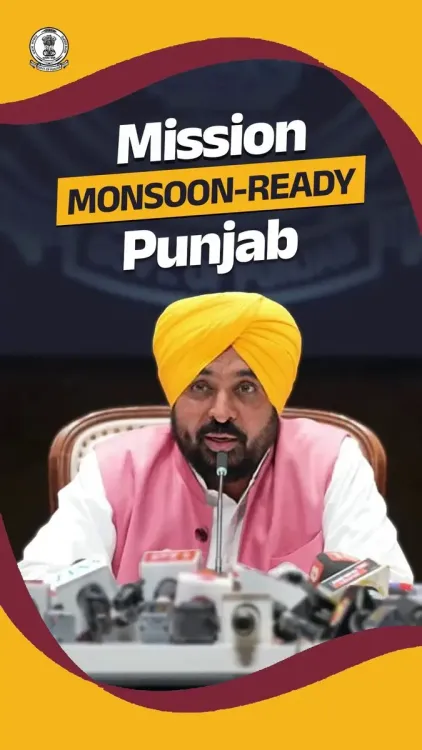
The Bhagwant Mann-led Punjab Government has launched what it describes as the state's most extensive sewerage desilting drive ahead of the 2026 monsoon, targeting sewage overflow and urban waterlogging across cities and neighbourhoods statewide.
Key Takeaways
The Chief Minister's Office of Punjab announced the sewerage desilting drive on 6 June 2026 .
Chief Minister Bhagwant Mann 's government has described it as the most extensive such drive in the state's history.
The drive targets elimination of sewage overflow and prevention of urban waterlogging ahead of the June-September monsoon.
The stated goal is to make every city and every mohalla across Punjab monsoon-ready.
Urban residents and municipal bodies are the primary stakeholders in the initiative's implementation and outcomes.
The campaign aligns with national urban sanitation priorities under the AMRUT framework launched in 2015 .
The Chief Minister's Office of Punjab announced on Saturday, 6 June 2026 that the Bhagwant Mann-led Punjab Government has launched the state's most extensive sewerage desilting drive ahead of the monsoon season, targeting sewage overflow and urban waterlogging across cities and towns.
Context
The drive was announced with the stated aim of making every city and every mohalla (neighbourhood) monsoon-ready before the June-September rainfall season begins in earnest. The official post described the initiative as a 'focused mission to deliver cleaner, healthier, and flood-free urban spaces,' with the government asserting it represents the largest such effort the state has undertaken.
Urban waterlogging is a recurring challenge across Punjab's cities during the monsoon months, when clogged or silted sewer lines cause wastewater to back up onto streets and into residential areas. Pre-monsoon desilting of drains and sewers is a standard civic preparedness measure, but the scale of this year's drive has been specifically highlighted by the government.
Policy Backdrop
Punjab's urban sanitation infrastructure has received support under the Atal Mission for Rejuvenation and Urban Transformation (AMRUT), the national programme launched in 2015 that has funded sewerage and drainage upgrades in towns and cities across the country, including in Punjab. The current drive builds on that broader national framework of strengthening urban drainage systems.
Chief Minister Bhagwant Mann, who has led the Aam Aadmi Party government in Punjab since March 2022, has positioned urban civic infrastructure as a key governance priority. Desilting campaigns of this nature are part of recurring state-level efforts to reduce the public health and economic disruption caused by monsoon flooding in densely populated urban areas.
Stakeholders and Impact
The primary beneficiaries of the drive are urban residents across Punjab who face waterlogging, property damage, and sanitation hazards each monsoon season. Municipal bodies across the state are the implementing agencies, tasked with mobilising equipment and personnel to clear sewerage networks before peak rainfall arrives.
Sewage overflow during monsoons is not merely an inconvenience — it poses direct public health risks by contaminating water sources and creating breeding grounds for vector-borne diseases. A successful desilting campaign, if implemented comprehensively, can meaningfully reduce these risks for lakhs of residents in Punjab's urban centres.
What's Next
The effectiveness of the drive will be assessed in the weeks and months following the monsoon season, with post-rainfall waterlogging data from Punjab's cities serving as the key metric. Civic bodies and residents will be watching whether the government's claim of an unprecedented scale translates into measurable improvement in drainage performance across localities.
If the initiative delivers visible results, it is likely to be highlighted as a governance achievement ahead of future electoral cycles. Independent assessments by urban local bodies and resident welfare associations will be critical to establishing whether the drive achieved its stated objectives.
Point of View
But the scale of the announcement suggests the AAP government is seeking political credit for what has historically been under-publicised civic maintenance. The linkage to flood-free, healthier urban spaces connects the initiative to a broader narrative of visible, ground-level governance that the party has championed since coming to power in 2022. Whether the drive's outcomes match its ambition will be the real test — post-monsoon waterlogging data from Punjab's cities will be the measure that matters.
NationPress
15 Sept 2026
Frequently Asked Questions
What is the Punjab sewerage desilting drive launched by CM Bhagwant Mann?
It is a state-wide pre-monsoon campaign launched by the Bhagwant Mann-led Punjab Government to clean and desilt sewerage networks across urban areas, aimed at preventing sewage overflow and waterlogging during the June-September monsoon season.
Why is Punjab carrying out a desilting drive before the monsoon?
Silted or blocked sewer lines cause wastewater to overflow onto streets during heavy rainfall, leading to urban flooding, property damage, and public health hazards. Clearing these lines before the monsoon reduces these risks for residents.
Which cities in Punjab are covered under the desilting drive?
The government has stated that the drive covers every city and every mohalla across Punjab, though specific city-by-city details have not been itemised in the official announcement.
What is AMRUT and how is it related to Punjab's sewerage infrastructure?
AMRUT, the Atal Mission for Rejuvenation and Urban Transformation, is a national programme launched in 2015 that has funded sewerage and drainage upgrades in urban areas across India, including Punjab, providing the policy and financial backbone for such infrastructure improvements.
How will the success of Punjab's desilting drive be measured?
The effectiveness of the drive will be gauged by the extent of urban waterlogging reported during and after the 2026 monsoon season, with data from municipal bodies and on-ground reports from residential areas serving as the primary indicators.