CM Mann launches Punjab's biggest pre-monsoon desilting drive
Synopsis
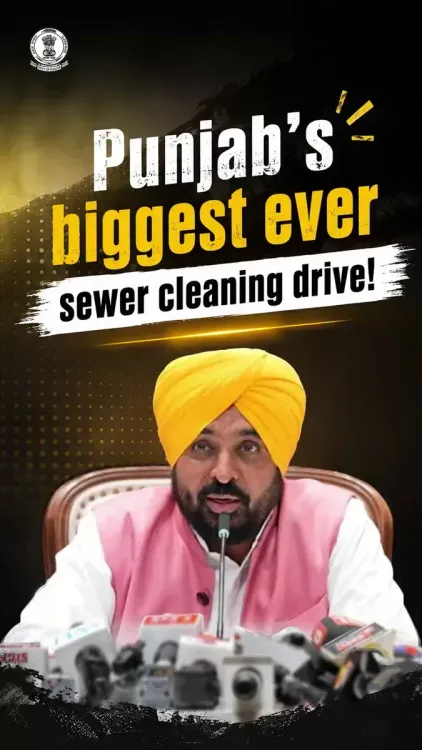
The Punjab government under Chief Minister Bhagwant Mann has launched the state's largest-ever pre-monsoon sewerage desilting drive, targeting sewage overflow and urban waterlogging. The initiative, announced on 6 June 2026, builds on Punjab's participation in the AMRUT urban infrastructure programme and continues the annual seasonal practice at a claimed unprecedented scale.
Key Takeaways
The Punjab government has launched what it calls the state's most extensive sewerage desilting drive ahead of the 2026 monsoon season .
Chief Minister Bhagwant Mann of the Aam Aadmi Party is leading the initiative, announced on 6 June 2026 .
The drive targets two specific problems: sewage overflow and urban waterlogging in Punjab's cities.
Punjab has been part of the central AMRUT scheme since 2015 , aimed at upgrading urban sewerage and drainage infrastructure.
The scale, budget, and city-wise coverage of the current drive have not yet been independently verified.
Post-monsoon waterlogging data will be the practical measure of the drive's effectiveness.
The Chief Minister's Office of Punjab announced on Saturday, 6 June 2026 that the state government, under the leadership of Chief Minister Bhagwant Mann, has launched what it describes as the most extensive sewerage desilting drive in Punjab's history, aimed at eliminating sewage overflow and preventing urban waterlogging ahead of the monsoon season.
Context
The announcement, made via the official CMO Punjab account on X, frames the drive as a direct pre-monsoon preparedness measure. The post states the initiative is 'aimed at eliminating sewage overflow and preventing urban waterlogging' — two recurring problems that affect Punjab's cities each year when the monsoon arrives. The government has described the current effort as the state's most extensive such drive to date.
Urban waterlogging in Punjab is a well-documented seasonal challenge, driven by a combination of ageing sewer networks, rapid urban expansion, and the heavy rainfall that characterises the July–September monsoon window. Desilting — the mechanical clearing of accumulated silt, debris, and solid waste from sewerage lines and drains — is the standard pre-monsoon intervention deployed by municipal bodies across India.
Policy Backdrop
Punjab has been a participant in the centrally sponsored Atal Mission for Rejuvenation and Urban Transformation (AMRUT) since 2015, a programme specifically designed to upgrade urban sewerage and drainage infrastructure across Indian cities. The current state government, led by the Aam Aadmi Party since March 2022, has positioned urban infrastructure maintenance as a core governance priority.
Annual pre-monsoon desilting campaigns are an established practice across Indian states, but the scale and coordination of such drives vary significantly between administrations. The Punjab government's characterisation of this year's effort as the 'most extensive ever' signals an attempt to distinguish the current drive from previous seasonal exercises, though independent verification of its scale and coverage remains pending.
Stakeholders and Impact
The primary beneficiaries of a successful desilting drive are urban residents across Punjab's cities, who face the direct consequences of waterlogging — flooded streets, disrupted transport, property damage, and public health risks from stagnant water. Municipal corporations across the state are the implementing agencies, responsible for deploying machinery and labour across drainage networks.
Sewage overflow is also a significant environmental and public health concern, with untreated or overflowing sewage contaminating water bodies and posing disease risks. A comprehensive desilting programme, if executed effectively, can reduce these downstream harms in addition to preventing surface flooding.
What's Next
Official progress reports detailing the geographic coverage, volume of silt cleared, and number of sewerage lines addressed will be the key metrics to watch as the drive proceeds. A post-monsoon assessment of waterlogging incidents across major Punjab cities will serve as the practical test of whether this year's effort delivers on its stated ambitions. The government's own framing — 'most extensive ever' — sets a clear benchmark against which the results will be measured.
Point of View
Framing routine seasonal maintenance as a governance achievement. For the AAP administration, urban service delivery has been a core electoral promise, and visible pre-monsoon action on waterlogging — a problem that generates significant public frustration — fits squarely within that narrative. The invocation of scale without yet-verifiable specifics is a pattern common to pre-season government announcements across India; the credibility of the claim will ultimately rest on post-monsoon outcomes. Longer term, durable resolution of Punjab's urban drainage problems will require sustained capital investment in sewerage infrastructure, not just annual desilting cycles.
NationPress
14 Sept 2026
Frequently Asked Questions
What is the Punjab government's sewerage desilting drive?
The Punjab government has launched a pre-monsoon sewerage desilting drive described as the most extensive in the state's history, aimed at clearing silt and debris from drains and sewerage lines to prevent urban waterlogging and sewage overflow during the monsoon season.
Why is desilting important before the monsoon in Punjab?
Punjab's cities face recurring waterlogging during the July–September monsoon due to ageing sewer networks and urban growth. Desilting clears blockages in drainage systems so that rainwater can flow freely, reducing the risk of flooded streets, property damage, and public health hazards.
Which scheme supports sewerage infrastructure in Punjab?
Punjab participates in the centrally sponsored Atal Mission for Rejuvenation and Urban Transformation, known as AMRUT, which has funded sewerage and drainage upgrades in Indian cities since 2015.
Who is overseeing the Punjab desilting drive?
The drive is being conducted by the Punjab government under Chief Minister Bhagwant Mann of the Aam Aadmi Party, with municipal corporations across the state serving as the implementing agencies on the ground.
How will the success of Punjab's desilting drive be measured?
The effectiveness of the drive will be assessed through official progress reports on coverage and, most practically, by comparing urban waterlogging incidents during and after the 2026 monsoon season against previous years.