Pithora painting at Vibrant Gujarat 2025: Tribal art goes global from Vadodara
Synopsis
A ritual art once painted on mud walls by Gujarat's tribal communities is heading to a global economic platform. Pithora painting's debut at the Vibrant Gujarat Regional Conference in Vadodara signals how India's GI-tagged crafts are being repositioned — from cultural footnotes to viable livelihoods, with artisan incomes reportedly rising 15-30% through institutional backing.
Key Takeaways
Pithora painting will be showcased at the Vibrant Gujarat Regional Conference (VGRC) on 29-30 June and the VGRE from 29 June to 3 July at GSFC University, Vadodara .
The art form, practised by the Rathwa, Bhil, and Bhilala communities of Chhota Udepur, Vadodara, and Panchmahal , received a GI tag in 2021 .
Garvi Gurjari has purchased Pithora artworks worth more than ₹6.2 lakh directly from artists over the past five years .
Participating artisans have seen an estimated 15 to 30 per cent increase in income , according to officials.
Padma Shri awardee Paresh Rathwa credited the initiative with making tribal artisans self-reliant and taking their heritage to global audiences.
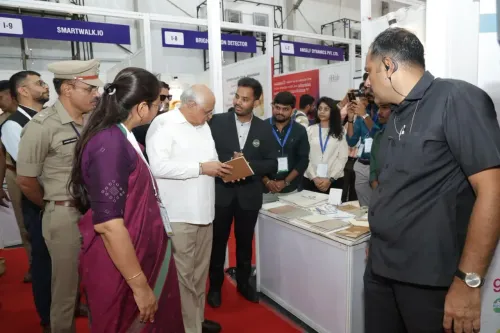
Pithora painting, a centuries-old tribal art form rooted in the forests and villages of Central Gujarat, is set to take centre stage at the Vibrant Gujarat Regional Conference (VGRC) and the Vibrant Gujarat Regional Exhibition (VGRE) in Vadodara, showcasing its remarkable journey from sacred mud-wall ritual to a commercially viable craft with national and international reach.
Event Details and Objectives
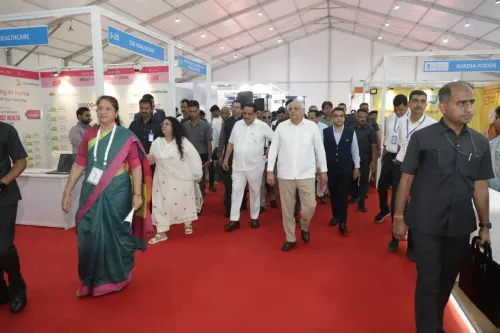
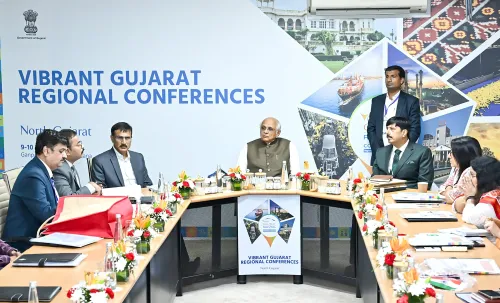
The VGRC for Central Gujarat is scheduled for 29 and 30 June at GSFC University, Vadodara, while the VGRE runs from 29 June to 3 July. According to officials, the events are designed to promote industrial and economic development alongside Gujarat's handicrafts and cultural heritage on a broader platform.
Aligned with the national vision of 'Developed India@2047' and 'Vocal for Local', the initiative will spotlight several GI-tagged products and traditional crafts from the region. Authorities said the core objective is to connect artisans directly with national and international buyers and expand livelihood opportunities through institutional support and market exposure.
The Roots of Pithora Art
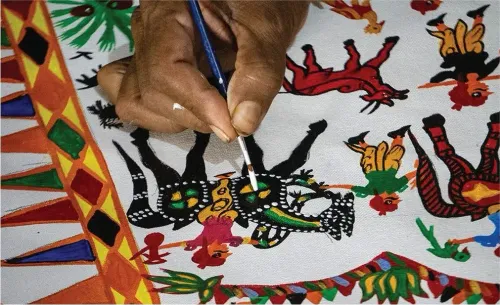
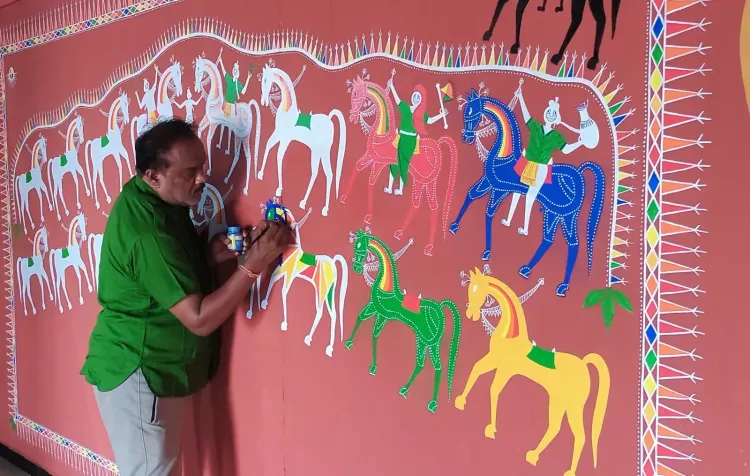
Pithora painting is traditionally practised by the Rathwa, Bhil, and Bhilala communities across Chhota Udepur, Vadodara, and Panchmahal districts. Historically rendered on the mud walls of tribal homes, the paintings served as religious ceremonies and symbolic prayers — expressions of harmony between humans, nature, and spiritual forces.
Over time, the art form has migrated from mud walls to canvas, paper, and other contemporary materials, enabling it to reach wider audiences while opening additional income streams for artists — particularly younger practitioners who have adapted traditional motifs to modern formats without abandoning their cultural roots. The art received a Geographical Indication (GI) tag in 2021, formally recognising its regional identity and cultural significance.
Tradition Meets Modernity
Despite the evolution in medium and market, practitioners note that the symbolic language of Pithora painting remains intact. Traditional elements such as bows and arrows continue to appear alongside contemporary imagery — vehicles, urban scenes — reflecting gradual social change within the artistic tradition. Individual interpretation varies in colour, composition, and motif selection, but the core visual vocabulary endures.
Notably, this dual identity — ancient ritual art that is also a living commercial craft — is precisely what makes Pithora a compelling exhibit at a platform focused on economic development.
Institutional Support and Artisan Income
The Gujarat State Handloom and Handicrafts Development Corporation Limited, through its 'Garvi Gurjari' initiative, has been central to this transition. Over the past five years, the corporation has directly purchased Pithora artworks worth more than ₹6.2 lakh from artists, with officials estimating a 15 to 30 per cent increase in income for participating artisans. The organisation currently works directly with five master artists and supports thousands of rural households indirectly through craft-based livelihoods.
Support measures include transport and stall assistance, live demonstrations, buyer interaction opportunities, and regular design development workshops that have encouraged diversification into home décor items and lighting accessories — extending Pithora motifs well beyond traditional formats. Digital campaigns promoting Gujarat's handicraft sector have further amplified visibility.
Artisans Speak
Pithora artist Naran Rathwa said institutional support has meaningfully expanded market access. 'The workshops, exhibitions and fairs organised have been very useful for us. Earlier, our income was limited to work available in the village, but now, due to access to new markets and customers, our sources of income have significantly increased,' he said.
Padma Shri awardee Paresh Rathwa echoed the sentiment, crediting the initiative with delivering both recognition and economic stability. 'It has truly made me and my fellow local artisans self-reliant. The institution has taken the heritage of our tribal community and the essence of our soil to different parts of the world,' he said. He added that engagement with organised platforms had helped artists better understand market expectations and presentation.
As the VGRC and VGRE prepare to bring together industry leaders, policymakers, and artisans later this month, Pithora art is poised to be among the cultural highlights — a living testament to how heritage craft can evolve without losing its soul.
Point of View
But the numbers tell a more grounded story: ₹6.2 lakh in direct purchases over five years is modest for a craft supporting thousands of rural households. The 15-30% income increase for participating artisans is meaningful at the individual level, yet the programme currently reaches only five master artists directly. The real test of Gujarat's tribal art push is whether VGRC exposure translates into sustained buyer relationships — not just exhibition footfall. Without scalable procurement pipelines and IP protection post-GI tagging, global platform appearances risk remaining one-off showcases rather than structural livelihood shifts.
NationPress
25 Sept 2026
Frequently Asked Questions
What is Pithora painting and where does it come from?
Pithora painting is a traditional tribal art form practised by the Rathwa, Bhil, and Bhilala communities in Chhota Udepur, Vadodara, and Panchmahal districts of Central Gujarat. Historically rendered on the mud walls of tribal homes as part of religious ceremonies, it has since evolved onto canvas and paper while retaining its symbolic visual language. It received a GI tag in 2021.
Where and when will Pithora painting be showcased at the Vibrant Gujarat event?
Pithora painting will be featured at the Vibrant Gujarat Regional Conference (VGRC) on 29 and 30 June and at the Vibrant Gujarat Regional Exhibition (VGRE) from 29 June to 3 July 2025, both held at GSFC University in Vadodara.
How has institutional support helped Pithora artisans?
The Gujarat State Handloom and Handicrafts Development Corporation's Garvi Gurjari initiative has purchased Pithora artworks worth over ₹6.2 lakh directly from artists over five years and provided training, design workshops, exhibition support, and market access. Officials estimate a 15 to 30 per cent income increase for participating artisans.
What is the significance of Pithora painting's GI tag?
The Geographical Indication (GI) tag awarded in 2021 formally recognises Pithora painting's regional identity, authenticity, and cultural significance. It provides legal protection against imitation and strengthens the art form's credibility in national and international markets.
How has Pithora painting changed while preserving its tradition?
Pithora painting has moved from mud walls to canvas, paper, and home décor products, enabling commercial reach. However, its core symbolic vocabulary — including motifs like bows and arrows — remains consistent. Contemporary elements such as vehicles and urban scenes have been incorporated, reflecting social change without abandoning cultural roots.