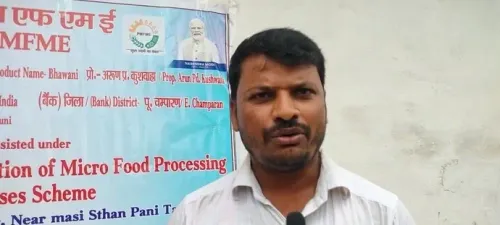
PMFME scheme transforms Burhanpur youth and women into entrepreneurs
Synopsis
A young man from a Burhanpur village used a ₹19.94 lakh PMFME loan and a 35% subsidy to build a fruit-powder startup that now employs local women — a ground-level snapshot of how India's 2020 food-processing formalisation scheme is playing out in rural Madhya Pradesh.
Key Takeaways
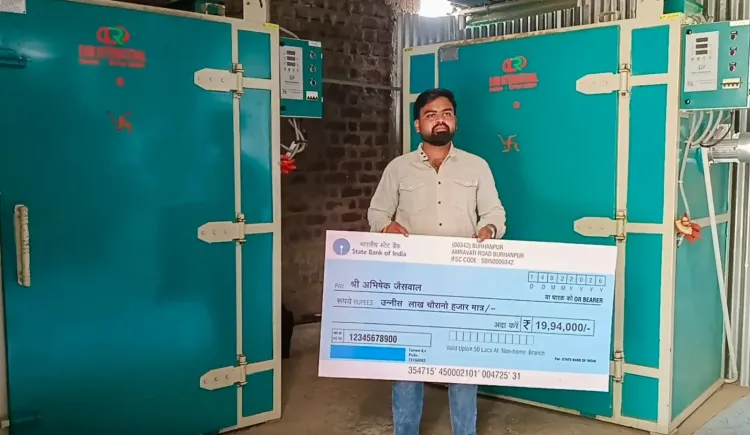
Abhishek Jaiswal of Patonda village, Burhanpur secured a ₹19.94 lakh loan under the PMFME scheme to launch a food-processing startup.
The unit produces fruit powder sold in local and domestic markets, with a subsidy of up to 35 per cent received under the scheme.
The startup employs several women and youth from the local village, boosting community-level employment.
The PMFME scheme was launched in 2020 under the Atmanirbhar Bharat Abhiyaan to formalise micro food-processing enterprises nationwide.
Local trader Sandeep Rawal also cited the scheme as a catalyst for entrepreneurial activity in the district.
The Pradhan Mantri Formalisation of Micro Food Processing Enterprises (PMFME) scheme is delivering tangible results in Madhya Pradesh's Burhanpur district, where beneficiaries like Abhishek Jaiswal of Patonda village are building food-processing startups and generating local employment — particularly for women. Launched in 2020 as part of the Atmanirbhar Bharat Abhiyaan, the centrally sponsored scheme provides financial, technical, and business support to micro food enterprises across India.
From Job-Seeker to Job-Creator
Abhishek Jaiswal, a resident of Patonda village in Burhanpur, had worked a salaried job after completing his education but harboured larger ambitions. It was during this period that he came across the PMFME scheme and decided to apply. A loan of ₹19.94 lakh was subsequently sanctioned to him, along with a subsidy of up to 35 per cent — provisions built into the scheme's support structure.
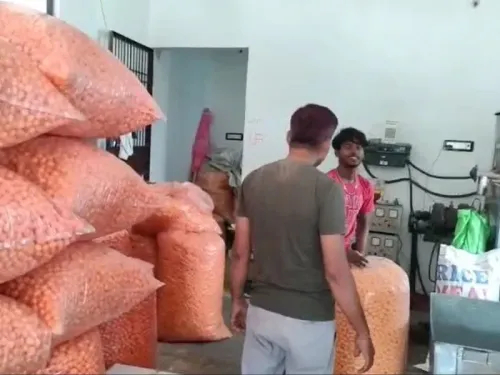
With that capital, Abhishek launched a food-processing startup focused on value addition to agricultural produce. His unit now manufactures fruit powder, which is sold across local and domestic markets. The venture has since grown into a functioning enterprise employing several women and youth from the surrounding village.
Employment Impact on Local Women
The startup's growth has had a measurable effect on the immediate community. Multiple women from Patonda village are now employed at the unit, gaining financial independence and contributing to household incomes. Abhishek's model — using a government-backed loan to create a private enterprise that then employs others — has become a reference point for other young people in the area considering a similar path.
Local spices trader Sandeep Rawal also acknowledged the scheme's role in opening up entrepreneurial avenues, expressing appreciation for the opportunities it has extended to the district's youth.
What the PMFME Scheme Offers
The PMFME scheme is a centrally sponsored initiative designed to formalise and scale micro food-processing units across the country. It provides eligible entrepreneurs with financial assistance — including credit-linked subsidies — as well as technical guidance and business development support for both new and existing units.
The scheme is aligned with the Vocal for Local vision, aiming to make micro-enterprises more competitive, integrate them into the organised sector, and build sustainable livelihoods in rural and semi-urban areas. Burhanpur, known historically for its banana and cotton cultivation, offers a natural base for agri-processing ventures of the kind Abhishek has established.
Broader Significance for Madhya Pradesh
Burhanpur's story is part of a wider pattern emerging across Madhya Pradesh and other states, where PMFME beneficiaries are reportedly converting scheme support into functioning micro-enterprises. The scheme's design — linking credit access to a formal subsidy structure — addresses one of the most persistent barriers for first-generation rural entrepreneurs: access to affordable capital.
As the scheme continues to scale, the government's focus will likely shift toward measuring employment outcomes and the sustainability of supported units beyond the initial loan cycle. Whether models like Abhishek's can be replicated at district scale remains the next test for the programme.
Point of View
But it is also a single data point. The PMFME scheme's real scorecard lies in aggregate numbers: how many of the sanctioned units are operational two years after disbursement, and how many jobs have been sustained — not just created at launch. Rural food-processing has a high attrition rate driven by market access and cold-chain gaps, neither of which a credit-linked subsidy alone resolves. Burhanpur's agri-processing potential is genuine, but converting individual success stories into district-level economic transformation requires supply-chain infrastructure that the scheme does not currently address. The government would do well to publish cohort-level survival data for PMFME beneficiaries before the next round of scheme expansion.
NationPress
11 Oct 2026
Frequently Asked Questions
What is the PMFME scheme and who can apply?
The Pradhan Mantri Formalisation of Micro Food Processing Enterprises (PMFME) scheme is a centrally sponsored programme launched in 2020 under the Atmanirbhar Bharat Abhiyaan. It provides financial assistance — including credit-linked subsidies of up to 35 per cent — along with technical and business support to entrepreneurs setting up or upgrading micro food-processing units.
How much financial support did Burhanpur beneficiary Abhishek Jaiswal receive?
Abhishek Jaiswal was sanctioned a loan of ₹19.94 lakh under the PMFME scheme, along with a subsidy of up to 35 per cent. He used the funds to launch a fruit-powder processing unit in Patonda village, Burhanpur.
What kind of business did Abhishek Jaiswal start under the PMFME scheme?
Abhishek set up a food-processing startup that performs value addition on agricultural produce, primarily manufacturing fruit powder sold in local and domestic markets. The unit employs women and youth from the surrounding village.
How has the PMFME scheme impacted women in Burhanpur?
The scheme has indirectly created employment for local women through startups like Abhishek Jaiswal's. Several women from Patonda village are now employed at his unit, gaining financial independence and contributing to household incomes.
What is the broader goal of the PMFME scheme?
The scheme aims to formalise micro food-processing enterprises, make them more competitive, and integrate them into the organised sector. It also supports the government's 'Vocal for Local' vision by strengthening agri-processing value chains in rural and semi-urban India.