PMK's Anbumani flags flood, traffic risks in TN secretariat shift to Pallavan Illam
Synopsis
PMK President Anbumani Ramadoss has publicly challenged the Tamil Nadu government's reported plan to build its new Secretariat at Pallavan Illam, calling out a stark land-area shortfall — just 13.22 acres against a 20-lakh-sq-ft facility — plus flood exposure on the Cooum riverbank and traffic strain on Anna Salai. His counter-proposal: a 500–1,000-acre integrated administrative city on Chennai's outskirts, planned for the next century.
Key Takeaways
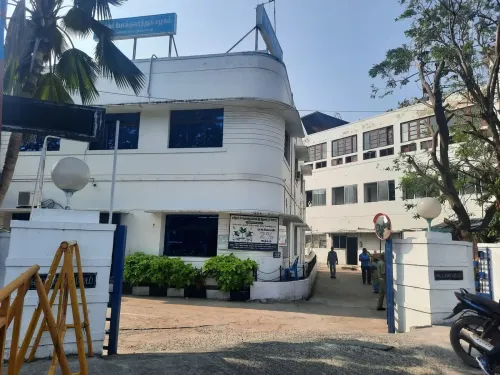
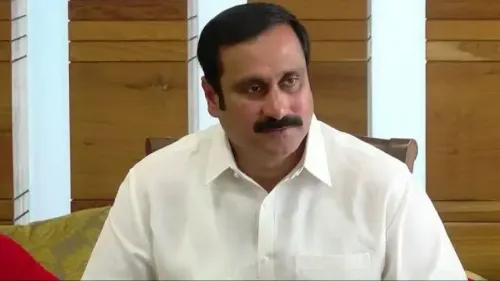
PMK President Anbumani Ramadoss on 20 October 2026 urged the Tamil Nadu government to reconsider shifting the new Secretariat project to Pallavan Illam on Anna Salai .
The Pallavan Illam site covers only 13.22 acres , compared to 26.26 acres at Pattinapakkam and 39.54 acres at the Omandurar government estate .
The proposed facility has a built-up area of 20 lakh square feet , which Anbumani argues cannot be viably housed on 13.22 acres.
He warned of flood risks from construction along the Cooum River banks and severe traffic pressure on Anna Salai .
Anbumani proposed an integrated administrative city of 500–1,000 acres on Chennai's outskirts as a long-term alternative.
Pattali Makkal Katchi (PMK) President Anbumani Ramadoss on Tuesday, 20 October 2026, urged the Tamil Nadu government to reconsider its reported plan to relocate the proposed new Secretariat to Pallavan Illam on Anna Salai, warning that the site's limited area, flood exposure along the Cooum River banks, and traffic implications make it an unsuitable choice for a long-term administrative headquarters.
The Site Comparison Problem
Anbumani, a former Union minister, pointed out that the Pallavan Illam site spans only 13.22 acres — significantly smaller than the 26.26 acres previously under consideration at Pattinapakkam and the 39.54 acres available at the Omandurar government estate. He questioned how a facility with a proposed built-up area of 20 lakh square feet could be viably accommodated on such a constrained parcel while fulfilling the functional demands of a state administrative headquarters.
Traffic and Accessibility Concerns
Anbumani warned that positioning a complex of this scale on Anna Salai — one of Chennai's busiest arterial roads — could add substantially to traffic pressure. The daily movement of government employees, elected representatives, officials, and visitors would intensify congestion at an already stressed corridor, he said. The presence of major roads, religious structures and the river on all sides leaves little room for traffic management infrastructure, he argued.
Flood Risk Along the Cooum
The PMK chief also raised environmental concerns, noting that construction along the banks of the Cooum River carries serious flood risks. He called on the government to assess these risks thoroughly before arriving at any decision, particularly given Chennai's well-documented vulnerability to urban flooding. This comes amid broader concerns about waterway encroachments across the city that have repeatedly worsened flood damage in past monsoon seasons.
Expansion Constraints and Long-Term Viability
Beyond immediate hazards, Anbumani argued that the site's physical boundaries — hemmed in by roads, the river, and existing structures — would make any future expansion impossible. For an institution expected to serve the state over multiple generations, he said, that rigidity was a fundamental disqualification.
A Counter-Proposal: Integrated Administrative City
While supporting the principle of a new Secretariat to address Tamil Nadu's growing administrative needs, Anbumani proposed an alternative vision: an integrated administrative city spread across 500 to 1,000 acres on the city's outskirts, planned with a century-long horizon. He argued that rather than compressing another major government complex into an already dense urban core, the state should seize this as an opportunity for transformative, sustainable planning — one that provides adequate room for administrative growth, green infrastructure, and long-term accessibility. The government has not yet formally responded to the PMK's concerns, and the final location for the proposed Secretariat remains undecided.
Point of View
Not mere political opposition. What's notable is that Anbumani has moved beyond criticism to an alternative proposal — a 500–1,000-acre administrative city on the outskirts — which shifts the debate from obstruction to vision. Tamil Nadu has grappled with urban flooding repeatedly; placing a permanent state headquarters on the Cooum banks without exhaustive hydrological study would be a governance risk long after the ribbon-cutting. The DMK government has yet to respond substantively, and the silence itself is telling — if the Pallavan Illam choice were straightforwardly defensible, a rebuttal would have followed quickly.
NationPress
20 Oct 2026
Frequently Asked Questions
Why is PMK opposing the Tamil Nadu Secretariat at Pallavan Illam?
PMK President Anbumani Ramadoss argues that the Pallavan Illam site on Anna Salai is too small at just 13.22 acres, flood-prone due to its proximity to the Cooum River, and likely to worsen traffic congestion. He says the site cannot accommodate a proposed 20-lakh-sq-ft complex and offers no room for future expansion.
How does Pallavan Illam compare to other sites considered for the new Secretariat?
Pallavan Illam offers 13.22 acres, considerably less than the 26.26 acres at Pattinapakkam and the 39.54 acres at the Omandurar government estate — both of which were previously under consideration for the project.
What alternative has Anbumani Ramadoss proposed for the new Secretariat?
Anbumani has proposed developing an integrated administrative city on 500 to 1,000 acres on the outskirts of Chennai, designed with a century-long planning horizon to allow for administrative growth, sustainability, and future expansion.
What are the flood risks associated with the Pallavan Illam site?
The Pallavan Illam site lies along the banks of the Cooum River, which has historically contributed to Chennai's urban flooding during heavy monsoon seasons. Anbumani has called for a thorough environmental and hydrological assessment before any decision is finalised.
Has the Tamil Nadu government responded to PMK's concerns?
As of 20 October 2026, the Tamil Nadu government had not formally responded to the PMK's concerns. The final location for the proposed new Secretariat remains undecided, according to available reports.