PMK's Anbumani threatens protest over Pallikaranai marshland wall

Synopsis
PMK president Anbumani Ramadoss has threatened a large-scale agitation if the TVK government does not scrap a ₹21.5 crore retaining wall inside Chennai's Pallikaranai marshland — a wetland that has already shrunk from 15,000 acres to 2,500 acres and serves as the city's primary natural flood buffer. The project, funded through a World Bank loan under the Neithal Recovery Mission, is now at the centre of a fight between political accountability, environmental law, and urban flood management.
Key Takeaways
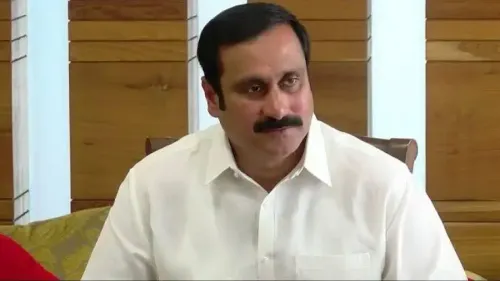
PMK president Anbumani Ramadoss on 12 October demanded an immediate halt to retaining wall and pathway construction inside Pallikaranai marshland , Chennai.
He alleged the project violates judicial directions on wetland protection and cited corruption in its execution.
The works are part of the Neithal Recovery Mission (launched 2024 ), funded by a World Bank loan of ₹1,674 crore ; ₹21.5 crore is earmarked for Pallikaranai under the Forest Department .
Residents reported worsening water stagnation, mosquito breeding, and dengue risk since construction began.
Pallikaranai marsh has shrunk from roughly 15,000 acres to approximately 2,500 acres over the past century.
PMK has threatened a large-scale agitation if Chief Minister C.
Joseph Vijay does not intervene and order removal of the structures.
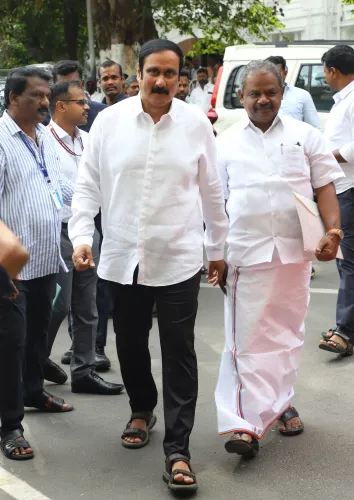
PMK president Anbumani Ramadoss on Monday, 12 October demanded an immediate halt to the construction of a retaining wall and pathway inside the Pallikaranai marshland in Chennai, warning that the three-kilometre project would worsen flood risk for surrounding residential neighbourhoods. After personally inspecting the site, he called on Chief Minister C. Joseph Vijay to intervene and order the removal of structures already in place.
What the PMK Is Demanding
Anbumani stated that the partially built retaining wall and pathway must be fully scrapped and the completed portions dismantled. He questioned why concrete structures were being raised inside a protected wetland, arguing the proposal had not been sought by local residents or fishing communities. He also alleged that the work violated judicial directions on wetland protection and accused the government of corruption in executing the project.
Origins of the Disputed Project
The construction was initiated under the Neithal Recovery Mission, launched in 2024 by the previous Dravida Munnetra Kazhagam (DMK) government to improve livelihoods across coastal communities in 14 districts along Tamil Nadu's 1,076-kilometre coastline. The TVK administration has continued the works despite reported environmental and legal concerns. The state secured a World Bank loan of ₹1,674 crore for the mission, with ₹21.5 crore earmarked specifically for the Pallikaranai component under the Forest Department, according to Anbumani.
Environmental and Flood Concerns
Anbumani described Pallikaranai marsh as a critical natural flood buffer for Chennai, noting that it channels surplus rainwater towards the sea and replenishes groundwater during summer months. He alleged that the retaining wall obstructs the natural flow of rainwater through the wetland, making surrounding localities more vulnerable to inundation. Residents had told him that water stagnation had already worsened since construction began, and he cited their concerns about mosquito breeding and dengue risk as additional consequences.
Notably, the marshland — which reportedly spanned around 15,000 acres a century ago — has shrunk to approximately 2,500 acres, making the protection of its remaining extent environmentally significant. This is part of a broader pattern of urban encroachment on Chennai's wetland network that environmental advocates have flagged for decades.
PMK's Warning and Next Steps
Anbumani warned that if the government did not immediately halt construction, the PMK would organise a large-scale agitation under his leadership. He further demanded that the government formally notify and demarcate the remaining marshland, alleging it had not done so despite court orders. The party's threat adds political pressure on the TVK administration to address both the legal and environmental dimensions of the project before the monsoon season deepens flood risk across Chennai's low-lying areas.
Point of View
Yet a ₹21.5 crore component inside a legally sensitive marsh — reportedly without resident demand and allegedly in defiance of court orders — raises serious questions about project design and oversight. The TVK administration inheriting and continuing this work without publicly addressing the legal status is the harder question that Anbumani's protest, whatever its political timing, does not let off the hook. Until the state formally notifies and demarcates the marsh as courts have directed, every structure raised inside it will remain legally and environmentally contested.
NationPress
12 Oct 2026
Frequently Asked Questions
Why is PMK opposing the Pallikaranai marshland construction?
PMK president Anbumani Ramadoss alleges that the retaining wall and pathway being built inside Pallikaranai marshland will obstruct rainwater flow, increasing flood risk in surrounding residential areas. He also claims the project violates court directions on wetland protection and was not requested by local residents or fishing communities.
What is the Neithal Recovery Mission and how is it connected to this project?
The Neithal Recovery Mission was launched in 2024 to improve livelihoods in coastal communities across 14 districts along Tamil Nadu's 1,076-kilometre coastline. The state secured a World Bank loan of ₹1,674 crore for the mission, with ₹21.5 crore earmarked for works at Pallikaranai under the Forest Department — works that Anbumani now says must be scrapped.
What has happened to Pallikaranai marsh over the years?
The Pallikaranai marshland reportedly covered around 15,000 acres a century ago but has shrunk to approximately 2,500 acres due to urban encroachment and development. The marsh serves as a crucial natural flood buffer for Chennai, channelling excess rainwater towards the sea and recharging groundwater.
What action is PMK demanding from the Tamil Nadu government?
PMK has called on Chief Minister C. Joseph Vijay to immediately halt construction, order the removal of the wall and pathway already built, and formally notify and demarcate the remaining marshland as directed by courts. Anbumani warned of a large-scale PMK agitation if these steps are not taken.
Which government started the Pallikaranai construction and who is continuing it?
The project was initiated under the previous DMK government as part of the Neithal Recovery Mission. According to Anbumani, the TVK administration has continued the works despite reported environmental concerns and alleged legal violations.