What Leads to Radicalisation of Perception in West Bengal?
Synopsis
The ongoing controversy surrounding the Special Intensive Revision of electoral rolls in West Bengal has escalated into a tragic situation, with multiple suicides and accusations of fear-mongering by political parties. This article delves into the implications of perceived victimization and the fear instigated by political narratives.
Key Takeaways
Special Intensive Revision is intended to update electoral rolls but has sparked controversy.
Political narratives have amplified fear among citizens leading to tragic outcomes.
The ECI's role is limited to determining voting rights, not citizenship.
Historical context shows SIR has been conducted multiple times without incident.
Public perception and political manipulation are at play in the current crisis.
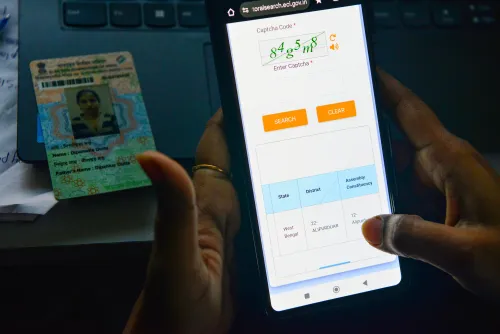
New Delhi, Nov 1 (NationPress) What began as an initiative to verify and update the electoral rolls in states heading for elections has spiraled into a significant controversy. The rise in rumors and echo chambers surrounding a citizenship issue has incited panic, culminating in the tragic suicides of at least three individuals in West Bengal.
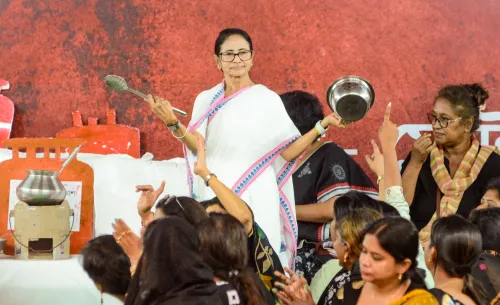
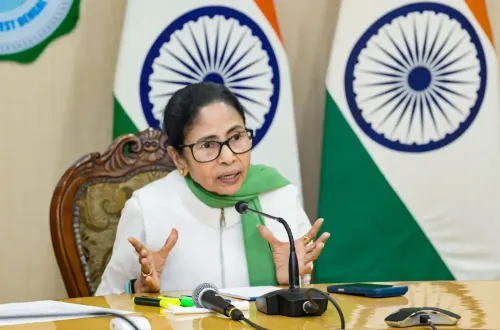
Officials from the ruling Trinamool Congress, including Chief Minister Mamata Banerjee, have pointed fingers at the Election Commission of India (ECI) and the Bharatiya Janata Party (BJP), attributing the atmosphere of fear to them. They have drawn parallels between the process of Special Intensive Revision (SIR) of the voter list and the National Register of Citizens (NRC). It is important to clarify that the ECI does not have the authority to add or remove citizens; its role is limited to determining voting rights.
In the event of grievances, there is an opportunity for appeal.
Nevertheless, the Congress and the Left parties have also scrutinized the poll body’s motives, alleging collusion with the BJP regarding the timing and methodology of the revision. They continue to amplify tensions, accusing the BJP of engaging in politics rooted in fear, division, and animosity.
The TMC has threatened to stage protests and pursue legal actions, asserting that they will establish help desks and organize mass protests if legitimate voters are removed during the SIR.
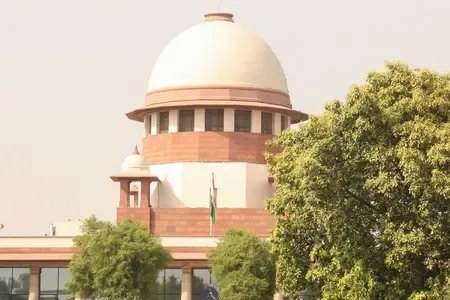
Interestingly, the Supreme Court is currently hearing petitions related to SIR but has not halted the process.
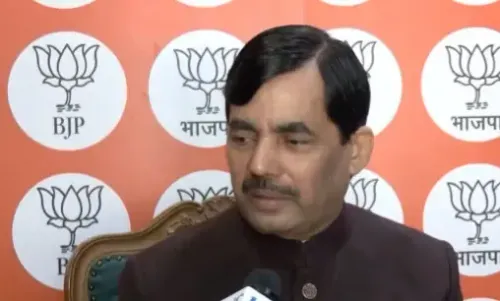
Leaders from the BJP have strongly rejected the accusation that SIR serves as a 'backdoor NRC' and have charged the TMC with exploiting fear for their political advantage. Party spokespersons have characterized the connection between suicides and a national administrative procedure as a fabricated narrative, countering what they describe as false or politically motivated claims.
Initially, some leaders from the state BJP took a strong stance, asserting that SIR would eliminate numerous fraudulent voters from the state. Each of these divergent perspectives has been absorbed into sympathetic networks. For TMC supporters, the prevailing message is one of victimization and peril; for BJP supporters, it translates into panic utilized as a political tool; and for undecided or marginalized citizens, the overwhelming noise is more disorienting than enlightening. The overall impact is not constructive debate but a radicalization of perception. Many citizens, particularly the elderly or those lacking adequate documentation, are susceptible to repeated alarms concerning statelessness, grief, and anxiety, leading some to take drastic measures.
In light of such traumas, political echo chambers have sorrowfully amplified the instances of death to incite further panic. Reports indicate that the families of the victims are often divided over the actual reasons for the suicides.
It is worth noting that the Special Intensive Revision (SIR) of the voter list has been conducted eight times between 1951 and 2004, with the last occurrence over two decades ago, from 2002 to 2004. Since then, numerous changes to the electoral rolls have arisen due to continuous migration, which can lead to voters being registered at multiple locations, failure to remove deceased individuals from the rolls, or the wrongful inclusion of individuals not recognized as citizens of India.
Article 326 of the Indian Constitution states that elections to the Lok Sabha and State Legislative Assemblies shall be based on the principle of adult suffrage. This means that the right to vote in these elections is reserved for individuals who are citizens of India, at least 18 years old, and not disqualified by law. Yet, many opposition parties are focusing on the citizenship aspect, arguing that the SIR of electoral rolls aims to exclude the names of voters likely to oppose the Bharatiya Janata Party (BJP).
In the wake of the SIR rollout announcement in West Bengal, reports surfaced that household workers in various parts of North 24 Parganas were resigning from their positions. Some families reported that their domestic helpers returned to Bangladesh, raising questions about the sudden departures—were they driven by fear of potential victimization or actual identification?
Point of View
It is critical to highlight the importance of unbiased reporting. The events in West Bengal reflect a broader trend of politicization of administrative processes, leading to real human consequences. While it is essential to scrutinize the motives of political parties, we must prioritize the well-being of citizens and strive for a narrative that fosters understanding rather than division.
NationPress
4 Oct 2026
Frequently Asked Questions
What is the Special Intensive Revision (SIR)?
The SIR is a process conducted by the Election Commission of India to verify and update the electoral rolls in preparation for elections.
Why has SIR caused controversy in West Bengal?
The SIR has been associated with fears of citizenship removal and political victimization, leading to widespread panic and tragic incidents.
How does the SIR relate to the National Register of Citizens (NRC)?
Critics have drawn parallels between SIR and NRC, fearing that SIR may serve as a backdoor mechanism for citizenship verification.
What are the consequences of the SIR process?
The SIR process has led to significant public anxiety, with reports of suicides attributed to the fear of losing voting rights.
What has been the response of political parties to the SIR?
Political parties, especially the TMC and BJP, have exchanged accusations, with each claiming the other is exploiting the situation for political gain.