Raj Thackeray slams Centre over Wangchuk hospitalisation, student lathi-charge
Synopsis
Raj Thackeray has drawn a direct line from the lathi-charge on student protesters and the forcible hospitalisation of Sonam Wangchuk to what he calls a government addicted to force over wisdom. His invocation of the Arab Spring and JP's Total Revolution signals that MNS is framing this not as an exam row but as a potential inflection point in Indian politics.
Key Takeaways
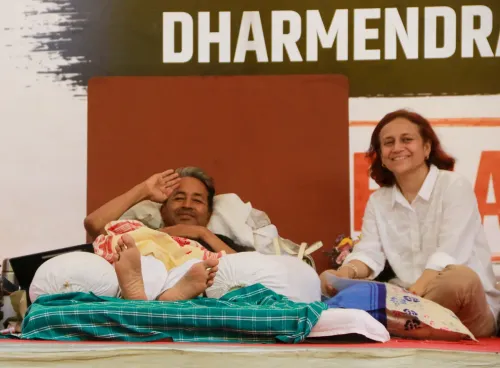
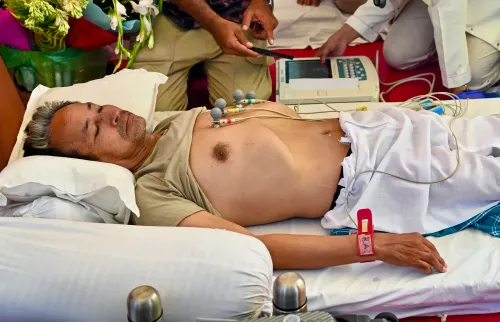
MNS chief Raj Thackeray on 21 July condemned the Centre over the forcible hospitalisation of climate activist Sonam Wangchuk and a lathi-charge on protesting students.
Thackeray demanded the resignation of Union Education Minister Dharmendra Pradhan , calling the minister's continuation a matter of government ego.
He questioned why PM Modi , known for ‘Pariksha Pe Charcha,’ had not directly engaged with students agitating on the streets.
Thackeray cited the Arab Spring (2011) , Sri Lanka (2022) , and JP's Sampoorna Kranti as historical examples of student unrest triggering political upheaval.
MNS reaffirmed its opposition to centralised exams like NEET and extended full support to the protesting students.
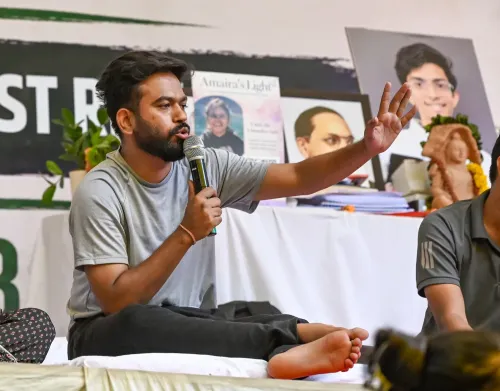
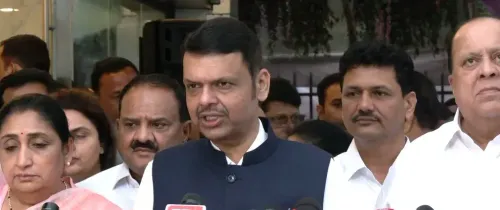
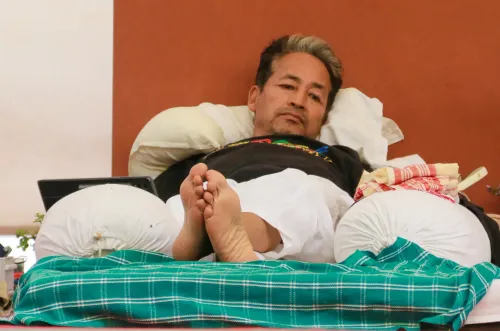
Maharashtra Navnirman Sena (MNS) chief Raj Thackeray on Tuesday, 21 July launched a sharp attack on the Central Government over the forcible hospitalisation of climate activist Sonam Wangchuk and a violent lathi-charge on protesting students, demanding the immediate resignation of Union Education Minister Dharmendra Pradhan.
Thackeray's Remarks on X
Taking to social media platform X, Thackeray condemned what he described as the government's heavy-handed response to peaceful demonstrators. “This government itself has become mentally ill and needs to be admitted to a hospital,” he posted, in a pointed reference to the reported forcible admission of Wangchuk to a medical facility.
The MNS chief alleged that the Centre had picked up Wangchuk against his will and that the lathi-charge on student protesters reflected an administration that “took pride in crushing legitimate protests.”
Demand for Education Minister's Resignation
Thackeray reiterated his call for Dharmendra Pradhan to step down, questioning why the government treated the minister's continuation as a matter of prestige. “Who is Dharmendra Pradhan that accepting his resignation feels like a failure to the government? The outrage of the nation's students is far more important than the ego of Dharmendra Pradhan and the government,” he said.
He also questioned why Prime Minister Narendra Modi — known for his annual ‘Pariksha Pe Charcha’ initiative engaging students on exam stress — had not stepped out to directly address the agitating students.
Historical Parallels and Broader Discontent
Drawing on historical precedents, Thackeray cited the Arab Spring (2011), the Sri Lankan political crisis (2022), anti-government protests in Nepal, and Jayaprakash Narayan's ‘Sampoorna Kranti’ (Total Revolution) movement in India to argue that student-led unrest has repeatedly triggered seismic political shifts.
“This movement isn't restricted to just one exam. It is an outburst of public despair against inflation, contract culture, suffocating urban development, and broader governance failures,” he said. Notably, his framing positions the ongoing student protests not as a narrow grievance over examination irregularities but as a symptom of deeper systemic frustration.
MNS Stance on NEET and Centralised Exams
Reaffirming MNS's opposition to centralised entrance examinations such as NEET, Thackeray urged the administration to pursue dialogue over force. “An incompetent minister must resign, and complete transparency must be brought into examinations. There is no bravery in ruthlessly crushing protests; true wisdom lies in resolving them through dialogue. MNS extends its full support to these students and their demands,” he said.
He also alleged that the ruling party had developed an “arrogant mindset,” claiming it believed its electoral victories were owed to central agencies and electronic voting machines rather than public mandate — an allegation the Bharatiya Janata Party (BJP) has consistently denied.
What Comes Next
With student protests over the NEET controversy showing no signs of abating, pressure on the Centre is likely to mount further. Whether the government moves toward dialogue or continues its current approach will determine the political trajectory of the agitation in the weeks ahead.
Point of View
And aligning with a nationwide student wave costs little while offering visibility. His historical comparisons — the Arab Spring, the Sri Lanka collapse, JP's Total Revolution — are designed to amplify, not merely comment. What is missing from his critique, however, is any acknowledgement of MNS's own chequered record on democratic protest. The more substantive question is whether the Centre's handling of Wangchuk and the student agitation reflects a structural intolerance of dissent or a tactical miscalculation — and on that, Thackeray offers heat but little light.
NationPress
20 Oct 2026
Frequently Asked Questions
Why did Raj Thackeray criticise the Central Government on 21 July?
Raj Thackeray criticised the Centre over two specific actions: the reported forcible hospitalisation of climate activist Sonam Wangchuk and a violent lathi-charge on students protesting over examination-related grievances. He called the government's response heavy-handed and demanded accountability from Union Education Minister Dharmendra Pradhan.
What did Raj Thackeray say about Sonam Wangchuk?
Thackeray alleged that the Central Government forcibly picked up Sonam Wangchuk and admitted him to a hospital against his will. He used the incident to argue that the administration had adopted a ‘mentally ill’ approach to handling dissent.
Why is Raj Thackeray demanding Dharmendra Pradhan's resignation?
Thackeray argues that Pradhan, as Union Education Minister, bears responsibility for the controversy surrounding centralised exams such as NEET and the government's response to student protests. He contended that the students’ anger outweighs any political cost of the minister stepping down.
What historical movements did Thackeray compare the current protests to?
Thackeray drew parallels with the Arab Spring of 2011, the Sri Lankan political crisis of 2022, anti-government protests in Nepal, and Jayaprakash Narayan’s Sampoorna Kranti (Total Revolution) in India — all instances where student or popular unrest led to significant political change.
What is MNS's position on NEET?
The Maharashtra Navnirman Sena (MNS) is opposed to centralised entrance examinations like NEET. Thackeray called for full transparency in examinations and urged the government to resolve the crisis through dialogue rather than force, pledging MNS’s full support to the protesting students.