Raj Thackeray slams Centre over Wangchuk fast, demands NEET action
Synopsis
MNS chief Raj Thackeray has gone after the BJP-led Centre on two fronts simultaneously — Sonam Wangchuk's 19-day fast-unto-death and the cascading NEET exam scandal. By framing both as symptoms of the same unchecked power, Thackeray is staking out ground that cuts across traditional political lines, appealing directly to BJP's own voters who are among the aggrieved NEET families.
Key Takeaways
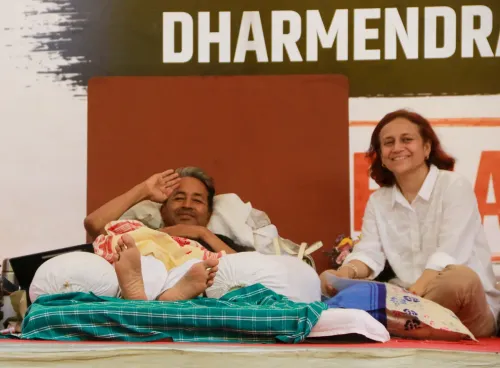
MNS chief Raj Thackeray on 16 July attacked the Centre over Sonam Wangchuk 's fast-unto-death, now in its 19th day .
Thackeray posted on X , accusing the government of sacrificing Wangchuk and the movement he represents.
He traced the BJP 's shifting relationship with Wangchuk back to 2018 , when the party invited him to the Re-Invest Conference .
Thackeray demanded structural transparency in competitive exams and the immediate sacking of the Union Education Minister over the NEET crisis.
He cited a pattern of exam irregularities from the Vyapam scam in Madhya Pradesh to recent NEET paper leaks.
Thackeray appealed directly to PM Narendra Modi , calling the student crisis “a social issue, not a political one.”
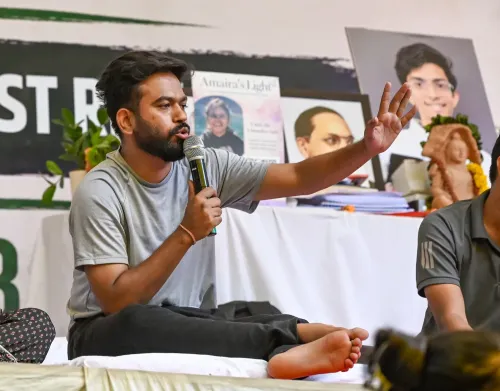
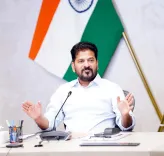
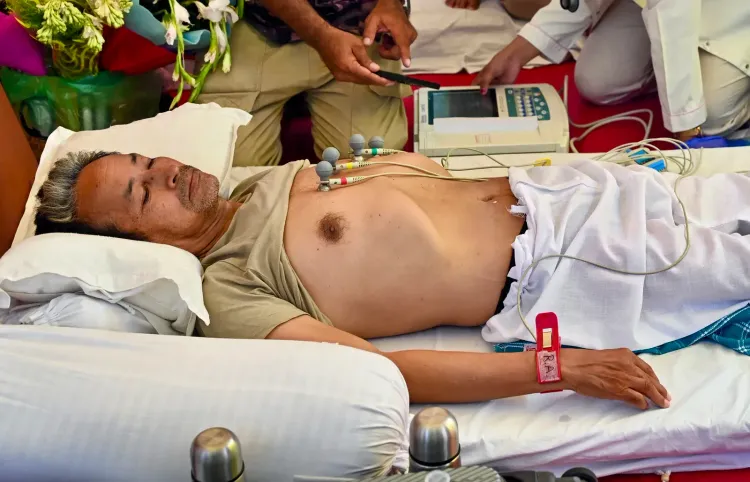
Maharashtra Navnirman Sena (MNS) chief Raj Thackeray on Thursday, 16 July launched a sharp attack on the BJP-led central government over climate activist and educationist Sonam Wangchuk's fast-unto-death, accusing the Centre of dismissing a legitimate public movement to protect political interests. As Wangchuk's indefinite hunger strike entered its 19th day, Thackeray expressed alarm over the activist's deteriorating health and called out what he described as the government's systematic undermining of democratic dissent.
Thackeray's Broadside on the Centre
In a post on X, Thackeray drew a pointed parallel between the government's silence on Wangchuk's fast and its alleged tolerance of financial irregularities. “It feels utterly awful to say that the government has decided to sacrifice Sonam Wangchuk -- and by extension, a movement that represents a voice for this country,” he said. He added: “When a government can watch silently as Shri Ram’s treasury is being looted, what difference will citizens’ movements make to them?”
Thackeray further alleged that public institutions have been brought under central control to manage elections at “astonomical costs,” and accused mainstream media of functioning under “invisible bosses” to suppress dissenting voices while independent outlets operate under a constant “sword of Damocles.”
BJP's Shifting Stance on Wangchuk
Thackeray traced what he called a timeline of political convenience in the BJP's relationship with the Ladakh-based activist. He noted that in 2018, the ruling party had invited Wangchuk to the Re-Invest Conference to draw on his expertise in unconventional energy. “One good thing about the BJP is that a person remains dear to them only as long as it suits their convenience,” Thackeray remarked.
According to Thackeray, Wangchuk initially welcomed Ladakh's Union Territory status but soon recognised that the government's underlying commitments were not being honoured. Despite repeated assurances, the Centre has reportedly failed to act on core demands — including the grant of full statehood, creation of two Lok Sabha constituencies, and protection of local land rights.
The NEET Crisis and Exam Scams
Turning to the immediate trigger of Wangchuk's current agitation, Thackeray strongly backed demands for structural transparency in competitive examinations and the immediate removal of the Union Education Minister. He cited a pattern of examination irregularities under the present regime, ranging from the Vyapam scam in Madhya Pradesh to recent leaks in national eligibility tests and teacher recruitment papers.
This pattern of impunity, he argued, stems from “unlimited power” and a total grip over state machinery — which the ruling party, he alleged, presents as the “silent consent” of voters. The NEET controversy has drawn nationwide protests, with students and parents demanding accountability and systemic reform of the examination framework.
A Direct Appeal to PM Modi
Thackeray concluded with a direct appeal to Prime Minister Narendra Modi, urging him to treat the student crisis as a social issue rather than a political one. “This isn’t a political issue. This is a social one,” Thackeray emphasised. He pointed out that BJP supporters, office-bearers, and workers were themselves among the lakhs of NEET students and parents who had suffered. “Viewing this movement through a political lens is fundamentally a sign of the central government’s narrow-mindedness,” he said.
With Wangchuk's health reportedly worsening and student protests showing no sign of abating, pressure on the Centre to respond is expected to intensify in the coming days.
Point of View
He is constructing a single narrative of institutional failure that is difficult for the Centre to compartmentalise. The appeal to BJP's own supporters among NEET families is particularly pointed: it attempts to fracture the ruling party's base rather than merely criticise it from the outside. What is notable is that Thackeray, historically aligned with Hindutva politics, is now deploying the language of democratic accountability — a shift that reflects how the NEET controversy has reshuffled political alignments. The Centre's continued silence on both fronts only widens the space for such attacks.
NationPress
15 Oct 2026
Frequently Asked Questions
Why is Raj Thackeray criticising the Centre over Sonam Wangchuk?
Raj Thackeray has accused the BJP-led Centre of ignoring Sonam Wangchuk's fast-unto-death, which had entered its 19th day as of 16 July, and of prioritising political interests over legitimate public dissent. He argued that the government's failure to respond reflects a broader pattern of dismissing citizens' movements.
What are Sonam Wangchuk's demands in his hunger strike?
According to Thackeray's account, Wangchuk has been demanding full statehood for Ladakh, the creation of two Lok Sabha constituencies for the region, protection of local land rights, and structural transparency in competitive examinations including the sacking of the Union Education Minister.
What did Raj Thackeray say about the NEET exam crisis?
Thackeray strongly backed demands for systemic reform of competitive examinations, citing a pattern of irregularities ranging from the Vyapam scam in Madhya Pradesh to recent NEET paper leaks. He called on PM Modi to treat the student crisis as a social issue and noted that BJP supporters were themselves among the affected families.
What did Thackeray say about the BJP's relationship with Sonam Wangchuk?
Thackeray highlighted that in 2018, the BJP had invited Wangchuk to the Re-Invest Conference to draw on his expertise. He argued that the ruling party's current indifference illustrates that it values individuals only as long as it is politically convenient to do so.
What is the significance of Thackeray's appeal to PM Modi?
By urging PM Modi to look beyond party lines, Thackeray sought to frame the NEET controversy and Wangchuk's fast as issues that cut across political affiliations — pointing out that BJP office-bearers and workers were themselves among the lakhs of students and parents affected by the examination crisis.