Rajasthan defends OBC reservation in panchayat polls before High Court
Synopsis
Rajasthan's OBC reservation dispute has landed in the High Court, with the state defending a Commission-backed lottery process while a petitioner argues the quota should have risen proportionately after the number of Zila Pramukh posts grew from 33 to 41. With the OBC Commission's report still not made public and the Congress forming a dedicated cell on the issue, the case could reshape how reservation is recalculated after district reorganisation.
Key Takeaways
The Rajasthan government told the High Court on 16 September that OBC reservation for local body and Panchayat elections was based on an OBC Commission door-to-door survey.
A lottery on 13 August reserved 5 of 41 Zila Pramukh posts for OBCs — three general OBC and two OBC women.
Total reservation across SC , ST , and OBC categories stands at 20 of 41 posts ( 48.78% ), within the Supreme Court's 50% ceiling.
Petitioner Radheram Godara argues OBC posts should have risen proportionately when total posts increased from 33 to 41 after district reorganisation.
Counsel Anand Sharma has questioned why OBC quota is 16% rather than 21% , and flagged that the Commission's report has not been made public.
The Indian National Congress has formed an 'Aarakshan Bachao Prakoshth' to campaign on the issue; the matter is expected before the court next week.
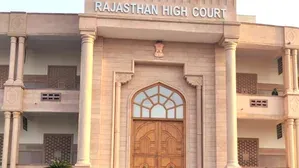
The Rajasthan government on Wednesday, 16 September defended its OBC reservation framework for local body and Panchayat elections before the Rajasthan High Court, asserting that the quota was determined on the basis of the OBC Commission's report, which drew on a door-to-door survey and analysis of data including the Jan Aadhaar database. The state maintained that all reservations for SC, ST, and OBC categories have been kept within the 50 per cent ceiling prescribed by the Supreme Court.
Background to the Dispute
The controversy centres on the reservation of Zila Pramukh posts across the state's Zila Parishads. A lottery held on 13 August reserved five of the 41 Zila Pramukh posts for OBC candidates — three for general OBC and two for OBC women. The districts reserved for OBC candidates were Jalore, Bundi, and Khairthal-Tijara, while Beawar and Sikar were reserved for OBC women.
Of the 41 total posts, eight were reserved for SCs, seven for STs, and five for OBCs — together accounting for 20 posts, or approximately 48.78 per cent, keeping the combined reservation just below the constitutional ceiling.
The Petitioner's Challenge
Petitioner Radheram Godara moved the High Court arguing that when the state had 33 Zila Pramukh posts, five were already reserved for OBCs. Following district reorganisation that raised the total to 41, Godara contended that the number of OBC-reserved posts should have increased proportionately — but it did not. His counsel, Anand Sharma, also questioned why OBC reservation was fixed at 16 per cent rather than 21 per cent, noting that 18 per cent had been provided in 2020. Sharma further pointed out that the OBC Commission's report has not been made public, raising transparency concerns.
Separately, the Commission reportedly recommended 192 OBC-reserved seats out of 1,403 Zila Parishad ward seats — amounting to 13.68 per cent — for Zila Parishad member positions.
State Government's Position
The state government countered that the reservation quota was allocated through a lottery process based on the Commission's recommendations, and that the existing reservation structure leaves no room to increase the OBC quota beyond the prescribed limit without breaching the 50 per cent ceiling. Officials emphasised that the Commission conducted a rigorous door-to-door survey and examined available data before arriving at its recommendations. The reservation lottery process for other Panchayati Raj posts — including Pradhan, Panchayat Samiti members, Sarpanch, and Panch — has been postponed pending the outcome of the legal proceedings.
Political Dimension
The Indian National Congress has seized on the issue, alleging that OBC reservation figures were reduced arbitrarily. The party has constituted an 'Aarakshan Bachao Prakoshth' (Save Reservation Cell) to campaign on the matter. The ruling state government, however, maintains that the quota was determined transparently through the Commission's process and is legally compliant.
What Happens Next
The petitioner's side has filed a rejoinder to the state government's response, and the matter is expected to come up for hearing before the Rajasthan High Court next week. The court's ruling will have direct implications for the reservation structure across Panchayati Raj institutions in the state, and could set a precedent for how OBC quota calculations are handled following district reorganisation elsewhere in India.
Point of View
But it sidesteps the petitioner's proportionality argument entirely. More troubling is the non-disclosure of the OBC Commission's report — if the methodology is sound, transparency costs nothing and buys legitimacy. The Congress's 'Aarakshan Bachao Prakoshth' signals that this is not just a legal dispute but a political one ahead of local body polls, and the High Court's ruling will be watched closely by states that have carried out similar district reorganisations.
NationPress
17 Sept 2026
Frequently Asked Questions
Why is the Rajasthan OBC reservation case before the High Court?
Petitioner Radheram Godara challenged the OBC reservation for Zila Pramukh posts, arguing that when the total number of posts rose from 33 to 41 after district reorganisation, the number of OBC-reserved posts should have increased proportionately but remained at five. The High Court sought the state government's response, which was filed on 16 September.
How many Zila Pramukh posts are reserved for OBCs in Rajasthan?
Five of the 41 Zila Pramukh posts were reserved for OBCs following a lottery held on 13 August — three for general OBC candidates (Jalore, Bundi, Khairthal-Tijara) and two for OBC women (Beawar, Sikar). Combined SC, ST, and OBC reservations total 20 of 41 posts, or approximately 48.78 per cent.
What is the state government's defence on OBC reservation?
The Rajasthan government told the High Court that the OBC quota was determined by the OBC Commission after a door-to-door survey and analysis of data including the Jan Aadhaar database. It also stated that all reservations are within the Supreme Court's 50 per cent ceiling and cannot be increased further without breaching that limit.
Why has the petitioner questioned the OBC reservation percentage?
Petitioner's counsel Anand Sharma has questioned why OBC reservation was fixed at 16 per cent instead of 21 per cent, noting that 18 per cent was provided in 2020. He has also flagged that the OBC Commission's report has not been made public, raising concerns about transparency in how the quota was determined.
What is the Congress's role in the OBC reservation dispute?
The Indian National Congress has alleged that OBC reservation figures were reduced arbitrarily and has constituted an 'Aarakshan Bachao Prakoshth' (Save Reservation Cell) to campaign on the issue. The party's intervention adds a political dimension to what is also an ongoing legal dispute before the Rajasthan High Court.