Rajasthan's Ambitious Aerospace and Defence Manufacturing Policy Unveiled
Synopsis
Rajasthan's new Aerospace and Defence Policy - 2026 aims to transform the state into a major manufacturing hub for defence technologies, fostering self-reliance and boosting the Make in India initiative. This strategic move includes comprehensive investment incentives and infrastructure support.
Key Takeaways
Rajasthan's Aerospace and Defence Policy - 2026 aims to make the state a defence manufacturing hub.
Offers a range of financial and non-financial incentives to attract investment.
Focuses on building a competitive ecosystem for manufacturing, research, and testing .
Projects classified as large , mega , and ultra-mega based on investment size.
Aligns with key national initiatives for strategic self-reliance .
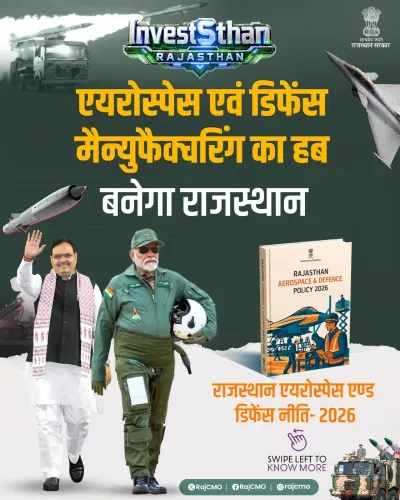
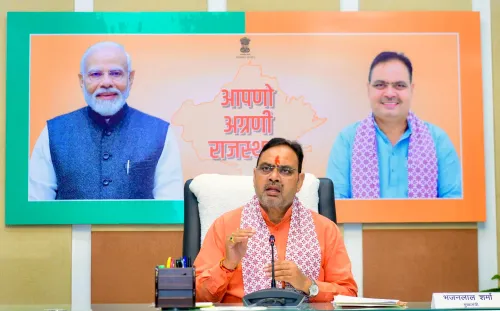
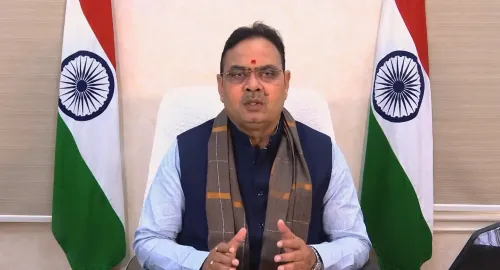
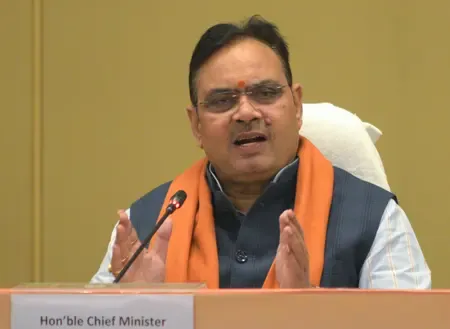
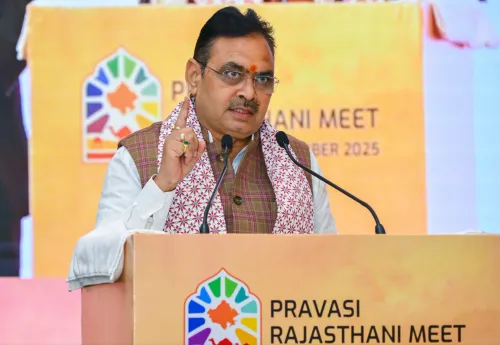
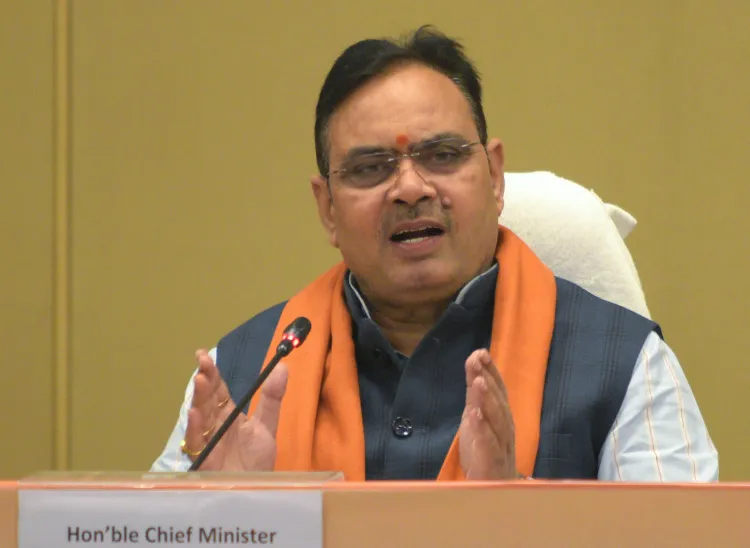
Jaipur, March 21 (NationPress) The unveiling of the Rajasthan Aerospace and Defence Policy - 2026 by Chief Minister Bhajan Lal Sharma marks a pivotal moment for the state, setting it on a path to significantly contribute to India's quest for strategic autonomy.
This new policy aims to position Rajasthan as a central hub for the production of aircraft, helicopters, drones, missiles, avionics, satellite buses, armoured vehicles, radars, navigation, communication, control systems, robotics, and defence electronics, thereby reinforcing the Make in India initiative.
To stimulate investment, the policy introduces a wide-ranging array of financial and non-financial incentives, in addition to ready-to-use infrastructure, skill enhancement programs, and expedited approvals, according to officials on Saturday.
The objective is to create a globally competitive framework that fosters manufacturing, research, testing, and services throughout the aerospace and defence supply chain.
It actively promotes involvement from Original Equipment Manufacturers (OEMs), system integrators, MSMEs, start-ups, and educational institutions. This initiative is also in sync with major national policies, including the Defence Production and Export Promotion Policy (DPEPP), iDEX, Atmanirbhar Bharat, and Make in India.
With a robust industrial infrastructure, enhanced by connectivity via the Delhi-Mumbai Industrial Corridor, a comprehensive network of national highways, ample land availability, and access to essential metals, Rajasthan is poised to attract significant aerospace and defence investments.
The metal machining industry, comprising facilities dealing with steel, copper, and brass, will be vital in producing ammunition and defence components. Furthermore, the state's dynamic automotive sector will facilitate the provision of mechanical and electronic parts.
Projects will be classified into large, mega, and ultra-mega categories under the new policy.
For manufacturing, large projects will range from investments of ₹50 crore to ₹300 crore, mega projects from ₹300 crore to ₹1,000 crore, and ultra-mega projects exceeding ₹1,000 crore.
In the service sector, large projects will involve investments from ₹25 crore to ₹100 crore, mega projects from ₹100 crore to ₹250 crore, and ultra-mega projects surpassing ₹250 crore.
The policy offers flexibility in selecting from capital subsidies, investment grants, or turnover-linked incentives. Additional ‘top-up’ incentives are available for job creation, emerging sectors, anchor units, and key industries.
Key advantages include exemptions from banking, wheeling, and transmission fees, adjustable land payment plans, and subsidies for office space leasing.
To bolster long-term industrial sustainability, the policy provides 100% exemption from electricity duty for seven years, full reimbursement of mandi fees for seven years, and a 75% exemption along with a 25% reimbursement on stamp duty and land conversion fees.
Moreover, additional measures for green initiatives, skill training, and intellectual property development further enhance the policy's appeal.
Under the leadership of Prime Minister Narendra Modi, there has been substantial growth in India's defence and aerospace sectors, propelled by reforms like transparent procurement practices and improved business conditions, as mentioned in a statement.
These initiatives have strengthened local production capabilities and advanced the aim of strategic independence.
India has showcased impressive potential in aerospace manufacturing, with successful platforms like the LCA Tejas, ALH Dhruv, and Sukhoi-30. The Make in India program has also fostered robust partnerships between international aerospace companies and domestic firms, creating a solid ecosystem of Tier-1, Tier-2, and Tier-3 suppliers.
Point of View
It's clear that Rajasthan's Aerospace and Defence Policy - 2026 is a well-timed initiative aimed at enhancing India's self-reliance in defence manufacturing. By attracting investments and fostering a supportive ecosystem, this policy could play a vital role in shaping the future of the aerospace and defence sectors in the state and the nation.
NationPress
23 Sept 2026
Frequently Asked Questions
What is the Rajasthan Aerospace and Defence Policy - 2026?
It is a new initiative launched by Rajasthan's Chief Minister to establish the state as a significant hub for defence manufacturing, aiming to enhance India's strategic self-reliance.
What types of projects are included in the policy?
The policy categorizes projects into large, mega, and ultra-mega, covering both manufacturing and service sectors with varying investment thresholds.
What incentives does the policy offer to investors?
Investors can benefit from financial and non-financial incentives, including subsidies, flexible land payment options, and exemptions from certain charges.
How does this policy align with national initiatives?
The policy is aligned with national initiatives such as the Defence Production and Export Promotion Policy, iDEX, Atmanirbhar Bharat, and Make in India.
What are the expected benefits of the policy for Rajasthan?
The policy is expected to attract substantial investment, create jobs, and establish Rajasthan as a leader in the aerospace and defence sectors.