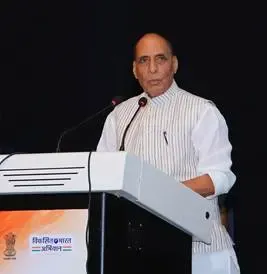
Rajnath Singh urges Defence Estates trainees to adopt people-first service approach

Synopsis
Rajnath Singh's message to the IDES 2025 Batch goes beyond routine motivation — it is a ministerial push to overhaul how India's 61 Cantonment Boards serve civilians. With over 18 lakh acres of defence land under IDES management and a 2047 development deadline on the horizon, the minister is signalling that cantonment governance must catch up with India's urban ambitions.
Key Takeaways
Defence Minister Rajnath Singh met IDES 2025 Batch Officer Trainees on 17 August 2025 in New Delhi .
Singh urged trainees to embody 'Seva Bhav' and engage citizens regularly to address grievances.
The Defence Estates Department manages over 18 lakh acres of defence land and administers 61 Cantonment Boards .
Singh called for cantonments to be transformed into smart, green and sustainable urban ecosystems by 2035 , as a milestone toward Viksit Bharat 2047 .
The minister stressed expansion of digital services and greater citizen participation in cantonment planning.
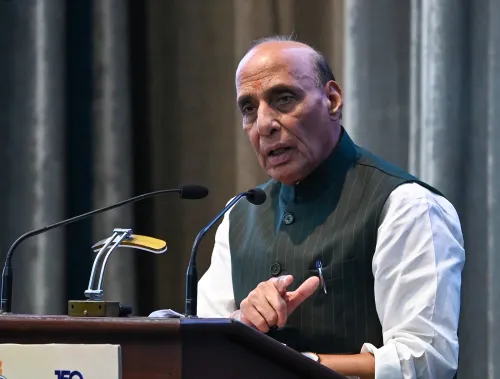
Defence Minister Rajnath Singh on Monday, 17 August 2025, met with Officer Trainees of the Indian Defence Estates Service (IDES) 2025 Batch in New Delhi, stressing that civil servants must prioritise a people-friendly approach and embody 'Seva Bhav' — a spirit of selfless service — in every interaction with citizens.
Key Directives from the Minister
Singh urged the trainee officers to engage with citizens regularly, listen to their grievances, and build a genuine sense of assurance among the public. He underlined that public servants must keep pace with the evolving aspirations of ordinary citizens and make service delivery more transparent and accessible.
The interaction was also attended by Director General Defence Estates, Shobha Gupta. The batch is currently undergoing training at the National Institute of Defence Estates Management (NIDEM).
Cantonments as Modern Urban Ecosystems
Singh acknowledged the dual mandate of the Defence Estates Department — managing over 18 lakh acres of defence land while overseeing the municipal administration of 61 Cantonment Boards across the country. He called for cantonments to be developed on par with modern cities, with continuous upgrades to systems and processes.
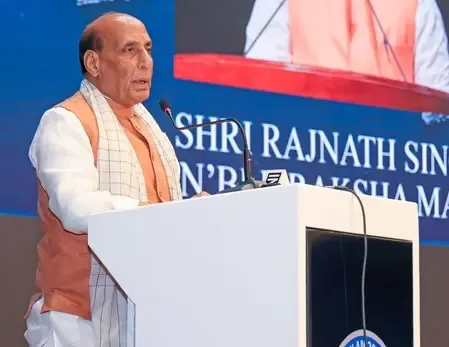
Delivering the keynote at Manthan 2025 – Strategic Roadmap to Viksit Bharat @2047, a two-day national conference organised by the Directorate General of Defence Estates (DGDE) in New Delhi, Singh had previously asked a batch of IDES officers to transform Cantonment Boards into 'smart, green and sustainable urban ecosystems' aligned with the government's vision of a developed India by 2047, with 2035 set as an interim milestone year.
Push for Digital and Citizen-Centric Services
'We must increase digital services so that people can avail transparent and timely services from home. We must increase citizen participation so that the residents become partners in the future planning of cantonments,' Singh said.
This emphasis on digitisation and participatory governance reflects a broader Centre-level push to modernise public service delivery in defence-administered zones, which often lag behind civilian municipal bodies in citizen-facing infrastructure.
Significance and What Comes Next
The IDES cadre plays a rarely spotlighted but consequential role — administering cantonment towns that house both military and civilian populations, often with distinct governance challenges. Singh's repeated engagement with successive IDES batches signals that cantonment reform has become a sustained ministerial priority, not a one-off directive.
As the 2025 Batch moves toward field postings, the pressure will be on NIDEM and DGDE to translate the minister's vision into measurable service improvements across India's cantonment towns.
Point of View
But the structural gap between cantonment administration and civilian urban bodies remains wide. Without measurable service benchmarks and independent accountability mechanisms, ministerial exhortations risk becoming ritual. The 2035 milestone is an opportunity to change that — if DGDE builds a credible scorecard alongside the vision.
NationPress
2 Oct 2026
Frequently Asked Questions
What did Rajnath Singh tell the IDES 2025 Batch trainees?
Singh urged the Indian Defence Estates Service 2025 Batch to adopt a people-friendly approach rooted in 'Seva Bhav', meet citizens regularly, listen to grievances, and make service delivery more transparent. He met the trainees on 17 August 2025 in New Delhi, where they are undergoing training at NIDEM.
What is the Indian Defence Estates Service (IDES)?
The IDES is a central civil service cadre responsible for managing over 18 lakh acres of defence land and administering the municipal functions of 61 Cantonment Boards across India. Officers of this service oversee both military land management and civilian welfare within cantonments.
What is the government's vision for Cantonment Boards?
The Centre wants Cantonment Boards transformed into smart, green and sustainable urban ecosystems by 2035, as a milestone toward a fully developed India by 2047 under the Viksit Bharat framework. Singh has stressed digitising services and increasing citizen participation in cantonment planning.
Who else was present at the interaction with the IDES trainees?
Director General Defence Estates Shobha Gupta was present alongside the 2025 Batch Officer Trainees at the interaction with Defence Minister Rajnath Singh on 17 August 2025.
What is Manthan 2025 and what did Rajnath Singh say there?
Manthan 2025 – Strategic Roadmap to Viksit Bharat @2047 was a two-day national conference organised by the Directorate General of Defence Estates in New Delhi. Singh delivered the keynote, calling on IDES officers to modernise cantonments and link service delivery improvements to India's 2047 development goals.