Parliament special session from Nov 30: Rijiju cautions Oppn
Synopsis
The Centre has called a four-day special session of Parliament from 30 November but has not named the bill it plans to bring. Kiren Rijiju promises 'very important business' and tells the Opposition to stop calling the session unconstitutional. Questions over the 131st Amendment Bill remain unanswered.
Key Takeaways
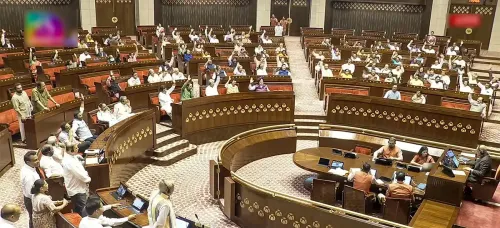
Parliamentary Affairs Minister Kiren Rijiju said the Special Session will run from 30 November to 3 December .
The Lok Sabha will take up the business on 30 November and 1 December , and the Rajya Sabha on 2 and 3 December .
Rijiju urged Opposition MPs not to make “frivolous remarks”, including claims that the session is unconstitutional.
Congress MP Jairam Ramesh and SP chief Akhilesh Yadav opposed the Constitution (131st Amendment) Bill, 2026 on social media.
Rijiju did not say whether the 131st Amendment Bill will be reintroduced, stating the Bills will be “informed later”.
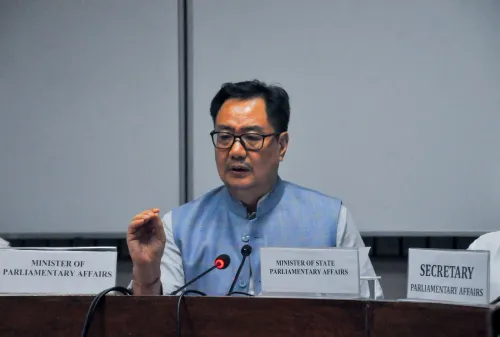
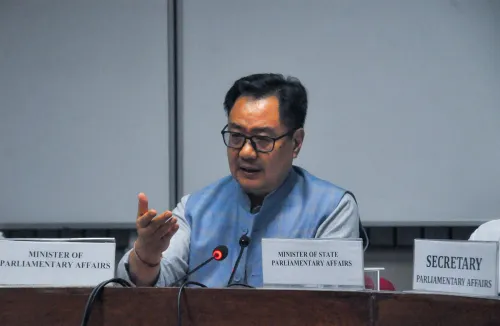
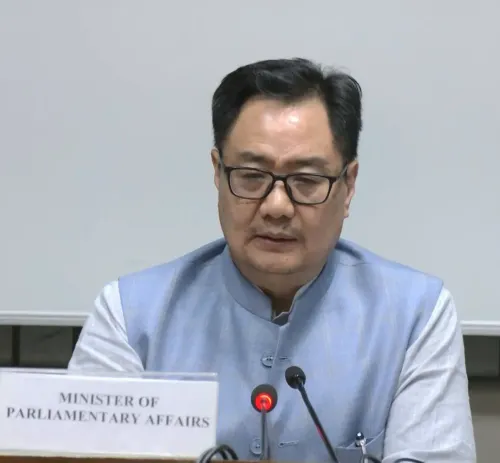
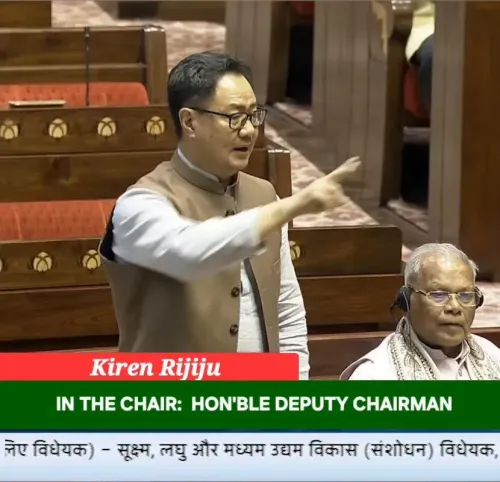
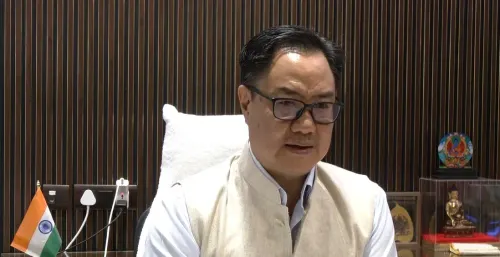
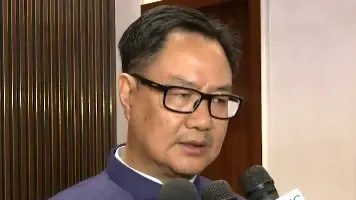
Union Parliamentary Affairs Minister Kiren Rijiju on 27 November 2026 said the upcoming Special Session of Parliament, scheduled from 30 November to 3 December, will take up “very important business”. Speaking to reporters in New Delhi, he urged Opposition MPs to stop making “frivolous remarks” and to ensure the House functions smoothly.
His remarks follow a sharp Opposition challenge on social media to both the timing of the session and the proposed Constitution (131st Amendment) Bill, 2026.
Session Schedule and Government's Plan
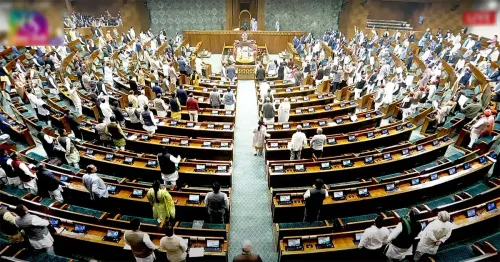
Rijiju said the government had formally written to the Speaker of the Lok Sabha and the Chairman of the Rajya Sabha about the four-day sitting. “The government has decided to convene a four-day Parliament session. We have written to the Speaker of the Lok Sabha and the Chairman of the Rajya Sabha. We will bring important business before the Lok Sabha on November 30 and December 1, and the same business will be taken up in the Rajya Sabha on December 2 and 3,” he said.
The minister said he had appealed to all political parties and had spoken to the leaders of major parties about the session.
Rijiju's Response to Opposition Criticism
The minister rejected claims that the government was bypassing parliamentary rules. “Some MPs have issued statements on social media and in other media outlets saying that the government is not functioning according to the rules. Such frivolous statements should not be made because whenever there is an important Bill or business to be taken up, the government can convene a session. This has been the established practice,” he said.
Rijiju also cited precedent. He said there have been earlier instances when one session was convened after another without the previous session being prorogued.
He questioned the charge that the sitting was unconstitutional. “When the government calls a special session, it means there is some special work to be undertaken... Calling the session unconstitutional or remarks that the Winter Session has been done away with, such frivolous remarks should not be made by MPs. How is calling a session unconstitutional?” he asked.
The Opposition's Objections
The exchange comes after Congress MP Jairam Ramesh and Samajwadi Party President Akhilesh Yadav opposed the proposed Constitution (131st Amendment) Bill, 2026, in posts on social media.
Opposition leaders have also raised concerns about the session format itself. Notably, the government has not yet named the legislation it intends to table, which keeps the Opposition guessing days before the House meets.
Asked whether the government plans to reintroduce the 131st Amendment Bill, Rijiju did not confirm it. “What Bills we are planning to introduce will be informed later, but now I can say that we are going to come up with some very important business, in which all MPs should participate as the world will be watching us,” he said.
Appeal for Participation
Rijiju said Parliament exists so that members can debate the country's major issues. “I urge all MPs across political parties to wholeheartedly participate in the discussions over whatever Bill the government plans to introduce,” he said.
“Whether you agree or not is a separate issue, as one is free to support or criticise the government in a democracy, but the Parliament should be allowed to function. In the future, the country will remember how we keep our opinions in the House. Therefore, it is the responsibility of all MPs to ensure proper functioning of the Parliament,” he added.
What Happens Next
Special sittings have often been used to take up high-stakes legislation. That track record has raised political expectations about this four-day window. With the agenda still undisclosed, attention now turns to the Lok Sabha on 30 November, when the government is expected to show its hand.
Point of View
Yet it will not say what MPs are being asked to debate. That contradiction weakens Rijiju's appeal. Calling constitutional objections 'frivolous' does not answer them, especially when a Constitution amendment bill is already being contested in public. If the Centre wants a serious debate rather than a walkout, publishing the agenda early is the simplest way to build trust.
NationPress
27 Nov 2026
Frequently Asked Questions
When is the Special Session of Parliament in 2026?
The Special Session will be held from 30 November to 3 December 2026. The Lok Sabha will take up the business on 30 November and 1 December, and the Rajya Sabha on 2 and 3 December.
What did Kiren Rijiju say about the Opposition?
Rijiju urged Opposition MPs not to make “frivolous remarks”, such as calling the session unconstitutional or claiming the Winter Session had been done away with. He asked all parties to take part in the debates and let Parliament function.
Will the Constitution (131st Amendment) Bill, 2026 be introduced in the special session?
Rijiju did not confirm this. He said the Bills to be introduced would be “informed later”, but promised “very important business”.
Who opposed the Constitution (131st Amendment) Bill, 2026?
Congress MP Jairam Ramesh and Samajwadi Party President Akhilesh Yadav opposed the proposed Bill in posts on social media.
Can the government call a session without proroguing the previous one?
According to Rijiju, there have been earlier instances when one session was convened after another without proroguing the previous one. He described convening a session for important business as established practice.