Diljit Dosanjh calls Adani's Khavda project 'Bohot Vadhiya'
Synopsis
Diljit Dosanjh swapped the concert stage for a 538 sq km solar-and-wind landscape in Kutch, calling Adani's Khavda project 'Bohot Vadhiya'. The 30 GW site already runs 11 GW and holds over half of India's operational battery storage, and is projected to become the world's largest power plant by 2029.
Key Takeaways
Diljit Dosanjh visited the Khavda Renewable Energy Plant in Kutch, Gujarat during his national concert tour.
The 30 GW project already has more than 11 GW operational, with 26 GW solar and 4 GW wind planned in total.
Its 6.63 GWh battery storage system accounts for over 50% of India's operational BESS capacity, and 50 GWh is planned.
More than 15,000 people work on the 538 sq km site, which is executed by Adani Green Energy Limited .
The company says Khavda will be the world's largest power plant across all energy sources by 2029 and will power 17 million homes a year.
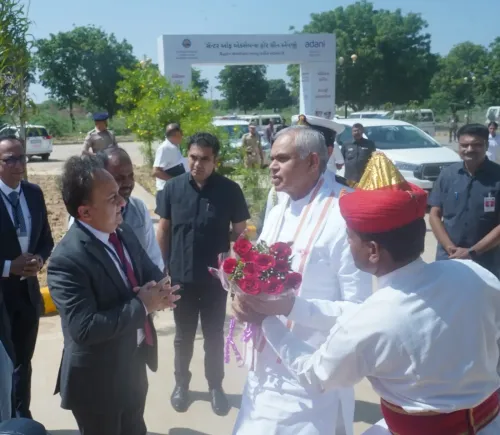
Global music star Diljit Dosanjh toured the Adani Group's Khavda Renewable Energy Plant in Gujarat's Kutch region earlier this week, describing the project with a delighted “Bohot Vadhiya (this is too good!)”. The singer made the visit during the Gujarat leg of his national concert tour. The site is billed as the world's largest renewable energy and battery storage project.
The visit, reported from Ahmedabad on 27 November 2026, put one of India's most recognisable entertainers inside a project that the Adani Group places at the centre of the country's clean energy ambitions.
Inside Diljit Dosanjh's Khavda Visit
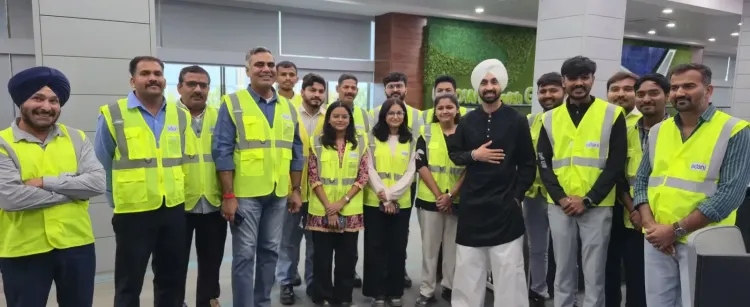
Dosanjh spoke with site engineers about the logistical and engineering challenges of building a mega-project on a remote saline landscape. The site lies roughly 70-100 kilometres from the nearest human settlement and spreads across 538 sq km.
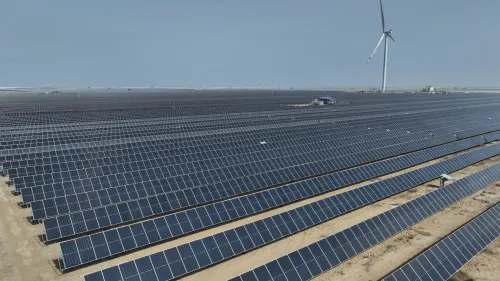
According to the company, the singer praised the Adani Green Warriors, the workforce it describes as being on India's frontline against climate change. From the site's viewing tower, he took in rows of solar panels stretching to the horizon alongside towering wind turbines.
He also visited the central control room, where the team showed him how operations across the vast site are monitored and managed digitally. Before leaving, Dosanjh planted a sapling at the project. The Khavda team gave him a piece of Rogan art, a traditional craft the region is known for, and an Ajrakh-print scarf, both rooted in Kutch's artistic heritage.
Scale of the Khavda Renewable Energy Project
The 30 GW Khavda project already has more than 11 GW of renewable generation capacity in operation. Once complete, it will produce 26 GW of solar power and 4 GW of wind power.
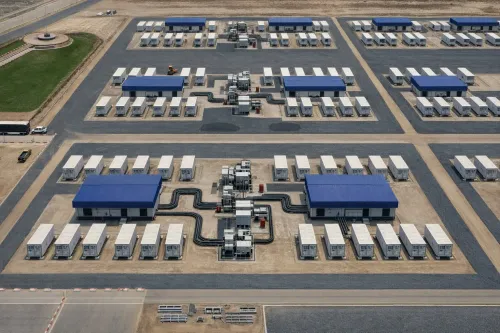
The site hosts what the company describes as the world's largest single-location operational Battery Energy Storage System (BESS), with a capacity of 6.63 GWh. That accounts for more than 50 per cent of India's total operational BESS capacity. Storage at the site is ultimately planned to reach 50 GWh, which the company says will support round-the-clock green power and grid stability.
More than 15,000 people currently work on the project. According to the company, the site is five times the size of Paris and will be visible from space once it is finished.
Why Khavda Matters for India's Energy Goals
Adani Green Energy Limited (AGEL) is executing the project. It forms the core of the Adani Group's commitment to invest around $100 billion over five years in India's energy transition.
The company says Khavda will power more than 17 million homes each year. It expects the site to become the world's largest power plant across all energy sources by 2029.
The project is closely tied to India's target of 500 GW of non-fossil fuel capacity by 2030. Battery storage has become central to that goal because intermittent solar and wind generation must be balanced to keep the grid reliable.
What Lies Ahead
Less than half of Khavda's planned capacity is currently operational, so the pace of commissioning over the next few years will be closely watched by the power sector. A high-profile visit like Dosanjh's raises public attention on the project. The bigger test is whether the remaining gigawatts and storage come online on schedule.
Point of View
And this one puts a hugely popular star alongside a group that often faces scrutiny over its scale and influence. The numbers are still significant: a single site holding over half of India's operational battery storage shows how concentrated the country's storage build-out currently is. That concentration is both an achievement and a vulnerability for grid resilience. The real measure of Khavda will be whether the remaining 19 GW and 43 GWh of storage arrive on schedule, not who visits the viewing tower.
NationPress
27 Nov 2026
Frequently Asked Questions
Why did Diljit Dosanjh visit the Khavda project?
Diljit Dosanjh visited the Adani Group's Khavda Renewable Energy Plant in Kutch during the Gujarat leg of his national concert tour. He met site engineers, toured the control room, planted a sapling and described the project as 'Bohot Vadhiya'.
What is the Khavda Renewable Energy Project?
It is a 30 GW renewable energy park spread over 538 sq km in Gujarat's Kutch region, being built by Adani Green Energy Limited. When complete, it will generate 26 GW of solar and 4 GW of wind power.
How much of the Khavda project is operational?
More than 11 GW of renewable generation capacity is currently operational at Khavda. The site also runs a 6.63 GWh battery storage system, which is over half of India's operational BESS capacity.
How many homes will the Khavda plant power?
According to the company, the Khavda project will power more than 17 million homes annually once complete. It is expected to become the world's largest power plant across all energy sources by 2029.
How does Khavda fit into India's clean energy targets?
Khavda is a key part of India's push towards 500 GW of non-fossil fuel capacity by 2030. It is also central to the Adani Group's plan to invest around $100 billion over five years in the energy transition.