Iran will never have nuclear weapons under Trump, says Rubio in Athens
Synopsis
Standing in Athens, US Secretary of State Marco Rubio drew an unambiguous line: Iran will never have a nuclear weapon on Trump’s watch, full stop. He declined to clarify enrichment thresholds, claimed Iran’s military has been severely weakened, and accused Tehran of choosing terrorism over its own people — signalling that US-Iran nuclear talks remain far from any compromise.
Key Takeaways
US Secretary of State Marco Rubio declared on 7 October 2026 that Iran will never acquire a nuclear weapon as long as President Trump is in office.
Rubio refused to specify whether Washington could accept any level of uranium enrichment under a future deal with Tehran .
He claimed Iran’s drone manufacturing , missile capabilities , navy , and air force had been ‘severely damaged’ — assessments not independently verified.
Rubio said Iran’s economy was in ‘total and complete freefall’ under US sanctions .
He accused Tehran of diverting funds to Hezbollah , Hamas , and the Houthis instead of domestic development.
The remarks were made during the sixth US-Greece Strategic Dialogue in Athens .
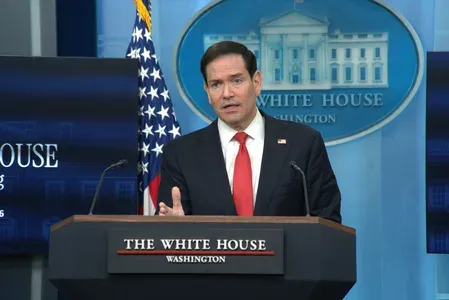
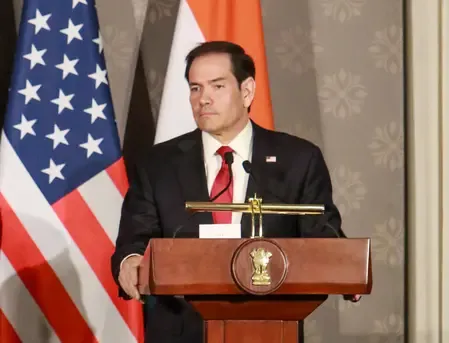
US Secretary of State Marco Rubio declared on Wednesday, 7 October 2026, that Iran will never be permitted to acquire a nuclear weapon as long as President Donald Trump is in office, while stopping short of clarifying whether Washington could accept any level of uranium enrichment under a future deal with Tehran. The remarks came during a joint press conference in Athens, Greece, where Rubio was attending the sixth US-Greece Strategic Dialogue.
The Bright Line on Iran's Nuclear Programme
Pressed on whether recent remarks by Vice President JD Vance signalled that Washington could accept Iranian uranium enrichment above zero, Rubio was unequivocal. “I don’t understand what the confusion is about the nuclear program. Iran cannot have a nuclear weapon, simple, period, and end of story,” he said. He declined to elaborate on what specific terms would be acceptable, saying he was “not going to go into the details about what would be acceptable or not.”
Rubio stressed that any agreement Washington would endorse must structurally guarantee that Tehran could never develop such a weapon. “Anything they agree to that would be acceptable to the United States has to be something that ensures that Iran will never have a nuclear weapon,” he said. “They will never have a nuclear weapon, period, not as long as President Trump is in office. And that, to us, is the bright line.”
Iran’s Military Posture and US Assessment
Rubio argued that Tehran had pursued a deliberate strategy of building up conventional military capabilities — specifically drones and missiles — to deter other nations and US forces in the Middle East from acting against its nuclear activities. He claimed the strategy was intended to hold countries across the region at risk as a deterrence shield.
According to Rubio, that effort has been significantly set back. He claimed Iran’s drone manufacturing, missile capabilities, navy, and air force had been “severely damaged,” leaving Tehran “significantly weaker militarily.” These assessments were made by Rubio and were not independently substantiated in the State Department transcript.
Economic Pressure and the Strait of Hormuz
Rubio also highlighted the economic dimension of US pressure on Iran, pointing to sweeping sanctions. “Now they’re facing crippling sanctions. Their economy is in total and complete freefall,” he said. He additionally claimed that Iran had “lost complete control of the straits,” referring to the Strait of Hormuz, and that oil flows through the critical waterway had returned to pre-conflict levels. These claims were not independently verified.
Rubio directed blame for Iran’s economic deterioration squarely at its leadership, accusing Tehran of channelling resources toward militant groups including Hezbollah, Hamas, and the Houthis rather than domestic development. “They should have spent their money on their people, and instead they spend their money on terrorism and on weapons,” he said.
Context: US-Greece Strategic Dialogue
The remarks came on the sidelines of the sixth US-Greece Strategic Dialogue in Athens, a bilateral forum covering defence, energy, trade, technology, and regional security. The dialogue itself underscores the US effort to deepen ties with NATO allies in the Eastern Mediterranean amid ongoing Middle East tensions. Notably, Greece’s geographic proximity to the region gives the venue added diplomatic resonance.
The exchange adds fresh complexity to ongoing nuclear negotiations with Iran, where the precise terms around enrichment remain a central sticking point between the two sides. How Washington ultimately defines its “bright line” in practice — particularly on enrichment thresholds — is expected to be a defining issue in any future agreement.
Point of View
If any, the US could live with, leaving the actual contours of a deal undefined. That ambiguity matters enormously: every previous Iran nuclear negotiation has foundered partly on enrichment thresholds. His claims about Iran’s military degradation and loss of control over the Strait of Hormuz were asserted without independent corroboration, which warrants scrutiny. The broader pattern here is a maximalist public posture paired with a deliberate silence on specifics — a negotiating posture that keeps pressure on Tehran but also keeps Washington’s options open in ways that remain invisible to the public.
NationPress
8 Oct 2026
Frequently Asked Questions
What did US Secretary of State Rubio say about Iran’s nuclear programme?
Rubio stated that Iran will never be allowed to acquire a nuclear weapon as long as President Trump is in office, calling it Washington’s ‘bright line.’ He made the remarks at a joint press conference in Athens on 7 October 2026, while declining to specify what level of uranium enrichment, if any, the US could accept in a future agreement.
Why did Rubio avoid clarifying the US position on uranium enrichment?
When asked directly about enrichment thresholds — following remarks by Vice President JD Vance that suggested some flexibility — Rubio said he was ‘not going to go into the details about what would be acceptable or not.’ The refusal to specify suggests ongoing internal deliberation or a deliberate negotiating posture aimed at keeping pressure on Tehran.
What claims did Rubio make about Iran’s military capabilities?
Rubio claimed that Iran’s drone manufacturing, missile capabilities, navy, and air force had been severely damaged, leaving Tehran significantly weaker militarily. These assessments were made by Rubio and were not independently substantiated in the State Department transcript.
What is the US-Greece Strategic Dialogue where Rubio made these remarks?
The US-Greece Strategic Dialogue is a bilateral forum between Washington and Athens covering defence, energy, trade, technology, and regional security. The sixth edition was held in Athens on 7 October 2026, and served as the backdrop for Rubio’s remarks on Iran.
What sanctions pressure is Iran facing, according to Rubio?
Rubio said Iran is facing ‘crippling sanctions’ and that its economy is in ‘total and complete freefall.’ He attributed Tehran’s economic difficulties to its leadership’s decision to fund militant groups — including Hezbollah, Hamas, and the Houthis — rather than invest in domestic development.