US-Iran talks ongoing, Rubio sets no deadline for military action
Synopsis
At the G20 foreign ministers’ meeting in Atlanta, Secretary of State Marco Rubio confirmed US-Iran talks are ongoing through direct and back-channel routes — but pointedly refused to set a deadline or gauge progress. With Trump yet to order further strikes and US forces reportedly defending shipping nightly, the standoff is in a fragile holding pattern where diplomacy and military readiness are running in parallel.
Key Takeaways
US Secretary of State Marco Rubio confirmed on 31 October that diplomatic talks with Iran had never stopped, including through intermediaries.
Rubio declined to set any deadline or assess how close a deal might be, saying timing decisions rest with President Donald Trump .
Trump has not yet authorised further military action against Iran , though Rubio said the US could ‘achieve military objectives’ if directed.
Iran was accused of targeting commercial shipping carrying oil, gas, and cargo, with US forces reportedly defending vessels from drones and missiles ‘almost every night.’ Rubio identified Iran’s nuclear programme and its support for Hezbollah , the Houthis , and Iraqi militias as the core issues any settlement must address.
G20 foreign ministers shared concern over maritime threats but remained divided on collective action.
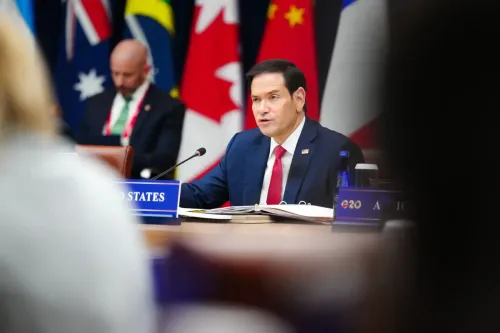
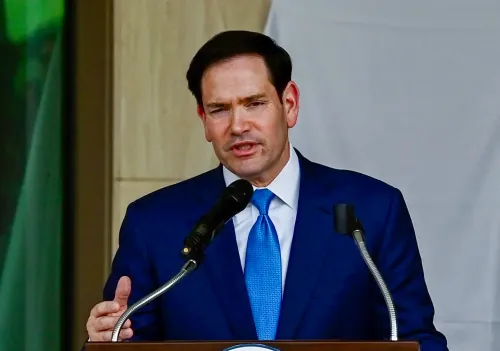
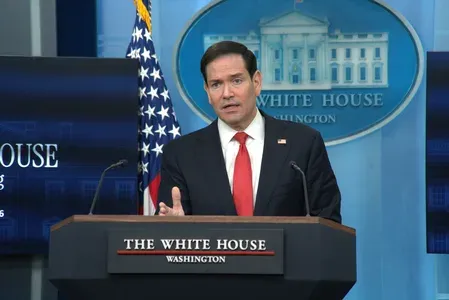
US Secretary of State Marco Rubio said on 31 October that diplomatic channels with Iran had remained continuously active, while declining to set any timeline for their conclusion or reveal whether a deal was within reach. Speaking at the close of the G20 foreign ministers' meeting in Atlanta, Rubio confirmed that President Donald Trump had not yet authorised further military strikes against Tehran.
Talks Continue Through Intermediaries
Rubio described the diplomatic process as multi-layered, involving both direct exchanges and third-party intermediaries. “There are multiple talks; talks have actually never stopped. There’s been active conversations going both in some cases directly, but often through intermediaries,” he said. He offered no assessment of how close the two sides were to any agreement, saying decisions on timing rested solely with Trump.
“I’m not gonna characterise either the progress on those talks or any timeframe on it other than to tell you that if there is a diplomatic solution, we would be open to it,” Rubio added. He stressed that any settlement would have to address US national security concerns, identifying Iran’s nuclear programme and its support for regional armed groups as the central sticking points.
Military Option Remains on the Table
When pressed on the possibility of renewed strikes, Rubio declined to outline any specific military contingency, but was unequivocal about Washington’s readiness. “We can achieve military objectives if we seek to. He hasn’t made a decision,” he said, referring to Trump. Rubio described the president as preferring a peaceful resolution while remaining confident in US military capability.
Iran Accused of Targeting Shipping and Backing Proxies
Rubio levelled sharp accusations at Tehran on two fronts. He alleged that Iran was openly targeting commercial vessels carrying cargo, oil, and natural gas in regional waters, warning that such attacks endangered countries well beyond the immediate conflict zone. He said US forces were engaged in defending commercial shipping against drones and missiles “almost every night,” though he noted that fuel movements remained broadly comparable to pre-conflict levels.
He further argued that disruption to maritime trade threatened global food security, as the movement of energy, fertiliser, and agricultural products could be curtailed for nations far removed from the fighting. On Iran’s regional role, Rubio accused Tehran of backing Hezbollah in Lebanon, the Houthis, and militias he said were undermining the Iraqi state. “So anywhere you turn, what you find is some Iranian proxy that’s undermining the peace and stability of the Middle East,” he said.
G20 Divided on Collective Response
Rubio acknowledged that fellow G20 foreign ministers shared concerns about threats to maritime trade and regional stability, but noted that shared recognition of the problem had not translated into agreement on collective action. The Atlanta meeting, he suggested, surfaced consensus on the dangers but not on remedies.
US Reaffirms Commitment to Saudi Arabia
On Saudi Arabia, Rubio said the United States would continue to honour its defence commitments, particularly those involving defensive assistance. He said Washington remained in regular contact with Saudi leadership, including at the level of direct conversations involving Trump. He also welcomed participation by other nations in defending Saudi Arabia against ongoing attacks, without specifying which countries were involved.
With no deadline set and no decision made on military action, the trajectory of the US-Iran standoff will depend heavily on what emerges from the back-channel talks Rubio described — and on how long Trump’s preference for a diplomatic outcome holds.
Point of View
Designed to keep Tehran at the table without constraining Trump’s options. What is notable is the pairing of diplomatic openness with an explicit inventory of Iranian offences: shipping attacks, proxy networks, nuclear ambition. That framing signals Washington is building a public case that could justify escalation if talks collapse. The G20 divide on collective maritime defence is the understated story here — the US is effectively policing critical sea lanes largely alone, and that burden will shape how long diplomatic patience lasts.
NationPress
1 Nov 2026
Frequently Asked Questions
Are the US and Iran currently in diplomatic talks?
Yes. Secretary of State Marco Rubio confirmed on 31 October that talks had never stopped, occurring both directly and through intermediaries. However, he declined to characterise their progress or set any deadline for a resolution.
Has President Trump decided on further military action against Iran?
No. Rubio said Trump had not made a decision on additional military strikes as of 31 October. He added that Trump preferred a peaceful outcome but remained confident in US military capabilities if ordered to act.
What are the main US demands in the Iran negotiations?
Rubio identified two core issues: Iran’s nuclear programme and its support for regional armed groups including Hezbollah in Lebanon, the Houthis, and militias in Iraq. He said any diplomatic settlement would have to address these concerns alongside broader US national security interests.
What did Rubio say about Iranian attacks on shipping?
Rubio accused Iran of openly targeting commercial vessels carrying cargo, oil, and natural gas, saying US forces were defending shipping from drones and missiles almost every night. He warned the disruption threatened global food and energy supplies far beyond the conflict zone.
What was the outcome of the G20 foreign ministers’ meeting in Atlanta on Iran?
The G20 foreign ministers meeting in Atlanta on 31 October surfaced shared concern about threats to maritime trade and regional stability, but produced no agreement on collective action. Rubio acknowledged that recognising the danger did not equate to consensus on how to address it.