Rubio defends Russia at G20, says US must talk to Moscow for Ukraine deal
Synopsis
At the G20 Foreign Ministers' meeting in Atlanta, US Secretary of State Marco Rubio made the case that talking to Russia is not a concession — it is a prerequisite for ending the Ukraine war. With Putin's Florida summit attendance unconfirmed and no breakthrough reported, the US is walking a careful line between engagement and legitimisation.
Key Takeaways
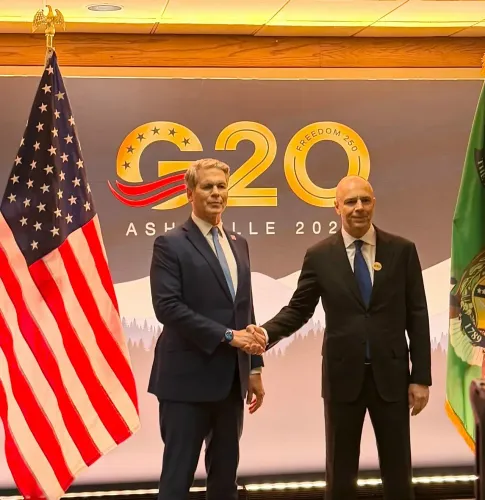
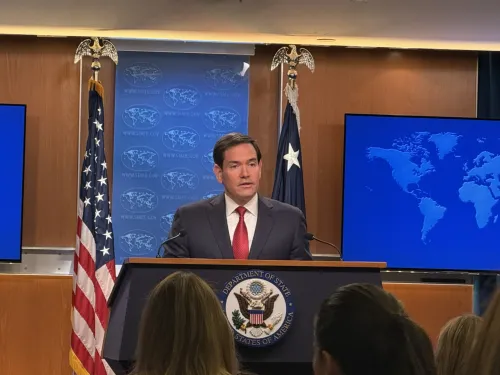
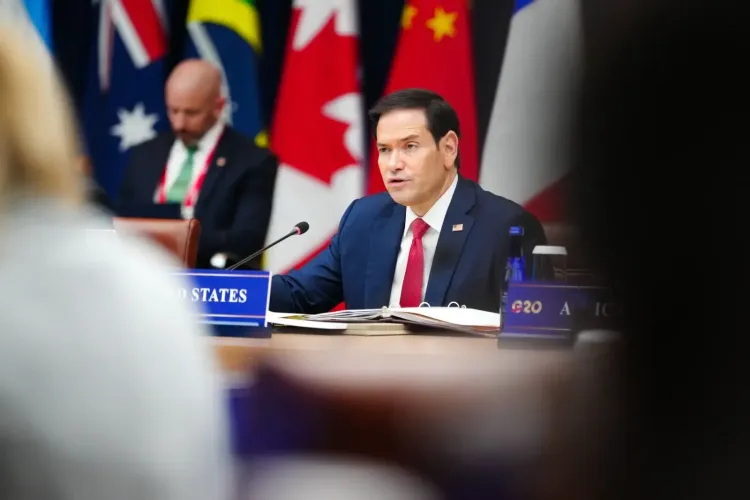
US Secretary of State Marco Rubio defended Russia's G20 membership at the Foreign Ministers' meeting in Atlanta on 31 October .
Rubio argued Washington must engage Moscow directly to broker a Ukraine peace deal, stressing that engagement does not equal endorsement.
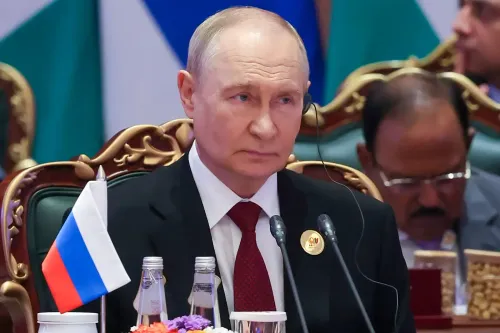
Russia has not confirmed whether President Vladimir Putin will attend the G20 leaders' summit in Florida in December .
Rubio said the US speaks to Ukraine 'as much, if not more' than it does to Russia, countering suggestions of a pro-Moscow tilt.
He cited Russia's nuclear arsenal and risks of escalation — including drone incursions into NATO airspace — as reasons to keep communication channels open.
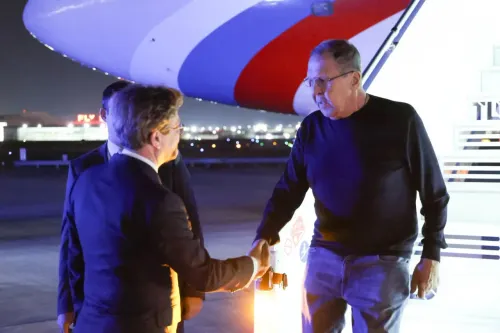
Rubio held a brief informal exchange with Russian Foreign Minister Sergei Lavrov in Atlanta, not a formal bilateral meeting.
US Secretary of State Marco Rubio defended Russia's continued participation in the G20 on 31 October, arguing that Washington cannot broker an end to the Ukraine war without maintaining direct communication with Moscow. Speaking at the close of the G20 Foreign Ministers' meeting in Atlanta, Rubio was careful to add that a negotiated settlement was not imminent.
The Core Argument: Engagement Is Not Endorsement
Rubio framed diplomatic engagement with Russia as a practical necessity rather than a political signal. 'How can you have a negotiated settlement between Russia and Ukraine if you don't have the ability to talk to both Russia and Ukraine?' he said, responding to criticism over Russian Foreign Minister Sergei Lavrov's presence at the Atlanta gathering.
He stressed that President Donald Trump did not accept the premise that meeting a government necessarily legitimised its actions or implied agreement with its conduct. Negotiations, Rubio argued, required direct interaction with every party whose agreement was ultimately needed.
Putin's Florida Attendance: No Confirmation
Rubio was also pressed on the prospect of President Vladimir Putin attending the G20 leaders' summit in Florida in December. He confirmed that Russia had not confirmed Putin's attendance and made no announcement on whether the Russian leader would travel to the event.
On whether Ukrainian President Volodymyr Zelensky could attend the Florida summit, Rubio said the decision rested with Trump. He did not rule it out — particularly if attendance could produce a positive outcome — but announced no formal invitation.
Nuclear Risk and Black Sea Spillover
Beyond the immediate battlefield, Rubio cited Russia's nuclear arsenal as a separate and compelling reason to preserve open lines of communication. He warned that the danger of escalation — if something went wrong — made contact essential.
Rubio also flagged risks extending well beyond Ukrainian territory: disruption in the Black Sea, sabotage operations, and drones entering NATO airspace could spread the consequences of the conflict to a wider set of countries. European governments and other partners, he said, had actively encouraged the United States to remain engaged.
US Contact With Ukraine 'As Much, If Not More'
Rubio pushed back against any suggestion that Washington was tilting toward Moscow. 'We talk to the Ukrainians plenty. We talk to them, as much, if not more than we talk to the Russian side, but we have to be able to talk to the Russian side,' he said.
He noted that senior US figures were devoting substantial attention to both Ukraine and Iran. Washington would continue pursuing an agreement, he said, though he reported no breakthrough from the Atlanta meeting.
Rubio-Lavrov Exchange and What Comes Next
Rubio disclosed that he had spoken briefly with Lavrov on the sidelines — a conversation rather than a formal bilateral meeting. Topics included possible opportunities for their leaders to interact at the Asia-Pacific Economic Cooperation (APEC) forum and at the December G20 summit, without firm commitments on the latter.
Russia remains a full member of the G20, a grouping of major advanced and emerging economies. Its G20 membership is legally distinct from its suspension from the former G8 in 2014 following the annexation of Crimea. With no settlement on the horizon and the Florida summit approaching, the question of who sits at the table — and under what terms — is set to intensify.
Point of View
Not appeasement. But the distinction between engagement and legitimisation is precisely what US allies in Europe and Ukraine's government are watching most closely — and Rubio offered no new mechanism to reassure them. The absence of a breakthrough, combined with Russia's unconfirmed attendance at the Florida summit, suggests the US is managing optics as much as it is managing a peace process. The harder question — whether Washington has any leverage over Moscow that it is actually prepared to use — went conspicuously unanswered in Atlanta.
NationPress
1 Nov 2026
Frequently Asked Questions
Why did Marco Rubio defend Russia's participation in the G20?
Rubio argued that the United States cannot help negotiate an end to the Ukraine war without the ability to speak directly to Russia. He said engaging a government did not amount to endorsing its actions, and that negotiations required contact with every party whose agreement was needed.
Will Vladimir Putin attend the G20 leaders' summit in Florida in December?
Russia had not confirmed Putin's attendance as of 31 October, according to Rubio. He made no announcement on whether the Russian president would travel to Florida, and no formal invitation or refusal was reported.
Could Ukrainian President Zelensky attend the Florida G20 summit?
Rubio said the decision on Zelensky's attendance rested with President Trump. He did not rule it out, especially if it could produce a positive result, but announced no formal invitation.
Is a Ukraine peace settlement close, according to Rubio?
No. Rubio offered a cautious assessment, saying, 'I don't think anyone here is claiming that we're on the verge of a negotiated settlement.' He reported no breakthrough from the Atlanta G20 Foreign Ministers' meeting.
Why does Russia still participate in the G20?
Russia remains a full member of the G20, which groups major advanced and emerging economies. Its G20 membership is separate from its suspension from the former G8 in 2014 following the annexation of Crimea — two distinct forums with different membership rules.