Is Marco Rubio Leading the US Strategy After Operations in Venezuela?
Synopsis
In a significant political move, Secretary of State Marco Rubio has been entrusted by President Trump to oversee the US strategy in Venezuela following recent operations. This comprehensive approach aims to utilize diplomatic and military tools to reshape the country's future. The implications of this strategy are profound, promising economic transformation and enhanced US influence in the region.
Key Takeaways
Marco Rubio leads the US strategy in Venezuela .
The strategy involves a comprehensive government approach.
US maintains control over Venezuela's commerce through an oil embargo.
Military presence in the region is a key component of the strategy.
Cooperation from the Venezuelan government is essential for economic change.
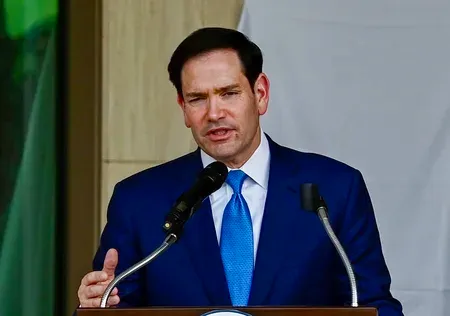
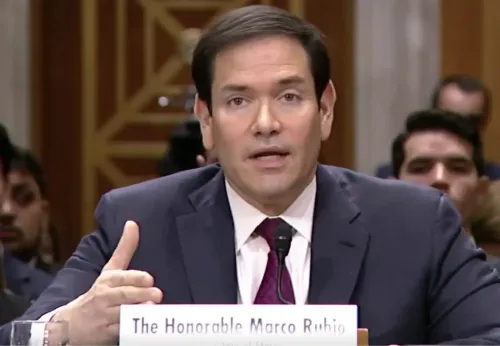
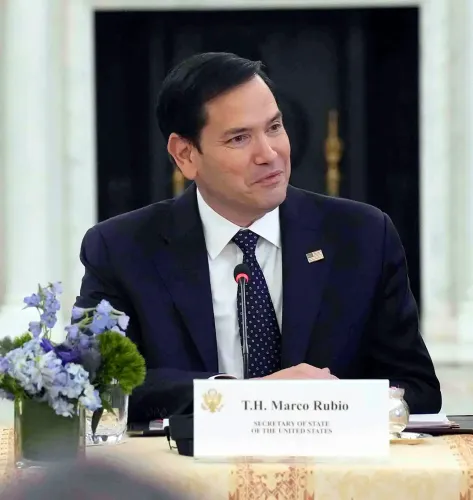
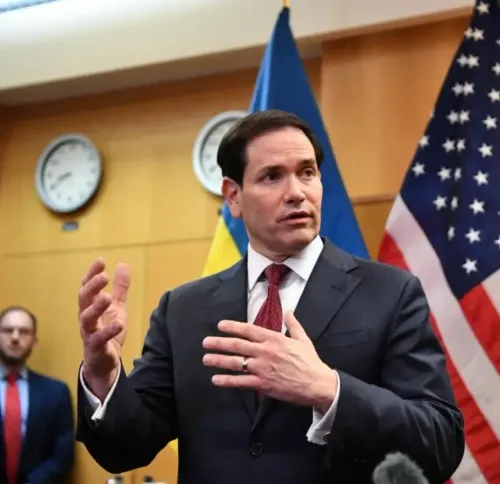
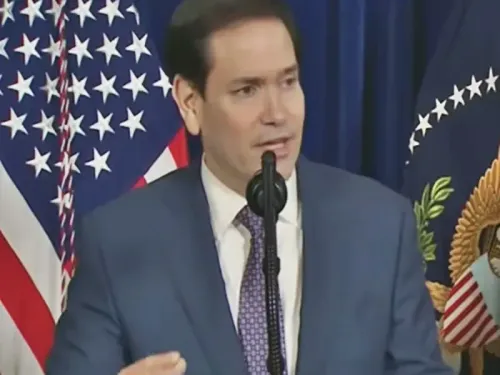
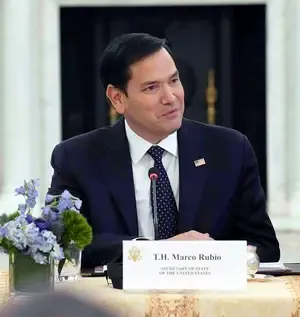
Washington, Jan 6 (NationPress) US Secretary of State Marco Rubio has been appointed by President Donald Trump to spearhead the execution of the United States’ post-operation strategy in Venezuela, as stated by the White House. This strategy encompasses a comprehensive government initiative that integrates diplomatic, economic, financial, and military measures.
Stephen Miller, a close adviser to the president, informed journalists at the White House on Monday that Rubio has been tasked with enforcing the president’s directives and facilitating coordination among various agencies.
“The President of the United States has instructed Secretary Rubio to directly implement the President’s guidance and to take the lead on this initiative,” Miller remarked, adding that this involves “energy policy, Treasury policy, financial policy, military policy.”
Miller emphasized that this approach signifies extensive coordination within the administration. “It’s a large team, a collective effort,” he noted, while downplaying his own involvement. “I’m just pleased to contribute to this remarkable team on behalf of President Trump.”
When questioned about how Washington is effectively overseeing Venezuela after the apprehension of Nicolás Maduro and the inauguration of a temporary leader, Miller highlighted US control over critical pressure points. “We have an oil embargo on Venezuela,” he stated. “For them to engage in any form of commerce, they require our approval.”
He also mentioned the persistent US military presence in the region. “Our substantial fleet, our Armada, remains active there,” Miller declared. “This constitutes an ongoing military operation by the US government. Naturally, we establish the terms and conditions.”
When asked if additional US personnel might be deployed, Miller dismissed the notion that Venezuela’s authorities are acting autonomously from Washington. “The Venezuelan government is collaborating directly with the United States,” he asserted.
Miller countered claims that Venezuelan officials have adopted a different public stance. “I cannot speak to the conversations you’re having with her,” he responded to a reporter, referring to the acting leadership in Caracas. “But I assure you that our discussions indicate we are receiving full, comprehensive cooperation from the Government of Venezuela.”
He expressed that the administration is optimistic that such cooperation will usher in economic transformation within the country. “Due to this cooperation, the people of Venezuela will experience unprecedented wealth,” Miller stated.
Miller argued that the United States stands to benefit significantly. “Certainly, the United States will reap considerable benefits in terms of economic, security, and military cooperation, counter-narcotics, counter-terrorism, and all other aspects of our security,” he explained.
Describing the initiative as a pivotal achievement, Miller claimed the administration perceives the Venezuela operation as “one of the most significant strategic shifts, rebalancing of power, and military victories” in US history, culminating in the effort to apprehend Maduro. He refrained from commenting on whether similar operations could occur elsewhere.
Point of View
The appointment of Marco Rubio to lead the US strategy in Venezuela reflects a decisive shift in American foreign policy. This initiative, which encompasses various strategies, aims to stabilize a region in turmoil while enhancing US interests. It is essential to monitor the outcomes of such a significant political maneuver.
NationPress
6 Oct 2026
Frequently Asked Questions
What is the main role of Marco Rubio in the US strategy for Venezuela?
Marco Rubio has been appointed by President Trump to lead the implementation of the US post-operation strategy in Venezuela, coordinating efforts across various governmental agencies.
How does the US plan to exert influence over Venezuela?
The US aims to exert influence through an oil embargo and military presence, requiring Venezuelan authorities to seek permission for commerce.
What does the cooperation from the Venezuelan government entail?
The cooperation involves working directly with the US government to facilitate economic changes expected to benefit the Venezuelan populace.
What are the expected benefits for the US from this strategy?
The US anticipates significant benefits in terms of economic, security, and military cooperation, which includes counter-narcotics and counter-terrorism efforts.
Is this strategy a significant shift in US foreign policy?
Yes, the operation in Venezuela is viewed as one of the most significant strategic shifts in US history, aiming to rebalance power in the region.