Manipur violence: Shiv Sena (UBT) slams Centre for 'securing Delhi, ignoring Manipur'
Synopsis
Shiv Sena (UBT)'s Saamana didn't mince words: while the Centre turned Delhi into a 'military cantonment' to suppress protests, Manipur — with 350 dead over three years and 60 killed in the last six months — is being left to fend for itself. The editorial's most damning line: 'Let Manipur burn, but Delhi must be saved.'
Key Takeaways
Shiv Sena (UBT) published a scathing editorial in Saamana on 21 October 2026 attacking the Centre's handling of Manipur .
More than 350 lives have been lost in Manipur 's ethnic violence over three years; 60 people killed in the last six months alone.
At least 23 fatal attacks were recorded over a recent 20-day span, including a shooting in Sunulok that killed 3 civilians.
The editorial accused the BJP of deploying massive force in Delhi to quell protests while failing to secure Manipur's border regions.
Chief Minister Yumnam Khemchand Singh's residence in Imphal became a flashpoint as residents placed a slain youth's body outside it in protest.
Shiv Sena (UBT) charged that PM Modi's visit to Manipur produced no lasting operational change on the ground.
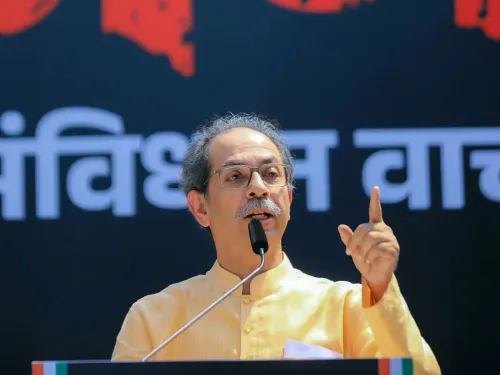
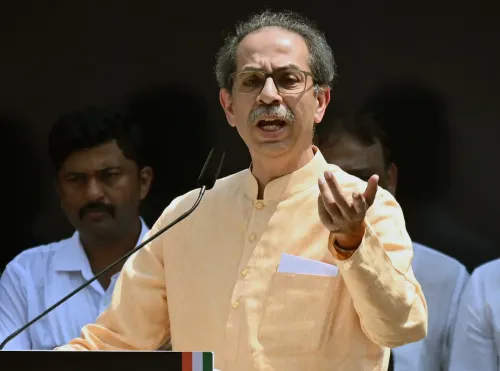
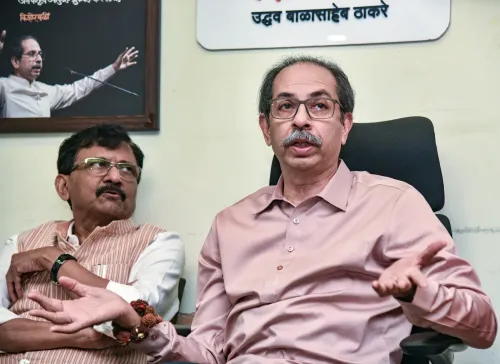
Shiv Sena (Uddhav Balasaheb Thackeray) launched a sharp political attack against the Centre on Wednesday, 21 October 2026, through an editorial in its mouthpiece Saamana, accusing the Bharatiya Janata Party (BJP)-led government of deploying overwhelming force to protect political power in New Delhi while leaving Manipur to burn under relentless ethnic violence.
The Core Charge: Misplaced Priorities
The Saamana editorial drew a pointed contrast between the government's response to anti-government protests in the national capital and its handling of Manipur's ongoing ethnic crisis. According to the editorial, the Centre mobilised sweeping security infrastructure — barricades, heavy personnel, and militarised street deployments — to contain political demonstrations in Delhi, while armed groups in Manipur's hilly and forested terrain continue to clash with assault weapons largely unchecked.
The Thackeray camp's editorial framed this as an indictment of the BJP's 'double-engine government' doctrine, noting that despite the party controlling both the Centre and the Manipur state government, peace in the northeastern state remains elusive. 'Let Manipur burn, but Delhi must be saved, and the government must survive,' the editorial charged, attributing this as the operative directive of the current leadership.
Scale of Violence in Manipur
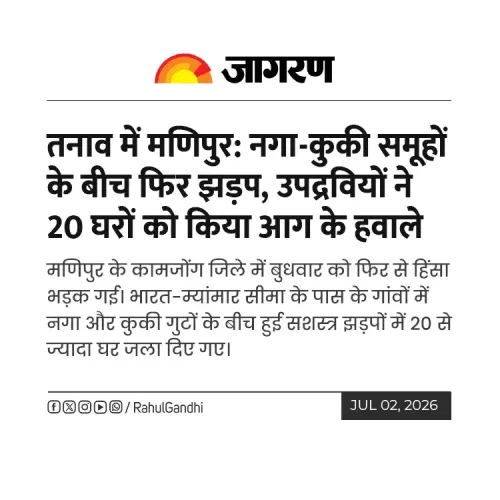
The editorial cited grim figures to underscore the human cost of the crisis. Over the past three years, ethnic clashes between the Meitei, Kuki, and Naga communities — rooted in a dispute over Scheduled Tribe (ST) status — have claimed more than 350 lives. The violence has accelerated: in the last six months alone, 60 people have been killed, with at least 23 fatal attacks recorded over a recent 20-day period.
The editorial highlighted a particularly harrowing recent incident in the Sunulok region, where an armed group allegedly opened indiscriminate fire on 14 Meitei civilians collecting firewood in a forest, killing three of them on the spot. In a stark expression of public fury, enraged residents reportedly placed the body of a slain youth directly outside Chief Minister Yumnam Khemchand Singh's residence in Imphal.
Condition of Displaced Residents
'Thousands of displaced Manipuris continue to languish in overcrowded, substandard government relief camps, trapped in constant fear for their lives. Heavy security forces are deployed, yet armed groups clash at will with assault weapons. Sending security contingents is treated as the end of the government's duty, while grassroots trust-building remains entirely missing,' the Saamana editorial stated.
The editorial argued that the deployment of security forces has been treated as a box-ticking exercise rather than a genuine strategy for restoring normalcy, with no visible effort toward community reconciliation or long-term administrative trust-building.
Uddhav Thackeray Camp's Rhetorical Challenge
Concluding its editorial, Shiv Sena (UBT) posed a direct challenge to the Centre: 'Is Manipur not a part of India just like Delhi? While the government deploys massive strength in Delhi, why is the same force not applied to Manipur? Manipur is burning over and over again. Who will stop this inferno?'
The editorial also noted that Prime Minister Narendra Modi's visit to Manipur did not translate into any lasting operational change on the ground, according to the party. This critique arrives as Shiv Sena (UBT) sharpens its opposition narrative ahead of state-level political contests, making Manipur a referendum on the BJP's governance competence. With no resolution in sight, the question of how the Centre plans to restore durable peace in the state remains unanswered.
Point of View
But the numbers it cites — 350 dead over three years, 60 in six months, 23 attacks in 20 days — demand engagement beyond partisan score-settling. The 'double-engine government' framing has long been the BJP's electoral selling point in states where it controls both the Centre and the state; Manipur is now a live stress-test of that claim. What mainstream coverage often misses is that the Centre's Manipur strategy has consistently prioritised security deployment over political dialogue, and dialogue — between Meitei, Kuki, and Naga community leaders — is the one variable that could actually move the needle. Without it, the next editorial will only have a higher body count to cite.
NationPress
21 Oct 2026
Frequently Asked Questions
What did Shiv Sena (UBT)'s Saamana say about Manipur?
Saamana's editorial accused the Centre of deploying heavy security forces in Delhi to suppress political protests while neglecting Manipur, where ethnic violence has killed over 350 people in three years. The editorial charged that the government's operative logic was 'Let Manipur burn, but Delhi must be saved.'
How many people have died in Manipur's ethnic violence?
According to the Saamana editorial, more than 350 people have died in Manipur's ethnic clashes over the past three years, with 60 fatalities recorded in the last six months alone. At least 23 fatal attacks occurred within a recent 20-day period.
What is the Sunulok incident mentioned in the editorial?
The editorial referred to an incident in the Sunulok region where an armed group allegedly fired indiscriminately on 14 Meitei civilians who were collecting firewood in a forest, killing three of them. Protesters subsequently placed the body of a slain youth outside Chief Minister Yumnam Khemchand Singh's residence in Imphal.
Why is Shiv Sena (UBT) criticising the Centre over Manipur?
Shiv Sena (UBT) argues that the BJP-led Centre, which controls both the Union government and the Manipur state government under its 'double-engine' model, has failed to restore peace in the state despite three years of ethnic violence. The party contends that force is selectively applied to protect political interests in Delhi rather than to protect citizens in Manipur.
What communities are involved in the Manipur ethnic conflict?
The conflict primarily involves the Meitei, Kuki, and Naga communities. It was originally triggered by legal disputes over Scheduled Tribe (ST) status and has since escalated into a prolonged cycle of armed clashes, displacement, and civilian casualties.