Assam CM Himanta Biswa Sarma vows no barrier will stop women from welfare access
Synopsis
Assam CM Himanta Biswa Sarma's pledge that 'no barricade' will stop women from reaching him is more than rhetoric — it comes backed by a three-scheme stack covering 37 lakh direct beneficiaries under Orunodoi, 17 lakh-plus entrepreneurship programme participants, and a girls' education push, cementing women's welfare as the defining political identity of his BJP-led government.
Key Takeaways
Assam CM Himanta Biswa Sarma on 10 November 2026 reiterated that no 'barricade' would prevent women from accessing government welfare or reaching him for support.
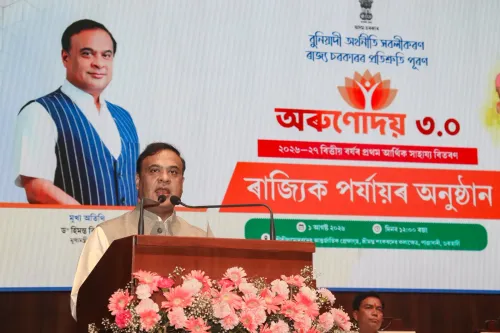
The flagship Orunodoi Scheme now provides direct financial assistance to more than 37 lakh women across Assam.
The Mukhyamantri Mahila Udyamita Abhiyan had reached more than 17 lakh women beneficiaries across Assembly constituencies by early 2026 , offering seed capital and bank-linked support.
The 'Nijut Moina' initiative focuses on girl students' education, complementing broader free education and social welfare measures.
Critics argue that consistent delivery to marginalised and remote women remains the true test of these commitments.
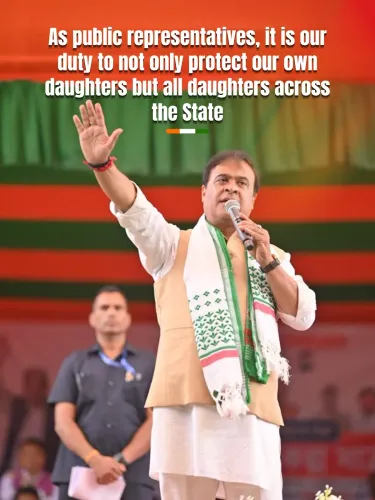
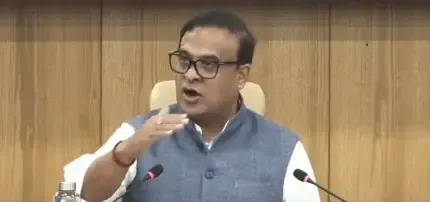
Assam Chief Minister Himanta Biswa Sarma on Tuesday, 10 November 2026, reaffirmed his government's commitment to shielding women from social evils and ensuring that state welfare benefits reach every eligible beneficiary in Assam. Speaking through a post on X, Sarma declared that no 'barricade' would prevent women from accessing support or realising their aspirations — a statement that underscores the Bharatiya Janata Party (BJP)-led government's sustained emphasis on women-centric outreach.
What the Chief Minister Said
In his post, Chief Minister Sarma wrote: 'We are making sure that our sisters don't fall prey to social evils and are able to get all welfare benefits. I am always there to help them realise their goals and no barricade can stop them from reaching me.' The post reflects a pattern of direct, social-media-driven communication that Sarma has used to signal policy priorities to the electorate.
Key Welfare Schemes Driving the Agenda
The government's most visible instrument is the flagship Orunodoi Scheme, which provides direct financial assistance to eligible women beneficiaries. The latest iteration of the programme extends support to more than 37 lakh women across Assam, with the government positioning it as a cornerstone of female financial security in the state.
Alongside Orunodoi, the Mukhyamantri Mahila Udyamita Abhiyan targets women linked to self-help groups, offering seed capital followed by bank-linked financial assistance based on fund utilisation. The initiative is designed to cultivate what the government terms a new generation of economically independent 'Lakhpati Baideus' — women entrepreneurs who cross the ₹1 lakh annual income threshold. According to reports, more than 17 lakh women had benefited under the programme across several Assembly constituencies by early 2026.
The government has also advanced the 'Nijut Moina' initiative, focused on supporting the education of girl students, supplemented by broader free education provisions and social welfare assistance.
Political Context and Significance
Women's welfare has emerged as a central pillar of the Sarma administration's political identity in Assam. The Chief Minister has repeatedly framed female financial independence, educational access, and protection from regressive social practices as non-negotiable development priorities. This comes amid the BJP-led government's efforts to consolidate its support base ahead of future electoral cycles, with women voters increasingly recognised as a decisive demographic in Assam's political landscape.
Notably, the multi-scheme approach — combining direct benefit transfers, entrepreneurship promotion, and education support — mirrors a national BJP template that has proven electorally effective in several states. Critics, however, argue that the true measure of success lies in implementation depth and whether benefits consistently reach the most marginalised women, particularly those in remote and tribal areas.
What to Watch
With the Orunodoi Scheme already covering 37 lakh women and the entrepreneurship mission surpassing 17 lakh beneficiaries, the Sarma government's next challenge will be scaling verification mechanisms and deepening outreach in underserved districts. How effectively the administration translates political messaging into measurable socio-economic outcomes for women across Assam's 126 Assembly constituencies will determine the long-term credibility of these commitments.
Point of View
And Assam is no exception. The Orunodoi Scheme's 37 lakh beneficiary count is an impressive reach figure, but reach and impact are distinct metrics. The harder question — whether financially assisted women are moving up the income ladder or simply receiving recurrent transfers — remains unanswered in official communications. The Lakhpati Baideu framing borrows directly from the Centre's Lakhpati Didi campaign, signalling alignment with national BJP branding rather than a purely state-originated vision. Genuine empowerment will require more than seed capital; it demands market linkages, skilling, and an honest audit of entrepreneurship outcomes.
NationPress
10 Nov 2026
Frequently Asked Questions
What did Assam CM Himanta Biswa Sarma say about women's welfare on 10 November 2026?
Chief Minister Himanta Biswa Sarma declared in an X post that his government is ensuring women do not fall prey to social evils and that all welfare benefits reach eligible beneficiaries. He stated that no 'barricade' would stop women from reaching him or achieving their goals.
What is the Orunodoi Scheme in Assam?
The Orunodoi Scheme is the Assam government's flagship direct financial assistance programme for eligible women beneficiaries. Its latest version covers more than 37 lakh women across the state, aimed at improving their financial security and socio-economic standing.
What is the Mukhyamantri Mahila Udyamita Abhiyan?
It is an Assam government initiative that promotes entrepreneurship among women in self-help groups by providing seed capital and bank-linked financial support. More than 17 lakh women had benefited under the programme across several Assembly constituencies by early 2026, according to reports.
What is the 'Nijut Moina' initiative?
'Nijut Moina' is an Assam government programme focused on supporting the education of girl students. It is part of a broader set of measures that includes free education and social welfare assistance for women.
Why is women's welfare a priority for the Sarma government in Assam?
The BJP-led government under CM Sarma has positioned women's financial independence, education, and protection from social evils as central to its development agenda. Women voters are an increasingly decisive demographic in Assam, and the multi-scheme welfare approach mirrors a national BJP template that has proven electorally effective in multiple states.