SC bar body backs CJI Surya Kant: courts must not be obstructed
Synopsis
The Supreme Court’s own Bar body has formally backed CJI Surya Kant’s refusal to meet Opposition leaders outside the courtroom — a pointed institutional signal. Hours later, the INDIA bloc filed a writ petition challenging the ECI’s electoral roll revision, effectively doing exactly what the CJI advised: approaching the court through law, not lobbying.
Key Takeaways
SCAORA passed a majority resolution on 12 October 2026 backing CJI Surya Kant’s refusal to meet Opposition leaders outside the judicial process.
The resolution states: ‘No action should be taken that may obstruct the functioning of the Courts or hamper the fair and independent dispensation of justice.’ CJI Kant declined a request by Rahul Gandhi and Mallikarjun Kharge for an appointment to submit a memorandum, citing the separation of powers doctrine.
Gandhi and 10 INDIA bloc leaders subsequently filed a writ petition (diary number 64196/2026 ) challenging the ECI’s Special Intensive Revision (SIR) of electoral rolls.
The petition names Chief Election Commissioner Gyanesh Kumar and two Election Commissioners as respondents; it is currently pending.
Related matters were already scheduled for hearing on 13 October 2026 before the Supreme Court.
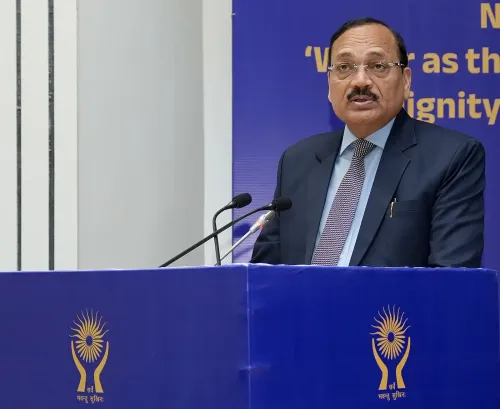
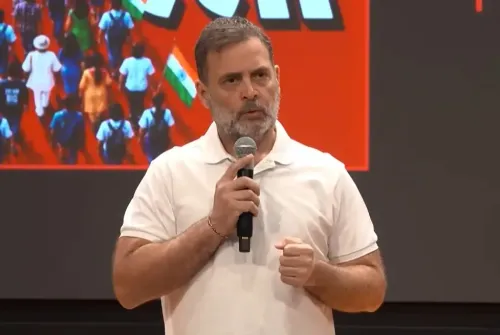
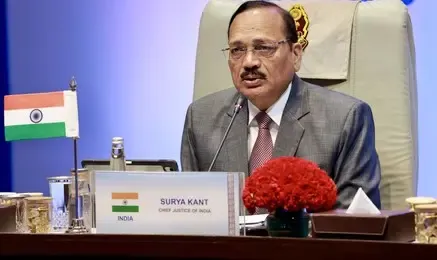
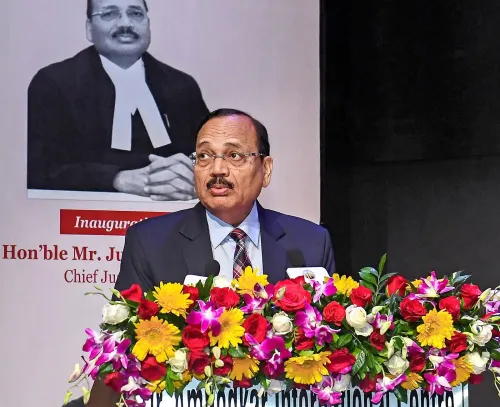
The Supreme Court Advocates-on-Record Association (SCAORA) on Monday, 12 October 2026, passed a majority resolution backing Chief Justice of India (CJI) Surya Kant's position that political parties must pursue their grievances through the judicial process — not through direct meetings with the judiciary. The resolution comes days after CJI Kant declined a request by Opposition leaders Rahul Gandhi and Mallikarjun Kharge for a personal appointment to submit a memorandum on matters already pending before the Supreme Court.
What the SCAORA Resolution Says
SCAORA, the statutory body representing advocates-on-record at the apex court, declared that any grievance requiring judicial resolution must be pursued through established legal channels. “No action should be taken that may obstruct the functioning of the Courts or hamper the fair and independent dispensation of justice,” the resolution stated.
The Bar body further emphasised that the independence of the judiciary must be respected by all stakeholders, and that grievances could be raised before the Supreme Court in accordance with law, where they would be considered independently and on their merits.
The CJI's Letter to Gandhi and Kharge
The SCAORA resolution follows a letter written by CJI Kant to Leader of Opposition in the Lok Sabha Rahul Gandhi and Leader of Opposition in the Rajya Sabha Mallikarjun Kharge after they sought an appointment on Monday between 4 p.m. and 5 p.m. to submit a memorandum on issues including the Election Commission of India (ECI)'s functioning, the arrest of students, closure of Metro stations, and cancellation of trains.
In his response, CJI Kant pointed out that the issues raised were already pending before the Supreme Court. “Convening a meeting to discuss pending cases would wholly contravene the principle of Separation of Powers, an intrinsic facet of the basic structure doctrine of the Constitution of India, and would be incompatible with the established ethics and judicial propriety,” he wrote.
The CJI also clarified that the Supreme Court did not hold administrative authority over the issues cited, but that it was duty-bound to examine matters affecting citizens’ rights through its judicial jurisdiction. He advised the Opposition leaders to file a petition, noting that matters on similar issues were already scheduled for hearing on Tuesday, 13 October, and that petitions could be filed physically or through the e-filing facility.
INDIA Bloc Moves Supreme Court Over Electoral Roll Revision
Gandhi and 10 other INDIA bloc leaders have since filed a writ petition before the Supreme Court challenging the Election Commission of India’s Special Intensive Revision (SIR) of electoral rolls, alleging large-scale voter deletions and irregularities in the exercise. The petition, filed on 12 October 2026 under diary number 64196/2026, names the ECI, Chief Election Commissioner Gyanesh Kumar, and Election Commissioners Sukhbir Singh Sandhu and Vivek Joshi as respondents.
The petitioners include Trinamool Congress (TMC) leader Saugata Roy, Samajwadi Party chief Akhilesh Yadav, Rashtriya Janata Dal (RJD) leader Tejashwi Prasad Yadav, Shiv Sena (UBT) leader Sanjay Raut, CPI(M) leader M.A. Baby, CPI leader D. Raja, Jharkhand Mukti Morcha (JMM) leader Mahua Majhi, NCP (SP) leader Supriya Sule, and Indian Union Muslim League (IUML) leader E.T. Mohammed Basheer. The petition is currently listed as pending on the Supreme Court’s website.
Context: Opposition vs Election Commission
The developments unfold amid an escalating confrontation between Opposition parties and the ECI over the SIR exercise. INDIA bloc leaders allege that the revision process threatens electoral fairness and could result in the exclusion of eligible voters from electoral rolls — a charge the Election Commission has not publicly addressed in this specific context.
Notably, this is not the first time that judicial-legislative boundaries have been tested in a politically charged environment. The CJI’s explicit invocation of the separation of powers doctrine — a basic structure principle — signals the judiciary’s intent to keep institutional lines clearly drawn. With the Supreme Court set to hear related matters, all eyes now turn to how the bench responds to the newly filed writ petition.
Point of View
Was redirected to the courtroom, and within hours filed a formal petition — which is precisely how the system is meant to work. The more pointed question is whether the ECI’s SIR exercise will survive judicial scrutiny; the political drama around the appointment request risks overshadowing that substantive legal challenge. If the bench finds merit in the voter-deletion allegations, the institutional fallout for the Election Commission could dwarf the optics of the CJI-Opposition standoff.
NationPress
12 Oct 2026
Frequently Asked Questions
Why did CJI Surya Kant refuse to meet Rahul Gandhi and Mallikarjun Kharge?
CJI Surya Kant declined the meeting because the issues raised by the Opposition leaders — including ECI functioning, student arrests, and Metro closures — were already pending before the Supreme Court. He said convening such a meeting would violate the constitutional principle of separation of powers and be incompatible with judicial propriety.
What is the SCAORA resolution and what does it say?
SCAORA — the Supreme Court Advocates-on-Record Association — passed a majority resolution on 12 October 2026 backing the CJI’s stand. It states that political parties must resolve grievances through the judicial process, and that no action should obstruct the functioning of courts or hamper the fair dispensation of justice.
What is the INDIA bloc’s writ petition about?
The petition, filed on 12 October 2026 under diary number 64196/2026, challenges the Election Commission of India’s Special Intensive Revision (SIR) of electoral rolls. The INDIA bloc alleges large-scale voter deletions and irregularities in the revision exercise that could disenfranchise eligible voters.
Who are the petitioners in the Supreme Court case against the ECI?
The petition is filed by Rahul Gandhi and 10 other INDIA bloc leaders, including Mallikarjun Kharge, Akhilesh Yadav, Tejashwi Prasad Yadav, Saugata Roy, Sanjay Raut, M.A. Baby, D. Raja, Mahua Majhi, Supriya Sule, and E.T. Mohammed Basheer. It names the ECI and its three commissioners as respondents.
When will the Supreme Court hear the electoral rolls case?
The CJI indicated that matters involving similar issues were already scheduled for hearing on Tuesday, 13 October 2026. The newly filed INDIA bloc petition is currently listed as pending on the Supreme Court’s website.