SC's written e-challan order skips electricity bill link, lists stricter recovery steps
Synopsis
The Supreme Court's electricity-bill remark grabbed headlines — but it never made it into the actual order. What the written ruling does contain is far more consequential: vehicle impoundment, Parivahan blacklisting, licence suspensions, and a PUC ban, all aimed at recovering a staggering ₹49,194 crore in unpaid e-challan dues. The gap between oral observation and binding direction is the real story.
Key Takeaways
The Supreme Court's suggestion to link e-challan dues to electricity bills was an oral remark and does not appear in the written order uploaded on 1 October 2026 .
The written order directs freezing of online vehicle services , denial of fitness and PUC certificates , Parivahan blacklisting , and potential vehicle impoundment for defaulters.
In cases of multiple violations , driving licences must not be renewed and existing licences may be suspended.
States and UTs collectively owe approximately ₹49,194.05 crore in outstanding e-challan dues; only about ₹26,175.05 crore has been recovered.
All states and UTs must implement the Ministry of Road Transport and Highways SOP dated 28 October 2025 .
The next hearing is scheduled for 25 November at 2 pm ; the Delhi Chief Secretary faces a personal appearance warning over pedestrian safety compliance.
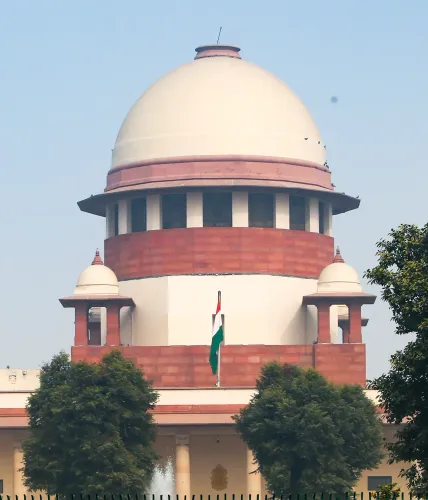
The Supreme Court's suggestion that unpaid traffic e-challan dues could be linked to electricity bills was an oral observation made during a hearing on Monday, 29 September 2025 and does not appear in the written order uploaded by the apex court on Thursday, 1 October 2026. The written order instead sets out a detailed framework of enforcement measures to recover outstanding traffic fines — a critical distinction that clarifies the legal standing of the widely-reported remark.
What the Written Order Actually Says
The order, passed by a bench of Justice J.B. Pardiwala and Justice K.V. Viswanathan, directs a series of punitive administrative steps against vehicle owners with pending e-challans. These include freezing online vehicle-related services, withholding renewal or fresh issuance of registration certificates, and blocking address-update requests until dues are cleared.
The bench further directed that fitness certificates must be denied to vehicles carrying outstanding fines, and that such vehicles be blacklisted on the Parivahan portal — effectively blocking their sale or transfer of ownership. In cases of multiple violations, driving licences are not to be renewed, and licences already in force may be suspended.
The court also ruled that no centre may issue a Pollution Under Control (PUC) certificate to a defaulting vehicle owner, and directed random vehicle checks. If an e-challan against a vehicle remains unpaid, the bench said, 'necessary steps shall be taken to impound the vehicle itself.'
The Scale of the Recovery Problem
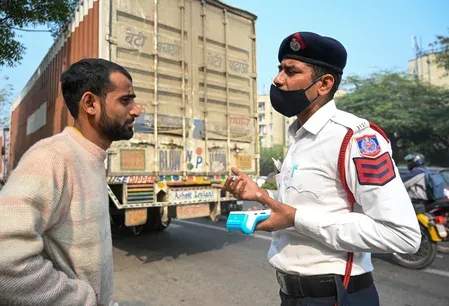
The bench's directions come against the backdrop of a staggering enforcement gap. States and Union Territories have issued e-challans totalling approximately ₹49,194.05 crore in outstanding dues, of which only around ₹26,175.05 crore has been recovered so far — a collection rate of just over 53%. The court noted that merely issuing challans was insufficient without an effective recovery mechanism, observing: 'Police may issue thousands and lakhs of such e-challans, but the question is how do you recover the fine.'
This comes amid a broader pattern of under-enforcement in Indian road safety regulation, where digitisation of violation records has outpaced the machinery for realising penalties. The apex court has been monitoring this litigation for almost 14 years, with the current bench overseeing it for over a year during which several prior directions have already been issued.
Compliance Mandate for States and UTs
All states and Union Territories have been directed to implement the Standard Operating Procedure (SOP) dated 28 October 2025, prepared by the Ministry of Road Transport and Highways. Compliance with Section 136A of the Motor Vehicles Act, 1988, read with Rule 167A of the Central Motor Vehicles Rules, 1989, has also been mandated.
The National Road Safety Board was directed to monitor electronic enforcement. Senior advocate Gaurav Agrawal, serving as amicus curiae, was asked to compile a consolidated chart of all directions issued by the bench, their implementation timelines, and current compliance status.
Delhi-Specific Directions and Next Hearing
The bench separately directed the Delhi Chief Secretary to file a compliance report on pedestrian safety measures near the Delhi High Court and the National Zoological Park on Mathura Road. The court warned that non-compliance could require the Chief Secretary to appear personally before it on the next date.
The matter has been listed for the next hearing on 25 November at 2 pm. How states respond to the latest directions — particularly the Parivahan blacklisting and licence suspension provisions — will determine whether this order achieves what years of monitoring have so far struggled to deliver.
Point of View
And media coverage that conflated the two created needless alarm among electricity consumers. The written order is, in fact, more surgical and more enforceable: Parivahan blacklisting and PUC denial hit defaulters where it hurts without penalising unrelated services. The deeper problem the bench has identified — a ₹49,194 crore recovery gap — reflects a structural failure of the e-challan system to move beyond digitised record-keeping to actual collection. Fourteen years of Supreme Court monitoring with limited results should prompt a harder question: whether the enforcement architecture itself needs redesign, not just incremental court orders.
NationPress
1 Oct 2026
Frequently Asked Questions
Did the Supreme Court order that e-challan dues be linked to electricity bills?
No. The electricity bill remark was an oral observation made during the hearing and does not appear in the written order uploaded on 1 October 2026. The order instead directs administrative measures such as vehicle blacklisting, licence suspension, and denial of PUC and fitness certificates.
What measures did the Supreme Court's written order actually direct?
The written order directs freezing of online vehicle services, withholding of registration and fitness certificates, blacklisting on the Parivahan portal, denial of PUC certificates, and vehicle impoundment for persistent defaulters. Driving licence renewal can also be blocked or existing licences suspended in cases of multiple violations.
How much in e-challan dues remains unpaid across India?
States and Union Territories are owed approximately ₹49,194.05 crore in outstanding e-challan dues. Around ₹26,175.05 crore has been recovered so far, leaving a recovery gap of roughly ₹23,000 crore.
Which law and rules govern the Supreme Court's e-challan directions?
The directions are issued under the Motor Vehicles Act, 1988, and the Central Motor Vehicles Rules, 1989 — specifically Section 136A and Rule 167A. States and UTs have also been told to follow the Standard Operating Procedure prepared by the Ministry of Road Transport and Highways dated 28 October 2025.
When is the next Supreme Court hearing on this road safety matter?
The matter has been listed for 25 November at 2 pm. The Delhi Chief Secretary has been separately directed to file a compliance report on pedestrian safety near the Delhi High Court and the National Zoological Park, with a personal appearance warning if directions remain unimplemented.