SC issues notice on PIL over ₹1,500 crore public bank fraud by JKM Infra
Synopsis
The Supreme Court has agreed to scrutinise a PIL alleging that ₹1,537.59 crore in public bank loans to a Noida infrastructure firm were settled for just ₹73.50 crore — a 95% haircut — through two asset reconstruction companies, despite a forensic audit flagging over ₹902 crore in alleged diversions. The bench of CJI Surya Kant has issued notice, forcing regulators and agencies to respond.
Key Takeaways
The Supreme Court on 19 June issued notice on a PIL alleging a ₹1,537.59 crore public bank fraud linked to JKM Infra Projects Ltd .
Loans of around ₹912 crore were taken from a consortium led by SBI between 2012 and 2015 , secured against collateral valued at just ₹60–72 crore .
An Ernst & Young forensic audit (May 2018) allegedly found over ₹902 crore diverted via shell companies and fake invoices.
The debt was ultimately settled by Phoenix ARC on 31 October 2025 for just ₹73.50 crore — a loss of more than 95% of public funds.
A bench of CJI Surya Kant and Justice N.
Kotiswar Singh has made the notice returnable in four weeks .
The PIL seeks ED , SFIO , and RBI probes and measures to bar defaulting promoters from reclaiming stressed assets.
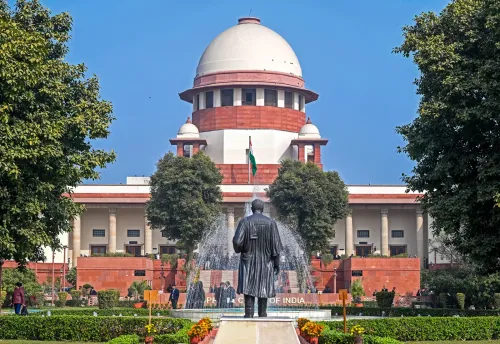
The Supreme Court on Friday, 19 June agreed to examine a public interest litigation (PIL) seeking a court-monitored investigation into an alleged banking fraud involving over ₹1,500 crore of public sector bank funds, with the petition targeting the roles of the Enforcement Directorate (ED), the Serious Fraud Investigation Office (SFIO), and the Reserve Bank of India (RBI). A bench comprising Chief Justice of India (CJI) Surya Kant and Justice N. Kotiswar Singh issued notice on the plea, making it returnable in four weeks.
The Alleged Fraud: What the PIL Claims
The PIL, filed through advocate-on-record Ashwani Kumar Dubey, alleges that loans and accrued dues totalling ₹1,537.59 crore owed by JKM Infra Projects Ltd — a Noida-based infrastructure company controlled by the Jalan family — were ultimately settled for just ₹73.50 crore through two asset reconstruction companies (ARCs): Prudent ARC Ltd. and Phoenix ARC Pvt. Ltd. The petition contends this represents a loss of more than 95% of public funds.
According to the plea, JKM Infra Projects obtained loans aggregating around ₹912 crore from a consortium of public sector banks led by the State Bank of India (SBI) between 2012 and 2015. The loans were allegedly sanctioned against collateral valued at only ₹60–72 crore, and the company reportedly began defaulting shortly after receiving the funds.
Forensic Audit Findings and Alleged Diversion
The petition relies heavily on a forensic audit conducted by Ernst & Young (EY) and submitted on 23 May 2018, which allegedly found that more than ₹902 crore was diverted through shell companies, struck-off entities, non-existent vendors, and other red-flagged entities using forged documents, fake invoices, and undisclosed bank accounts.
'The forensic audit itself recorded that the findings satisfied every criterion for classifying the account as a fraud under RBI Master Directions. Despite this, the account was never declared fraudulent and no meaningful action was taken to recover the diverted public funds,' the plea stated.
The PIL further alleges that despite these findings, the consortium banks did not initiate criminal proceedings, refer the matter to enforcement agencies, or classify the account as a fraud account under applicable RBI norms.
How the Debt Was Transferred and Settled
SBI reportedly assigned the debt to Prudent ARC in 2020 at a substantial discount. The debt was later transferred to Phoenix ARC in 2025. On 31 October 2025, Phoenix ARC allegedly entered into a settlement accepting ₹73.50 crore against an outstanding debt of over ₹1,537 crore. The petitioner claims that throughout this process, no assets were attached, no bank accounts were frozen, and no coordinated investigation was undertaken by the relevant authorities.
FIRs, Closure Report, and Regulatory Inaction
The plea references two FIRs registered in connection with the matter — FIR No. 53/2021 by the Economic Offences Wing (EOW), Delhi, and FIR No. 43/2026 at Phase-1 Police Station, Gautam Budh Nagar, Uttar Pradesh. A closure report filed in the EOW case was reportedly rejected by a competent court in January 2026, which directed further investigation into the forensic audit findings.
The petition claims that representations were submitted to the ED, the RBI, Income Tax authorities, and the Union Ministry of Corporate Affairs, but no effective action has been taken to date. Citing a CBDT press release issued in December 2021, the plea argues the JKM case reflects a broader pattern in which ARCs allegedly acquire non-performing assets using funds linked to borrower groups and later settle debts at steep discounts, causing substantial losses to lender banks.
What the PIL Has Sought
The petition seeks directions for a comprehensive investigation by the ED under the Prevention of Money Laundering Act (PMLA), an SFIO probe into the company and associated entities, and RBI action to examine the roles of banks and ARCs in the transactions. It also seeks measures to prevent defaulting promoters from regaining control of stressed assets through backdoor settlements and to ensure accountability for the alleged diversion of public funds. The Supreme Court's notice now obliges the respondents to respond within four weeks.
Point of View
If the allegations hold, is a textbook illustration of how India's stressed-asset resolution architecture can be gamed: borrow large, default early, wait for the ARC cycle to compress the debt, and settle at a fraction of the dues — with no criminal liability attached. The Supreme Court's decision to examine this PIL matters not just for this case but as a signal to regulators who have so far treated the forensic audit findings as a paper exercise. The deeper question is systemic: if an EY audit flagging ₹902 crore in diversions does not trigger a fraud classification under RBI's own Master Directions, what exactly does? The court's notice puts the ED, SFIO, and RBI on the spot — and their responses will reveal whether the accountability gap is one of capacity or of will.
NationPress
26 Sept 2026
Frequently Asked Questions
What is the Supreme Court PIL about the ₹1,500 crore bank fraud?
The PIL alleges that loans totalling ₹1,537.59 crore extended to Noida-based JKM Infra Projects Ltd by public sector banks were ultimately settled for just ₹73.50 crore through two asset reconstruction companies, resulting in a loss of over 95% of public funds. The Supreme Court has issued notice seeking a court-monitored investigation by the ED, SFIO, and RBI.
Who are the key parties named in the JKM Infra fraud case?
The key parties include JKM Infra Projects Ltd (controlled by the Jalan family), a bank consortium led by SBI, and two ARCs — Prudent ARC Ltd. and Phoenix ARC Pvt. Ltd. The PIL was filed through advocate-on-record Ashwani Kumar Dubey, and the Supreme Court bench is headed by CJI Surya Kant.
What did the Ernst & Young forensic audit find in the JKM Infra case?
The EY forensic audit, submitted on 23 May 2018, allegedly found that more than ₹902 crore was diverted through shell companies, struck-off entities, non-existent vendors, forged documents, and fake invoices. According to the PIL, the audit concluded the account met every criterion for classification as a fraud under RBI Master Directions, yet no such classification was made.
What relief has the PIL sought from the Supreme Court?
The PIL seeks a comprehensive ED investigation under the PMLA, an SFIO probe into JKM Infra and associated entities, and RBI scrutiny of the banks and ARCs involved. It also requests measures to prevent defaulting promoters from regaining control of stressed assets through discounted backdoor settlements.
What is the current status of the FIRs in the JKM Infra case?
Two FIRs have been registered — FIR No. 53/2021 by the Economic Offences Wing, Delhi, and FIR No. 43/2026 at Phase-1 Police Station, Gautam Budh Nagar, Uttar Pradesh. A closure report in the EOW case was rejected by a court in January 2026, which directed further investigation based on the forensic audit findings.