SC dismisses Tamil Nadu pleas for extra Cauvery water from Karnataka
Synopsis
The Supreme Court dismissed Tamil Nadu's plea for Karnataka to release 26.954 tmcft of additional Cauvery water, refusing to override the statutory CWMA mechanism. With drought conditions cited by Karnataka and crops at risk in Tamil Nadu, the ruling pushes both states back to a regulatory body that has struggled to resolve this dispute for decades.
Key Takeaways
The Supreme Court dismissed Tamil Nadu's applications on 20 November 2026 , declining to direct Karnataka to release additional Cauvery water .
The order was passed by a bench of Justices Vikram Nath and Aparesh Kumar Singh .
Tamil Nadu had sought release of 26.954 tmcft of water, citing adverse impact on farmers and crops.
Karnataka argued compliance with CWMA directives and cited drought-like conditions and drinking water priorities in its own districts.
Both the CWMA and the CWRC continue to oversee water distribution between the two states; Tamil Nadu's recourse now lies with these bodies.
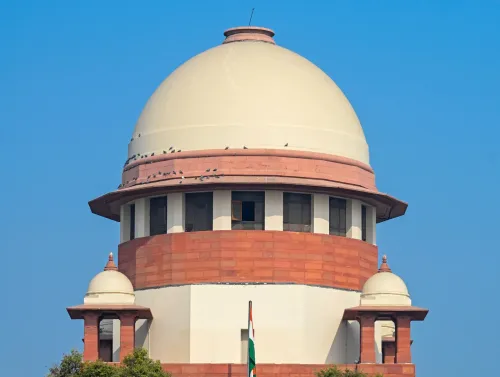
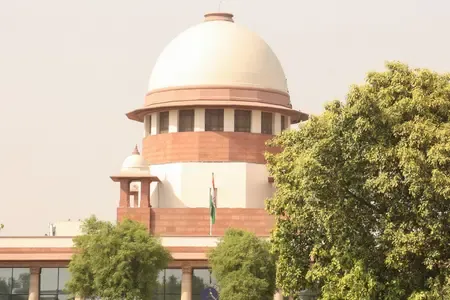
The Supreme Court on Friday, 20 November 2026, dismissed applications filed by the Tamil Nadu government seeking directions to Karnataka to release additional Cauvery river water to meet the state's irrigation and drinking water requirements. A bench comprising Justices Vikram Nath and Aparesh Kumar Singh declined to issue any such directive, bringing the latest round of litigation in the long-running inter-state water dispute to a close for now.
'We have dismissed (the application),' the Justice Nath-led bench stated while pronouncing the order.
What Tamil Nadu Had Sought
Tamil Nadu had approached the apex court demanding the immediate release of its claimed share of Cauvery water, arguing that the shortfall in supply was severely affecting farmers and standing crops across the state. The state had specifically sought directions for Karnataka to release 26.954 thousand million cubic feet (tmcft) of water, contending that the quantity being released remained inadequate despite sufficient availability in Karnataka's reservoirs.
The government argued that it was not receiving its proportionate share under the prescribed water-sharing arrangement, and that the situation on the ground had reached a point where agricultural livelihoods were at risk.
Karnataka's Counter-Position
Karnataka firmly opposed Tamil Nadu's demands, maintaining that it was fully complying with the directions of the Cauvery Water Management Authority (CWMA). The state highlighted drought-like conditions prevailing in several of its own districts, reduced inflows into reservoirs, and the overriding need to protect drinking water supplies for its own population.
Karnataka further argued that both the CWMA and the Cauvery Water Regulation Committee (CWRC) were already monitoring the release and equitable distribution of Cauvery water between the two states, making a separate judicial directive unnecessary.
Background and Earlier Proceedings
This is not the first time the Supreme Court has been drawn into the Cauvery dispute in recent months. Earlier, the court had permitted Tamil Nadu to place its grievance before the CWMA — the statutory body set up to implement the Cauvery water-sharing framework — and had posted the matter for further hearing on 31 August. The latest applications followed that round without a resolution acceptable to Tamil Nadu.
The Cauvery dispute has festered for decades, with the two states frequently clashing over seasonal releases, particularly during years of below-normal rainfall across the river basin. The CWMA and CWRC exist precisely to adjudicate such disagreements, and the court's decision to dismiss the applications reinforces that the statutory mechanism — not direct judicial intervention — is the primary forum for relief.
What Happens Next
With the Supreme Court declining to intervene, Tamil Nadu's immediate recourse lies with the CWMA and the CWRC, which continue to oversee water management between the two states. Farmers and agricultural stakeholders in the Cauvery delta region of Tamil Nadu are likely to remain under stress until seasonal conditions improve or the statutory bodies act. The ruling underscores the court's reluctance to override specialised regulatory mechanisms in complex inter-state water disputes.
Point of View
Raising the question of whether the statutory framework is adequately equipped for the political and hydrological complexity of the Cauvery dispute. Tamil Nadu's farmers pay the price every deficit-rainfall year while the two states trade legal volleys. The real gap is not in court orders but in a credible, real-time monitoring and enforcement regime that neither state can easily contest.
NationPress
20 Nov 2026
Frequently Asked Questions
Why did the Supreme Court dismiss Tamil Nadu's Cauvery water plea?
The Supreme Court dismissed the applications on 20 November 2026, declining to override the statutory oversight of the Cauvery Water Management Authority (CWMA), which is already monitoring water releases between the two states. Karnataka argued it was complying with CWMA directions, and the court found no grounds to issue additional directives.
How much water did Tamil Nadu seek from Karnataka?
Tamil Nadu had sought directions for Karnataka to release 26.954 thousand million cubic feet (tmcft) of Cauvery water, arguing the quantity being released was inadequate despite sufficient availability in Karnataka's reservoirs.
What is the Cauvery Water Management Authority (CWMA)?
The CWMA is the statutory body set up to implement the Supreme Court's Cauvery water-sharing verdict and to monitor equitable distribution of the river's waters between Tamil Nadu, Karnataka, Kerala, and Puducherry. The CWRC assists the CWMA in day-to-day regulation of releases.
What is Karnataka's position in the Cauvery dispute?
Karnataka has maintained that it is fully complying with CWMA directions and has highlighted drought-like conditions in several of its districts, reduced reservoir inflows, and the need to prioritise drinking water for its own population as reasons it cannot release additional water.
What options does Tamil Nadu have after the court's dismissal?
With the Supreme Court declining to intervene, Tamil Nadu must now seek relief through the CWMA and the Cauvery Water Regulation Committee (CWRC), the two statutory bodies empowered to adjudicate inter-state water releases. The court had earlier permitted Tamil Nadu to approach the CWMA with its grievance.