I-PAC raid row: SC reserves order on ED plea for CBI probe against Mamata Banerjee

Synopsis
The Supreme Court has reserved its order on whether the CBI must probe Mamata Banerjee's alleged interference in ED raids on I-PAC's Kolkata office — a case rooted in a coal smuggling money laundering investigation. The ruling could set a precedent on judicial oversight versus state discretion when senior politicians are under scrutiny.
Key Takeaways
The Supreme Court on 29 October reserved its order on the ED 's plea seeking a CBI probe and FIR against former West Bengal CM Mamata Banerjee .
The case relates to alleged interference during ED search operations at the I-PAC office in Kolkata on 8 January , linked to a coal smuggling money laundering probe.
Kapil Sibal argued the new West Bengal government could refer the matter to the CBI without a court order; the ED opposed this, citing risk of mala fide conduct.
The ED has sought FIRs against Banerjee, former DGP Rajeev Kumar , and former Kolkata Police Commissioner Manoj Kumar Verma .
The Supreme Court on 15 January had stayed FIRs against ED officials and ordered preservation of CCTV footage from the premises.
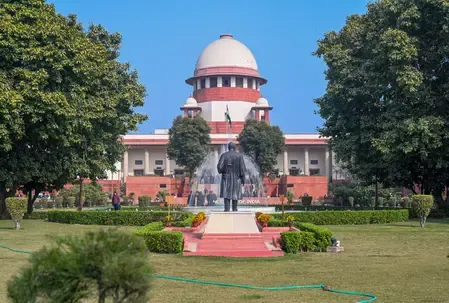
The Supreme Court on Thursday, 29 October reserved its order on a plea filed by the Enforcement Directorate (ED) seeking a Central Bureau of Investigation (CBI) probe and registration of an FIR against former West Bengal Chief Minister Mamata Banerjee and senior police officials. The case stems from alleged interference during ED search operations at the Kolkata office of political consultancy firm Indian Political Action Committee (I-PAC).
What the Court Heard
A Bench comprising Justice Prashant Kumar Mishra and Justice N.V. Anjaria confined its deliberations to a narrow question: whether the matter should be referred to the CBI by judicial direction, or whether the newly elected West Bengal government should be left to decide on its own. The Bench observed that the circumstances under which the ED had originally approached the top court may no longer exist, given the change of government in the state.
Senior advocate Kapil Sibal, appearing for Banerjee, argued that with a new government in place in West Bengal, there was no longer any obstacle to the state itself deciding to transfer the probe to the CBI. He maintained that a court direction was unnecessary, as the state government was fully competent to refer the matter to the central agency independently.
ED's Counterargument
Additional Solicitor General S.V. Raju, representing the ED, pushed back firmly. He argued that leaving the decision to the state government risked allegations of mala fide conduct and could compromise the integrity of the investigation. Raju stressed that the case involved allegations against not only a former Chief Minister but also senior police officials — including the then West Bengal Director General of Police Rajeev Kumar and the then Kolkata Police Commissioner Manoj Kumar Verma — making independent oversight essential.
The ED's law officer further submitted that since cross-cases were involved, a single agency should handle both sides of the dispute to ensure a coherent and unbiased inquiry. He said handing the decision back to the state could invite fresh controversy over how the case was managed.
Background: The I-PAC Raid and What Followed
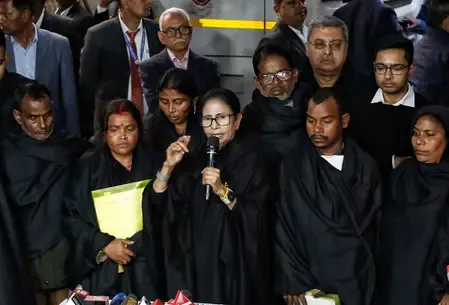
The dispute traces back to 8 January, when ED officials conducted search operations at the I-PAC office in Kolkata and at the residence of its co-founder, Pratik Jain, as part of a money laundering investigation linked to an alleged coal smuggling scam. The ED has claimed that Banerjee arrived at the premises — accompanied by police personnel and senior officials — while the searches were ongoing and allegedly interfered with the probe.
Banerjee has denied these allegations. She has maintained that she visited the premises to retrieve confidential data belonging to the All India Trinamool Congress (TMC), which she said related to the party's electoral strategy.
On 15 January, the Supreme Court stayed FIRs registered by West Bengal Police against ED officials in connection with the same searches, and directed the preservation of CCTV footage and other digital records relating to the premises. Notably, the apex court had earlier orally observed that alleged interference by a sitting Chief Minister in an ongoing investigation could put democracy 'in peril.'
What Happens Next
With the Supreme Court having reserved its order, the ruling — once delivered — will determine whether the CBI takes over the probe by judicial mandate or whether the new West Bengal government retains the discretion to act. Legal observers note that the outcome could set a significant precedent for how courts balance state autonomy with the need for independent investigation in cases implicating senior political figures. All eyes are now on the Bench's written order.
Point of View
It implicitly trusts a government with political skin in the game to investigate allegations against its own predecessor. The ED's concern about mala fide is not merely procedural; it reflects a systemic problem with state-directed CBI referrals in politically charged cases. The apex court's earlier oral remark — that a sitting CM's alleged interference could put democracy 'in peril' — suggests the Bench is alive to the stakes, but its written order will be the real measure of how far it is willing to intervene.
NationPress
29 Oct 2026
Frequently Asked Questions
What is the I-PAC raid case involving Mamata Banerjee?
The case involves ED search operations conducted on 8 January at the Kolkata office of political consultancy firm I-PAC and at the residence of its co-founder Pratik Jain, as part of a money laundering probe linked to an alleged coal smuggling scam. The ED alleges that former West Bengal Chief Minister Mamata Banerjee, accompanied by police officials, entered the premises during the search and interfered with the investigation, which Banerjee has denied.
What did the Supreme Court decide on 29 October?
The Supreme Court reserved its order on the narrow question of whether it should direct a CBI probe and FIR registration, or leave that decision to the new West Bengal government. No final ruling was delivered on the day; the written order is awaited.
Why does the ED want a CBI probe instead of a state investigation?
The ED argues that the allegations involve a former Chief Minister and senior police officials, making an independent central agency essential for a fair probe. It also submitted that cross-cases are involved and should be handled by a single agency, and that leaving the decision to the state government could invite allegations of mala fide conduct.
Who are the officials named in the ED's FIR plea?
The ED has sought FIRs against former West Bengal Chief Minister Mamata Banerjee, the then West Bengal Director General of Police Rajeev Kumar, and the then Kolkata Police Commissioner Manoj Kumar Verma, among others.
What orders has the Supreme Court previously passed in this case?
On 15 January, the Supreme Court stayed FIRs registered by West Bengal Police against ED officials in connection with the same searches and directed the preservation of CCTV footage and digital records from the premises. The court had also made oral observations that alleged interference by a sitting Chief Minister in an ongoing investigation could put democracy 'in peril.'