Supreme Court to closely monitor NEET reform road map, seeks CBT feasibility affidavit
Synopsis
The Supreme Court has put the Centre on notice: fix NEET structurally or face sustained judicial oversight all year. With a 27 July affidavit deadline, the court is demanding answers on CBT viability, NTA governance, and cybersecurity — while dismissing Air Force deployments as the kind of ad hoc thinking that created the crisis in the first place.
Key Takeaways
The Supreme Court declared it will 'very closely monitor' the Centre's NEET reform road map throughout the year.
The Centre must file a detailed affidavit by 27 July covering CBT feasibility , cybersecurity architecture , and NTA governance restructuring .
The court criticised reliance on ad hoc measures, citing the deployment of the Air Force as an example of temporary fixes.
Solicitor General Tushar Mehta confirmed the Radhakrishnan Committee recommendations have been 'fully accepted' by the government.
PM Modi announced a draft Bill the previous day proposing harsher penalties and fast-track courts for paper leak offences.
Fast-track courts under the Public Examinations (Prevention of Unfair Means) Act, 2024 are being set up, with NEET cases on priority.
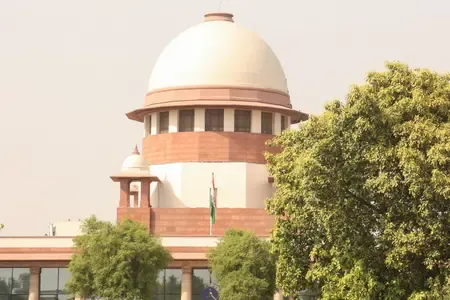
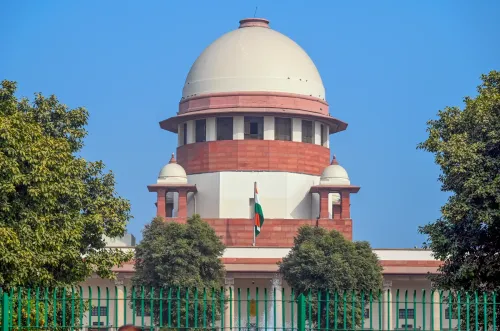
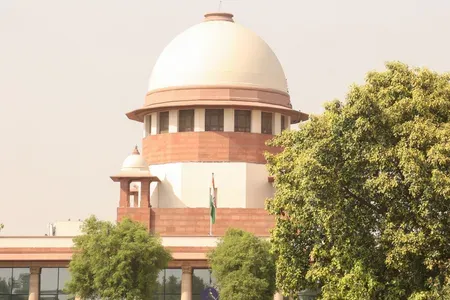
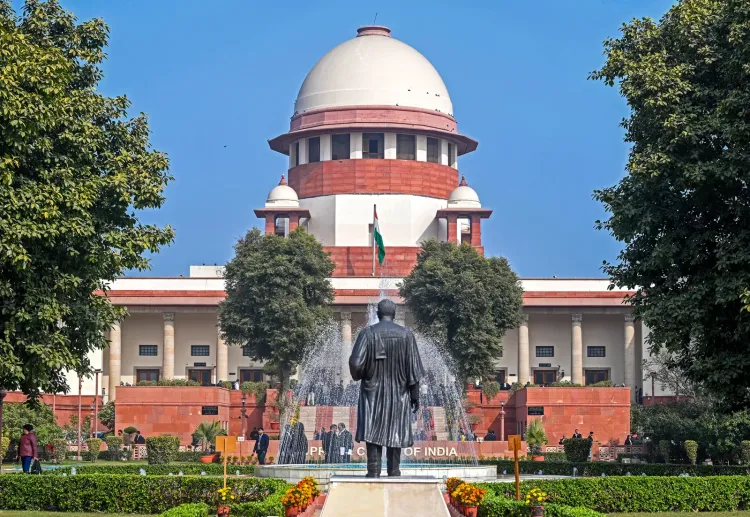
The Supreme Court on Friday, 24 July declared it would 'very closely monitor' the Union government's road map for overhauling the National Testing Agency (NTA) and preventing future paper leaks, directing the Centre to file a comprehensive affidavit by 27 July covering the feasibility of shifting NEET-UG to a computer-based testing (CBT) format, cybersecurity architecture, and examination security protocols. The order came as the court heard a batch of petitions demanding structural reforms in the wake of the alleged 2026 NEET paper leak controversy.
What the Court Directed
A Bench of Justice P.S. Narasimha and Justice Alok Aradhe posted the matter for further hearing on 27 July, after Solicitor General Tushar Mehta sought additional time to present a 'holistic view' of the reforms underway. The court made clear that the affidavit must specifically address the proposed structure of the NTA's governing board, mechanisms to ensure transparency and stakeholder participation, and the role of domain experts — including institutions such as the IITs — in strengthening the examination framework.
The Bench also pressed the Centre on whether NEET could eventually shift entirely to CBT mode, and what cybersecurity safeguards would be required to protect such a system. 'Can it be shifted? How can the data be kept safe? If you digitise it, how will you secure it? Who will handle cybersecurity?' the Bench asked, directing these questions to be answered in the affidavit.
Centre's Assurances
Solicitor General Mehta assured the court that the Centre would place on record the entire examination process, 'right from the printing press till the time the student gets the paper.' He stated that the Radhakrishnan Committee — the high-powered panel headed by former ISRO Chairman K. Radhakrishnan — had been 'fully accepted' by the government, and that the Centre was 'going ten extra miles' to address students' concerns, with the entire exercise supervised at the highest executive level. 'Any suggestion from the court, we will take it without reservation,' Mehta submitted.
Court's Rebuke of Ad Hoc Measures
The Supreme Court was pointed in its criticism of temporary fixes, noting that stopgap arrangements cannot become permanent policy. 'You deployed the Air Force, but that is ad hoc,' the Bench observed. 'Ad hocism has troubled us for years,' it added, signalling that the court expects durable institutional reform rather than crisis-response measures. The court also recalled its earlier position that specific accountability must be fixed within the NTA, warning that recurring controversies would persist unless responsibility was clearly assigned to individuals handling each stage of the examination process.
Legislative Push and Fast-Track Courts
The hearing followed Prime Minister Narendra Modi's announcement the previous day that the Centre has prepared a comprehensive draft Bill introducing stricter penalties for paper leak offences. The proposed legislation — expected to be cleared by the Union Cabinet and introduced in Parliament the following week — envisages harsher punishments, fast-track special courts for time-bound trials, and stronger institutional accountability. The government has also initiated the process of setting up fast-track courts under the Public Examinations (Prevention of Unfair Means) Act, 2024, with NEET-related cases among those prioritised for early hearing.
What the Petitions Seek
The batch of petitions before the court demands a transition to CBT, greater statutory accountability for the NTA, stronger technological safeguards, and systemic measures to prevent recurring paper leaks. The Supreme Court has indicated it will follow up on the matter throughout the year, stating: 'We will see that complete and total institutionalisation takes place. We can't let this continue.' The next critical date is 27 July, when the Centre's detailed affidavit is due.
Point of View
Without fixing the underlying accountability vacuum. The Radhakrishnan Committee's acceptance is a necessary step, but acceptance on paper and implementation on the ground are two different things, as the NTA's own history demonstrates. The CBT question is the real test: India's examination infrastructure, internet penetration gaps, and power reliability make a full CBT transition far more complex than the court's questions imply. If the Centre's affidavit sidesteps these structural constraints with broad assurances, the court will have its answer about whether the government is serious — or merely performing seriousness.
NationPress
23 Oct 2026
Frequently Asked Questions
What did the Supreme Court order regarding NEET reforms on 24 July?
The Supreme Court directed the Centre to file a comprehensive affidavit by 27 July detailing its road map for NTA institutional reforms, the feasibility of shifting NEET-UG to computer-based testing (CBT), cybersecurity safeguards, and examination security protocols. The court said it would 'very closely monitor' the reform process throughout the year.
What is the Radhakrishnan Committee and what did it recommend?
The Radhakrishnan Committee is a high-powered panel headed by former ISRO Chairman K. Radhakrishnan, constituted to recommend structural reforms to the NTA and the NEET examination system. The Centre told the Supreme Court that the committee's recommendations have been 'fully accepted' and are being implemented under the highest executive supervision.
Can NEET-UG shift to computer-based testing (CBT)?
The Supreme Court has specifically asked the Centre to address whether NEET can transition to a fully CBT model and what cybersecurity infrastructure would be needed. The Centre has been directed to answer these questions in its affidavit due on 27 July; no final decision has been announced yet.
What new legislation is the government proposing on paper leaks?
Prime Minister Narendra Modi announced on 23 July that the Centre has prepared a draft Bill introducing stricter penalties for paper leak offences, fast-track special courts for time-bound trials, and stronger institutional accountability. The Bill is expected to be cleared by the Union Cabinet and introduced in Parliament the following week.
Who is affected by the NEET paper leak controversy?
The alleged 2026 NEET-UG paper leak directly affects medical aspirants across India who appeared for the examination, as well as the integrity of admissions to undergraduate medical programmes. The Supreme Court is hearing a batch of petitions from students and other stakeholders demanding systemic reform of the NTA and the examination process.