SECC 2011 caste data unreliable for reservations, Centre told Supreme Court
Synopsis
The Centre's affidavit to the Supreme Court laid bare just how broken the SECC 2011 caste enumeration was: 4,28,677 caste entries in Maharashtra alone against 494 recognised categories, 40 spellings of a single community, and caste columns filled with numbers and symbols. The Supreme Court ultimately dismissed Maharashtra's petition — but the data crisis it exposed continues to haunt India's reservation policy debate.
Key Takeaways
The Centre told the Supreme Court that SECC 2011 raw caste data is unreliable and cannot form the basis for reservations in admissions, employment, or local body elections.
Maharashtra's SECC data enumerated 4,28,677 distinct castes, against just 494 entries in official state OBC, SC, and ST lists combined.
Over 99 per cent of castes enumerated in Maharashtra had a population of fewer than 100 people; 11.12 per cent of the state's population was recorded as having 'No caste'.
A single community — 'Mappilas' in Kerala's Malabar region — was recorded in 40 different spellings , creating 40 separate caste entries.
Nationally, the exercise produced more than 46 lakh distinct caste names that remain unclassified into backward-class categories.
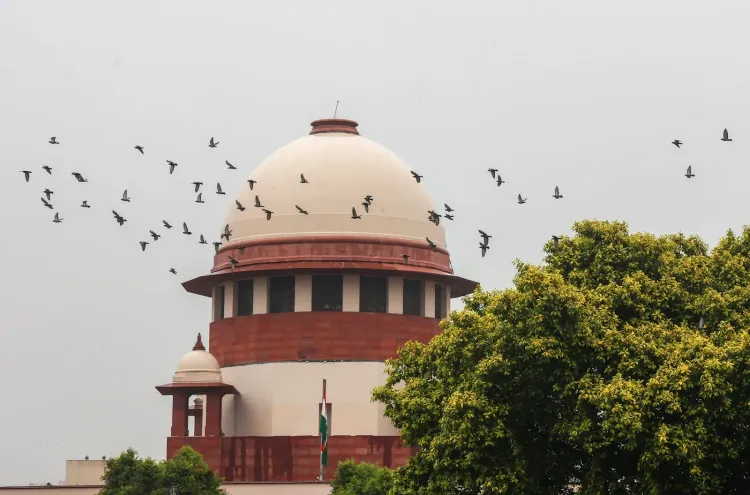
The Supreme Court dismissed the Maharashtra government's writ petition seeking disclosure of the SECC-2011 OBC caste data.
The Union government has told the Supreme Court that raw caste data gathered during the Socio Economic and Caste Census (SECC) 2011 is riddled with inaccuracies — including instances where enumerators entered numbers or symbols instead of caste names — rendering it unfit for determining reservations or any other official constitutional exercise. The disclosure came in a reply affidavit filed in September 2021 in response to a writ petition by the Maharashtra government seeking disclosure of SECC-2011 raw caste data pertaining to Other Backward Classes (OBCs).
Scale of the Problem
The affidavit, filed by the Union Ministry of Social Justice and Empowerment, revealed that the SECC-2011 dataset contained nearly 130 crore records, initially stored across thousands of separate MS Excel sheets before being transferred into a relational database management system. For Maharashtra alone, the data enumerated a staggering 4,28,677 distinct caste entries — against the state's existing published lists of just 494 recognised categories (47 Scheduled Tribes, 59 Scheduled Castes, and 388 OBCs). The Centre said this disparity alone demonstrated the depth of the data's unreliability.
Additionally, out of Maharashtra's total population of around 10.3 crore, as many as 1.17 crore people — or 11.12 per cent — were recorded as having 'No caste'. More than 99 per cent of the castes enumerated in the state had a population of fewer than 100 people.
Root Causes: No Caste Registry, No Standardisation
The Centre identified the absence of a pre-existing caste registry as a primary structural flaw. 'There was no registry of caste prepared prior to the conduct of 2011 Census,' the affidavit stated, adding that a standardised drop-down mechanism for enumerators could have produced more consistent data.
Spelling variations compounded the problem significantly. The affidavit cited the example of 'Mappilas' in the Malabar region of Kerala, where the same community was recorded in 40 different spellings by different enumerators, effectively creating 40 separate caste entries. Similarly, names such as 'Pawar' and 'Powar' — phonetically similar but listed differently — required grouping, with only 'Powar' appearing on the official OBC list.
In several cases, households either refused to disclose their caste or enumerators were unable to determine it, resulting in entries such as 'X' in the caste column. People also used clan names, gotras, sub-castes, titles, and synonyms interchangeably, further fragmenting the data. Nationally, the SECC-2011 exercise produced more than 46 lakh distinct caste names that have not been classified into appropriate backward-class categories.
Why the Data Cannot Be Used for Reservations
The Centre maintained that these cumulative infirmities — enumerator errors, inherent design flaws, and the absence of a standardised framework — meant the caste data could not legally or constitutionally underpin any exercise involving reservations in admissions, employment, or local body elections. 'There is no reliable or dependable castes-based census data available which can be the basis of any constitutional or statutory exercise like reservations in admission, promotion or local body elections,' the affidavit said.
The government also pushed back against Maharashtra's reliance on the Supreme Court's 2021 judgment in Vikas Kishanrao Gawali vs State of Maharashtra, clarifying that the ruling addressed reservations exceeding 50 per cent in certain Zilla Parishads and Panchayat Samitis — and did not specifically direct disclosure of SECC-2011 raw caste data or adjudicate on its infirmities.
Supreme Court Dismisses Maharashtra's Petition
The Centre also cited a 2014 Supreme Court judgment setting aside a Madras High Court direction for a caste-wise census, which had observed that 'it is not within the domain of the Court to legislate' on census methodology. Relying on this precedent, the Union government urged the court to dismiss Maharashtra's petition, arguing that granting the reliefs sought would amount to judicial interference in executive policy. The Supreme Court ultimately dismissed the Maharashtra government's writ petition.
The outcome underscores the long-unresolved tension between the political demand for OBC data and the administrative reality of what the 2011 exercise actually produced — a question that will continue to shape debates around caste-based reservation policy in India.
Point of View
With demands for a fresh caste census growing louder across party lines. The irony is stark: a dataset of 130 crore records is effectively unusable precisely because no one built the foundational infrastructure — a caste registry, standardised spellings, a controlled enumeration mechanism — before deploying thousands of enumerators. The Mappilas example, one community recorded 40 ways, is not an outlier; it is the rule. What the affidavit does not address is why these structural flaws were not flagged and corrected before the data was shelved for over a decade. The Supreme Court's dismissal closes this particular legal chapter, but the underlying policy vacuum — India still has no credible, court-proof OBC population count — remains wide open.
NationPress
9 Oct 2026
Frequently Asked Questions
Why did the Centre say SECC 2011 caste data is unreliable?
The Centre told the Supreme Court that the SECC 2011 caste data was riddled with errors, including enumerators entering numbers or symbols instead of caste names, 40 different spellings of single communities, and the absence of a pre-existing caste registry to standardise entries. For Maharashtra alone, the data produced 4,28,677 distinct caste entries against just 494 officially recognised categories.
What did the Maharashtra government seek from the Supreme Court?
The Maharashtra government filed a writ petition seeking disclosure of SECC-2011 raw caste data for OBCs, or alternatively, permission to independently collect empirical OBC data within the state. The Supreme Court ultimately dismissed the petition.
Can SECC 2011 data be used for OBC reservations?
No, according to the Centre's affidavit. The Union government maintained that the data's cumulative inaccuracies — spelling variations, missing entries, symbols in caste columns — make it constitutionally and legally unfit to underpin any reservation exercise in admissions, employment, or local body elections.
How large is the SECC 2011 caste dataset?
The SECC 2011 dataset contains nearly 130 crore records, initially stored in thousands of separate MS Excel sheets. Nationally, it produced more than 46 lakh distinct caste names that have not been classified into appropriate backward-class categories.
What did the Supreme Court decide on Maharashtra's petition?
The Supreme Court dismissed the Maharashtra government's writ petition. The Centre had argued that granting the reliefs sought would amount to judicial interference in executive policy, and cited a 2014 Supreme Court judgment holding that courts cannot direct the executive to conduct a census in a particular manner.