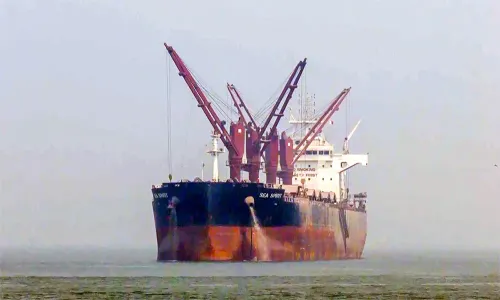
HMM Namu attack: Seoul to reveal Strait of Hormuz probe findings
Synopsis
South Korea is set to formally reveal who attacked the HMM Namu in the Strait of Hormuz on 4 May — a finding that could directly implicate Iran and drag Seoul into the US-Iran standoff. With anti-ship missiles suspected and Tehran already denying involvement, the 5 pm briefing by First Vice Foreign Minister Park Yoon-joo could reshape regional diplomacy.
Key Takeaways
South Korea was scheduled to announce investigation findings into the HMM Namu attack on 27 May at 5 pm .
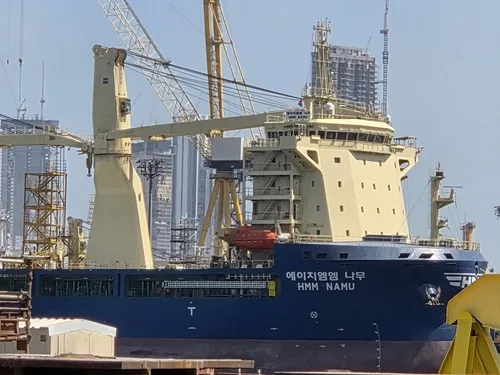
The HMM Namu , operated by HMM Co. , was struck by two unidentified airborne objects in the Strait of Hormuz on 4 May .
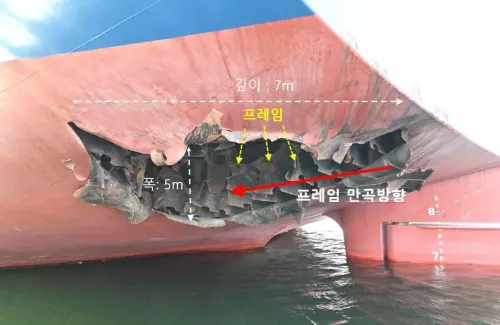
The attack caused an explosion and fire, injuring 1 of 24 crew members.
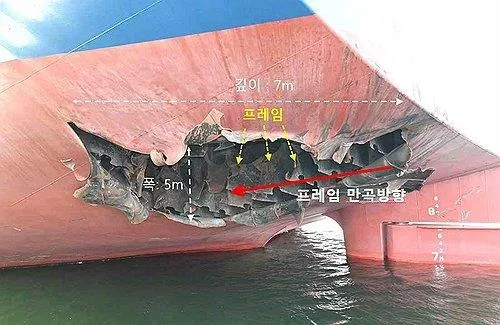
Preliminary findings confirmed the blast was caused by external strikes , not internal factors; anti-ship missiles are considered the likely weapon.
Iran has 'firmly and categorically' denied military involvement, despite US President Donald Trump claiming Tehran fired on the vessel.
First Vice Foreign Minister Park Yoon-joo was set to lead the briefing, joined by defence ministry officials.
The South Korean government was set to disclose the findings of its official investigation into the 4 May attack on the cargo vessel HMM Namu in the Strait of Hormuz on Wednesday, 27 May, according to foreign ministry officials. The announcement is expected to be the most definitive statement yet on who carried out the strike that left one crew member injured and triggered a fire aboard the ship.
What the Investigation Covered
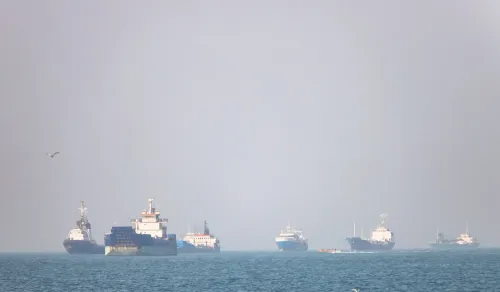
A government probe team conducted an in-depth forensic analysis of engine debris recovered from the two unidentified airborne objects that struck the HMM Namu — a vessel operated by South Korean shipping giant HMM Co. — while it was stranded in the strait amid the broader US-Iran conflict. The investigation sought both to determine the nature of the projectiles and to identify those responsible.
First Vice Foreign Minister Park Yoon-joo was scheduled to lead the press briefing at 5 pm, joined by officials from the defence ministry and other relevant agencies, the foreign ministry confirmed in a message to reporters.
The Attack and Its Aftermath
The 4 May strike caused an explosion and fire aboard the HMM Namu, leaving one of the 24 crew members with minor injuries. Preliminary probe results had already established that the explosion and fire were caused by external strikes rather than any internal mechanical failure — a finding that ruled out accident and pointed firmly toward a deliberate attack.
Speculation over the weapon used has centred on either anti-ship missiles or drones, with sources suggesting anti-ship missiles appear the more likely option.
Iran in the Frame — But Denials Persist
A senior foreign ministry official had told reporters earlier this month that the likelihood of a non-Iranian actor being behind the attack appeared slim, though Seoul maintained a cautious stance on formally assigning blame. US President Donald Trump had claimed shortly after the incident that Iran had 'taken some shots' at the HMM vessel and other targets.
The Iranian Embassy in Seoul, however, stated that Tehran 'firmly and categorically' denies any involvement by its military in the incident. Following Seoul's preliminary findings on external strikes, Iran did not issue any further statement — a silence that observers noted.
What Comes Next
All eyes are now on whether South Korea will officially name the party responsible — a step that would carry significant diplomatic consequences given the geopolitical sensitivities surrounding the Strait of Hormuz. Any formal attribution to Iran could strain Seoul's carefully managed ties with Tehran, while also drawing South Korea deeper into the US-Iran standoff. The briefing's outcome is being closely watched by shipping industry stakeholders and regional security analysts alike.
Point of View
But how explicitly Seoul will say so. A named attribution would be unprecedented in the bilateral relationship and could complicate South Korea's energy and trade ties with Tehran. The silence from Iran after the preliminary findings — no rebuttal, no counter-narrative — is conspicuous. In diplomatic terms, that silence often speaks louder than a denial.
NationPress
20 Sept 2026
Frequently Asked Questions
What happened to the HMM Namu in the Strait of Hormuz?
The HMM Namu, a cargo vessel operated by South Korean shipping company HMM Co., was struck by two unidentified airborne objects on 4 May while stranded in the Strait of Hormuz amid the US-Iran conflict. The attack caused an explosion and fire, leaving one of the 24 crew members with minor injuries.
What did South Korea's investigation find?
Preliminary findings confirmed the explosion and fire were caused by external strikes rather than any internal mechanical failure. A forensic analysis of debris recovered from the projectiles was conducted to determine the weapon type and identify those responsible, with full results due on 27 May.
Is Iran suspected of carrying out the attack?
A senior South Korean foreign ministry official indicated that the possibility of a non-Iranian actor appeared slim, and US President Donald Trump claimed Iran had fired on the vessel. However, the Iranian Embassy in Seoul has stated that Tehran 'firmly and categorically' denies any military involvement.
What type of weapon was used in the HMM Namu attack?
Speculation has centred on anti-ship missiles or drones, with sources suggesting anti-ship missiles are the more likely option. The government investigation analysed engine debris from the objects to make a definitive determination.
What are the diplomatic implications of South Korea naming a responsible party?
Formally attributing the attack to Iran would carry significant diplomatic consequences, potentially straining South Korea's ties with Tehran and drawing Seoul further into the US-Iran standoff. South Korea has so far maintained a cautious stance on assigning blame publicly.